
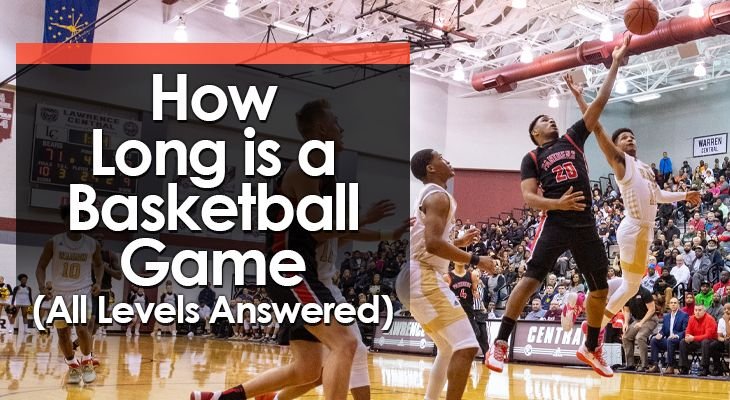
High school basketball games typically last for 32 minutes, divided into four 8-minute quarters.
Ever wondered about the pacing and duration of a high school basketball game? The quick back-and-forth action always keeps you on the edge of your seat. But exactly how long is high school basketball game? Let’s delve into the specifics of the timing.
Understanding the game’s structure makes it more engaging to watch. The game is segmented into different periods, each with a specific duration. This affects strategy and player rotations throughout the match.

How Long is a High School Basketball Game?
Let’s dive into the exciting world of high school basketball! You might be wondering, “Just how long does one of these games actually last?” It’s a great question because it’s not as simple as saying “exactly one hour” or something like that. Several things can affect how much time ticks by on the clock during a high school basketball game. So, buckle up, and we will explore all the details.
The Four Quarters: The Foundation of Game Length
The basic structure of a high school basketball game involves four main parts called quarters. Think of them like the chapters in a book or the acts in a play. Each quarter is a set length of time, and this is the biggest factor in determining the overall game time. In most places in the United States, each quarter in a high school basketball game is 8 minutes long. This means that without any stoppages or interruptions, a game would run for 32 minutes (8 minutes x 4 quarters = 32 minutes).
However, this 32 minutes is what we call “playing time.” Actual time elapsed will be more than 32 minutes, and that’s because of things like timeouts, fouls, and breaks between quarters.
Clock Stoppages: Why Games Take Longer than Expected
Now, we need to talk about why a basketball game doesn’t just fly by in those 32 minutes of “playing time.” There are many instances when the game clock stops. These pauses add a lot of time to the game’s total length. Here are some of the major reasons the clock stops during a game:
- Timeouts: Both teams get timeouts during the game. These are short breaks where the coach can talk to the players and plan strategies. The clock stops during timeouts. The number of timeouts and length can vary. Usually, there are a couple of full timeouts which last a minute or so, and several 30-second timeouts.
- Fouls: When a player does something against the rules, it’s called a foul. The clock usually stops when a foul is called, especially if the foul leads to free throws. Free throws take some time, with the players getting ready to shoot and the ball being given back into play.
- Out-of-Bounds: When the ball goes out of bounds, the clock stops until the ball is back in play. The clock restarts once the ball is in the hands of a player on the team restarting possession.
- Jump Balls: A jump ball happens at the start of the game and also when the ball is tied up between two players and neither team can cleanly gain possession. During the jump ball process, the clock also stops until someone is able to take possession.
- Injuries: If a player gets hurt, the game pauses for the necessary care, and the clock stops while medical attention is provided.
- Half-Time Break: Between the second and third quarters there is a longer break called half-time. Half-time can last 10 to 15 minutes depending on the league, state rules and time allocated for halftime ceremonies.
- Quarter Breaks: In between each of the four quarters, there is also a short break. The breaks between the first and second and third and fourth quarters are much shorter, often lasting only one or two minutes to allow the teams to change benches and get ready for the next quarter.
The Effect of Clock Stoppages on Game Length
All these stoppages can really increase how long a game lasts. A game that has many fouls, timeouts, and injuries is going to take much longer than one with few interruptions. Typically, with all the stoppages, a high school basketball game can run anywhere from 1 hour and 15 minutes to 1 hour and 45 minutes. Sometimes it may even go over two hours if there are a lot of extra stoppages, a close game in the fourth quarter, or even overtime.
Overtime: When a Game Needs More Time
Sometimes, even after all four quarters, the two teams are tied on the scoreboard. When this happens, the game goes into overtime. Overtime provides more time for one of the teams to win. In high school, the standard overtime period is usually 4 minutes long.
Multiple Overtime Periods
If the score is still tied at the end of the first overtime, then another overtime period can happen. And this can continue until one team is victorious. Each overtime is usually the same length of time as the first, which is usually 4 minutes. Having multiple overtimes can add a lot of time to the overall game time. These games can take significantly longer than the average game.
Variations in Game Length: Rules and Regulations
While the 8-minute quarter format is most common in the United States, there can be variations. Sometimes, depending on the specific league, state, or even the type of tournament, the rules might change slightly.
Different Quarter Lengths
Shorter Quarters: Some leagues, particularly at younger age groups within high school (like freshman or junior varsity games), might use shorter quarters. These might be 6 or 7 minute quarters. This reduces the length of the game and makes it less exhausting for the younger players.
National and International Rules: In some international high school competitions, the rules of organizations like the FIBA (International Basketball Federation) might be used which have different quarter lengths and other slight rule changes.
Time-Related Rules
Running Clock: Although less common in standard games, sometimes a “running clock” rule might be used, typically when one team has a big lead in the late stages of the game. In a running clock scenario, the clock only stops for timeouts. This is designed to speed up the game and avoid running up the score by extending the game unnecessarily.
Shot Clock: Some high school leagues and states are starting to use a shot clock, which means that the offense must attempt a shot within a specific amount of time (typically 30 or 35 seconds). The shot clock was previously mainly used in college and professional levels, and it adds pressure to the offensive team to initiate shot attempts instead of passing the ball for a long time.
Factors That Can Extend Game Length
Several factors beyond the core rules of the game can influence its overall duration. Let’s look at some scenarios that can extend the total time of a high school basketball game.
Intense Fouls and Free Throws
A game with many fouls can significantly increase its length because free throws take time to administer. Teams in foul trouble often slow the game down in an attempt to take the flow out of the other teams offense. This can result in more clock stoppages.
Close Game Situations
When a game is close in the final moments, the number of time-outs taken by each team increases. They want to strategize and ensure they are making the right play in the pressure situations. This will result in additional stoppages in play.
Referee Stoppages
If there is confusion over a call, then the referees will often need to stop the game to discuss it amongst themselves or view video replay. This leads to additional stoppages in the flow of play and increases game time.
How to Keep Track of Game Time
If you’re watching a basketball game, it’s helpful to know how the time works.
The Scoreboard Clock
The main way to keep track of time is the big clock on the scoreboard. It shows the time remaining in the current quarter. The game clock runs down from 8:00 to 0:00 in each quarter. When a quarter is over, the clock resets and starts counting down again for the next quarter.
Timeout Indicators
On the scoreboard, you’ll usually see indicators that display how many timeouts each team has remaining. This is helpful to see how much time each team has to stop the clock and plan their strategy.
Game Clock Awareness
In the last minute of a game, you’ll hear more chatter from coaches, players, and fans as they all become keenly aware of how much time is remaining. As the clock gets closer to 0:00 you may see different plays being executed and intentional fouling may occur.
Key Takeaways About High School Basketball Game Length
To wrap things up, here are the main points to keep in mind when thinking about how long a high school basketball game is:
- The basic game is made of four quarters, usually 8 minutes each.
- Game clock stoppages for fouls, timeouts, and other interruptions significantly increase a game’s length.
- Most high school games can last between 1 hour and 15 minutes and 1 hour and 45 minutes.
- Overtime can occur if the teams are tied at the end of regulation.
- Variations in the rules and format can influence the overall game duration.
- Keeping track of the time on the scoreboard and being aware of the game situation are important in following a game.
Understanding these elements helps anyone better appreciate the game of basketball, especially as it relates to the flow and the time commitment involved. The ebb and flow of the game, with its quick bursts of action and moments of strategic pausing, is what makes it such a compelling sport to watch and play.
1 vs. 5 high school basketball game 😂😂😂
Final Thoughts
High school basketball games typically consist of four quarters, each eight minutes long. The clock stops for timeouts, fouls, and other stoppages. Therefore, a game usually lasts around an hour to an hour and a half, depending on the number of interruptions.
This total time includes intermissions between quarters. Understanding ‘how long is high school basketball game’ means considering both the playing time and these breaks. The actual game clock runs for just 32 minutes.

