
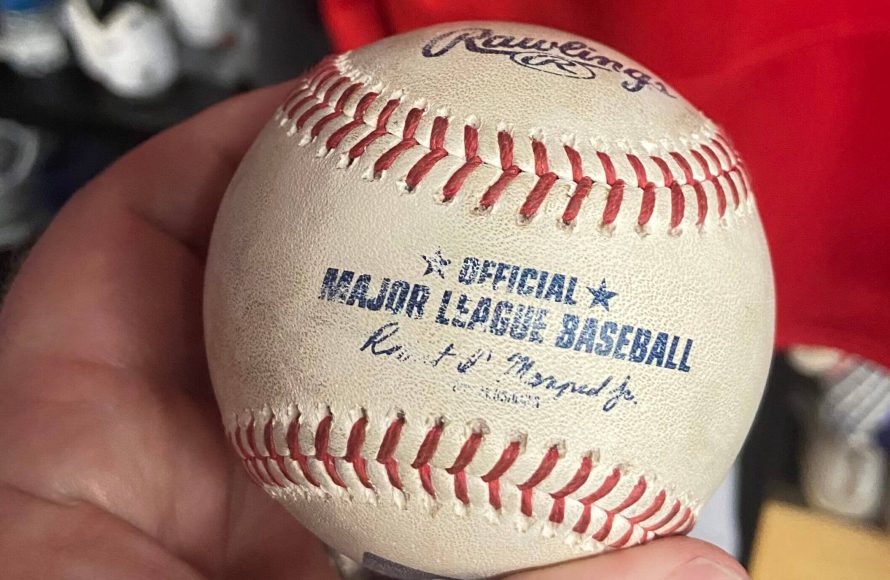
They typically use between 70 and 120 baseballs during a single game.
Have you ever watched a baseball game and wondered just how many baseballs they go through? It’s easy to lose count of the foul balls, home runs, and balls tossed to the dugout. The sheer volume can seem like a lot.
Considering the constant action, it raises a genuine question about how many baseballs do they go through in a game? The number is higher than you might expect, and a lot of factors contribute to it. The reason behind it is all quite fascinating.

How Many Baseballs Do They Go Through in a Game?
Ever watched a baseball game and wondered just how many baseballs get used? It’s a lot more than you might think! It’s not just one or two; we’re talking dozens, sometimes even over a hundred! It’s like a baseball parade out there, with balls constantly flying in and out of play. Let’s dive deep into why so many baseballs are needed and what happens to them during a game.
The Journey of a Baseball: From Box to Bench to…Outfield?
Before a game even starts, a team has a fresh box of baseballs ready to go. These aren’t your average backyard balls. They’re specially made, perfectly round, and stitched with precision. These balls usually arrive in packages, often containing dozens, sometimes more. They are inspected before the game to make sure they meet the specific regulations of the league, because the balls needs to be perfect weight and size. It’s a pretty serious process! Think of these balls as the game’s raw materials, and they need to be top notch. They start their journey in the pristine box, ready to be put into play.
Pre-Game Prep: The Rubbing Mud Ritual
But before they even touch a bat, umpires and game personnel take each new ball and rub it with a special mud. This isn’t just any mud; it’s a very specific kind of mud, often from a certain location in the Delaware River. Why mud? Because it helps take the slickness off the brand-new baseball’s surface, providing the pitchers with a better grip. Without this mud treatment, the balls would be too slippery to handle properly. This is important for the safety and control that pitchers need. It’s a key step that most people don’t see.
The First Pitch and Beyond: How Baseballs Leave the Game
Once the game begins, baseballs quickly start getting used and taken out of play for various reasons. The main one, is hitting. When a batter makes contact, the ball can fly in a lot of different directions and places, including the field, and that is the most common reason for baseballs to leave the playing field, requiring a replacement ball to be put into play. This can include a home run, single or any other kind of batted ball. Let’s see some of the main reasons:
- Foul Balls: When a batted ball goes outside the lines of play, it is a foul ball, these are very common.
- Home Runs: When a ball clears the outfield fence, it goes out of play and fans may catch them, or end up in a location that makes it difficult to retrieve.
- Balls in the Stands: Baseballs that are thrown or hit into the seating areas are usually lost to the fans. Sometimes they will be returned, but usually they become souvenirs.
- Damaged Baseballs: Some hits can impact the baseball, which could change its shape or cause damage, needing replacement.
- Baseballs Pitched in the Dirt: Pitchers sometimes have errant pitches, which end up in the dirt, or a location that would change the composition and nature of the ball.
- Baseballs used in Warm Up: In between innings, the teams will warm up, and they will throw the baseballs around. These balls are also sometimes removed.
As you can see, there are many situations where a ball goes out of play, requiring a new baseball to be introduced into the game. This is why the supply is constantly being replenished.
Calculating the Average Number of Baseballs Used
It’s tough to pin down an exact number, but we can get a pretty good idea by looking at the various factors. Let’s explore some averages and the reasons behind the fluctuations.
Average Usage Per Game
On average, a typical Major League Baseball game uses anywhere from 70 to 120 baseballs. Think about that for a second! That’s a whole lot of balls going out of play! This can increase in a game with a lot of hits, a lot of fouls or a game that goes into extra innings. The number is rarely under 70, and in some rare circumstances has gone up past 150 or even 200 in a game. The averages can change because each game is different. So, while we can get the averages it isn’t an exact science.
Factors Affecting the Number
Several things can affect the total number of baseballs used in a game. These factors make each game’s usage unique:
- Number of Hitters and Hits: A game with many hits, including doubles, triples, and home runs, is going to result in many baseballs being used. The more times the baseball is batted into play, the more used baseballs there will be.
- Number of Foul Balls: Games with many foul balls will lead to high baseball usage. Foul balls are out of play and have to be replaced each time.
- Number of Stolen Bases: If there are a lot of stolen bases, the base coach may take that ball out of play, requiring replacement.
- Pitching Style: Some pitchers may be very erratic, throwing balls in the dirt, or not in a catchable area. This will require more baseballs to be used.
- Extra Innings: If a game goes into extra innings, naturally, the number of baseballs used will go up. This means more pitches, more hits, and more chances for baseballs to go out of play.
- Home Runs: Games with many home runs will lead to more baseballs being used. Home run balls almost always leave the field of play.
These are the primary reasons the number of baseballs changes from game to game. The variables are many and can often compound during a game.
What Happens to All Those Used Baseballs?
So, you might be thinking, where do all those baseballs go? It’s not like they just disappear! Let’s see what happens after they’ve had their moment in the game. There are several different things that can happen to the used baseballs.
The Life After the Game
Once the game is over, the used baseballs take different paths:
- Practice and Training: Many used baseballs will be used for practice and training. These can be for batting practice, or for pitchers to use in their warmups and training sessions.
- Minor League Play: Some used baseballs are used in minor leagues and other less professional baseball organizations. These baseballs might not be good enough for the highest level, but are perfect for other leagues.
- Souvenirs and Collectibles: Sometimes, baseballs that are hit in very big moments or big games end up as souvenirs. They can become special items for coaches, players, or fans. They may be put in a personal collection or sold at auction houses.
- Charity: Some baseball organizations donate used baseballs to charity organizations or youth leagues that can’t afford the cost of brand new baseballs. These baseballs can be used in local little leagues and community organizations, allowing more people to enjoy the great game of baseball.
- Discarded: Baseballs that are too damaged or are no longer safe are discarded. These balls are usually in terrible condition and cannot be used in any way.
There is a constant flow of baseballs, from the pristine boxes to the game, and then to different pathways. While most of the baseballs don’t go into collections, some do find special places and others are used for training and practice.
The Cost of Baseballs
Have you ever thought about how much all those baseballs cost? It’s more than you think, and the cost can add up over a season for a team. Baseball costs can add up quite quickly! Let’s take a look:
The Price Tag
The cost of a single official Major League Baseball ranges from about $6-$10. When you think about a team going through at least 70 of those per game, and a team playing 162 games per season, you can see how this becomes an expense. If we do a low end math, using $6 per baseball and a 70 per game average, that is around 420 dollars per game. Multiply that by the 162 game season, and that comes out to a staggering $68,040 per season for baseballs. And this doesn’t even account for the costs of the special mud that is used to rub each of the baseballs.
Team Expense
A team will need to have extra baseballs for training and practice purposes also, so their cost is even more. That is why these baseballs are used in minor league games and for practices. Teams will try to recycle the baseballs as long as they can, because the costs can quickly get out of hand if they aren’t managed well. It adds up to a pretty significant expense for the teams every season. They have to make sure that they are able to have a steady supply of baseballs at all times. The baseball is an essential piece of equipment in the game and it is important to always have enough for each game, for practices and for any unexpected needs.
The Unique Life of a Baseball
The baseball isn’t just a ball. It goes through an interesting journey during its time in a game. It will be in the hands of the pitcher, used for hitting and is a constant participant in each game. It will travel long distances and will be used repeatedly until it leaves the game. Let’s look at what makes each baseball unique:
Each Ball Tells a Story
Every baseball has a unique journey. Each one could have a different story about what happens to it during the game, and how it gets out of play. There is no telling what each baseball will endure during a game. Some baseballs may get hit for a home run, some might be thrown into the dirt, and some might just be used to warm up. While each one looks very similar when they start the game, they all have a different story and different uses once the game ends. Even if it’s just a foul ball, each baseball is part of the game’s history.
The Human Element
A lot of work goes into each baseball. From the people who made them, to the people that rubbed mud on them, to the players and umpires that use them in each game. It is a crucial part of the game, and each one has its own story to tell. Each baseball, no matter how mundane or unexciting its use is, is an important piece of the game. They are essential in the game of baseball.
So, the next time you are watching a baseball game, remember all the journeys that these baseballs go on, and the big part that they play in the game. You’ll be watching the game with a new perspective on the humble baseball.
Good Question: How Many Baseballs Are Used In A Game?
Final Thoughts
Typically, a single MLB game uses between six and twelve dozen baseballs. Fouls, hits, and balls tossed to fans quickly deplete the supply. Umpires change balls frequently for quality and safety.
So, how many baseballs do they go through in a game? The exact number fluctuates, but a team uses a lot and it is a major part of the game. They must maintain this supply.

