
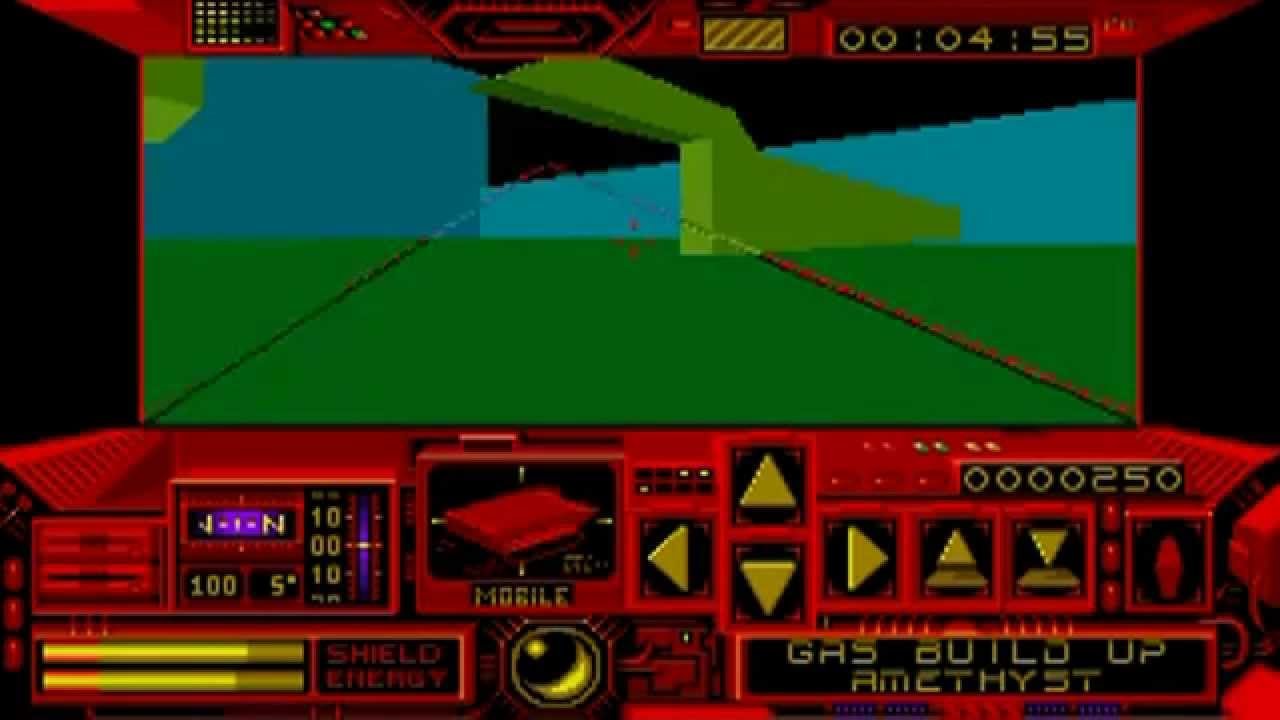
‘Maze War’ is often considered the first 3D game, dating back to the early 1970s.
Ever pondered what was the first 3d game? It’s a question that sparks curiosity for many game enthusiasts. The history of gaming is filled with innovations that pushed boundaries.
Early video game development started with simple 2D graphics, but a move towards 3D was inevitable. Figuring out which title claimed that initial milestone is a fun trip back in gaming history.

What Was The First 3D Game?
Figuring out the very first 3D game is like trying to find the first drop of rain in a big storm. It’s tricky because “3D” can mean different things to different people. Some games used tricks to look 3D, while others were truly 3D, meaning they let you move freely in a three-dimensional world. Let’s dive into this puzzle and explore the contenders for the title of “First 3D Game”. We’ll need to look at different kinds of “3D” and see which games came out first.
The Illusion of 3D: Early Attempts
Before we get to actual 3D games, let’s talk about the games that tried to make you think they were 3D. These games used clever ways to create the feeling of depth, even though they weren’t truly three-dimensional. Imagine looking at a picture that seems to pop out – that’s kind of what these games did.
Pseudo-3D Techniques
Games during the late 1970s and early 1980s used a few clever tricks to fake 3D. These techniques include:
- Isometric Projection: This is where the game view is at an angle, kind of like looking at a building from a corner. It gives the sense of depth without being fully 3D. Think of classic games like Zaxxon and Qbert. These games used angled views to show height and depth, tricking our eyes into seeing a 3D world on a flat screen.
- Scaling Sprites: As objects moved “away” from you in the game, they would get smaller, and as they moved “closer,” they would get bigger. This gave the illusion of movement in a 3D space. Games like Pole Position and Out Run used this to create the feeling of racing down a road.
- Perspective Scrolling: Imagine the background moving faster than objects in the foreground, this creates a sense of distance. Side scrolling games like Moon Patrol used different scrolling speeds for different layers to give a sense of depth.
These techniques were super innovative for their time. They helped players feel like they were exploring a 3D world, even though the games weren’t technically 3D. They laid the foundation for the true 3D games that would follow.
Defining True 3D
So what makes a game truly 3D? It means that you can move freely through a virtual world, not just along a set path. Think of games where you can walk forward, backward, left, right, and jump, and that aren’t bound by a flat plane or isometric grid. Here are some key things that make a game “true 3D”:
- Three Axes of Movement: You can move along the X (left and right), Y (up and down), and Z (forward and backward) axes. This lets you explore the world freely.
- Polygonal Graphics: Instead of using images made up of lots of tiny dots (pixels), true 3D games use shapes called polygons (often triangles). These polygons create the surfaces of the objects in the game.
- Perspective Correctness: As objects move further away, they become smaller in size, and also change angles correctly with the viewer’s perspective. This gives a more natural and realistic sense of depth.
- Real-time Rendering: The game draws the 3D world in real-time, meaning it doesn’t pre-render everything. The game calculates and displays what you see as you move.
Now that we know what true 3D is, we can start looking at which games were the first to truly go three-dimensional.
Early Contenders for “First True 3D Game”
Figuring out the absolute first true 3D game is tricky, but we can point to a few games that were really early and important:
Battlezone (1980)
One of the earliest and most important games that attempted 3D graphics was Battlezone. Released by Atari in 1980, Battlezone put players in the cockpit of a tank, battling other tanks in a simple, wireframe world. It used a vector graphics display (lines instead of filled pixels) to show the landscape and enemies. Though the visuals were basic compared to today’s games, it was revolutionary for its time, offering a sense of depth and movement that was new to arcade gamers. Here is why it matters:
- First-Person Perspective: Battlezone put you right in the driver’s seat. You saw the world from inside your tank, a perspective that became popular in future 3D games.
- Vector Graphics: While not using polygons, Battlezone’s vector graphics gave it a distinct 3D feel, with lines making up the objects and world.
- Early 3D Movement: You could move forward, backward, and turn, and it gave a feeling of exploring a 3D space.
Though primitive by today’s standards, Battlezone laid a solid foundation for first-person 3D games. It was a pivotal step in transitioning from 2D to 3D.
3D Monster Maze (1981)
Released for the Sinclair ZX81, 3D Monster Maze is an early example of a 3D game on a home computer. In this game, you moved through a maze from a first-person perspective, trying to escape a dinosaur called the Tyrannosaurus Rex. It may look simple now, but it was pretty groundbreaking in its time.
- First-Person Perspective: Similar to Battlezone, you experienced the game from the eyes of the player, moving through corridors.
- Simple 3D Rendering: The game used basic shapes to make the maze and the T-Rex. It wasn’t very fancy, but it did create a 3D effect.
- Maze Exploration: The game involved navigating a 3D maze, which was one of the earliest examples of this type of gameplay.
3D Monster Maze showed that 3D experiences were possible even on less powerful hardware. It proved that games didn’t need to be in arcades to be in 3D.
Elite (1984)
Elite, released in 1984, was a space-trading and combat game and was quite a significant step forward for 3D gaming. This game wasn’t just about flying in 3D space, it also had a lot of freedom and possibilities. Elite combined wireframe 3D graphics with a huge open world (or open galaxy), making it an incredibly immersive experience.
- Wireframe 3D: Similar to Battlezone, Elite used wireframes to show spaceships and objects, but it took the complexity up a level. It had much more intricate and varied designs.
- Open World Exploration: You could fly anywhere in its vast galaxy, completing missions and trading goods between planets.
- Freedom of Movement: Elite let players pilot spaceships with a full range of movement, including roll, pitch and yaw – offering a true 3D experience.
Elite was one of the first games to offer such a vast and free experience in 3D, influencing many of the games that followed, and showing that 3D games could be expansive and complex.
Other Notable Early 3D Games
While Battlezone, 3D Monster Maze and Elite are often mentioned as early examples, it’s worth noting some other games that also pushed the boundaries of 3D gaming:
- Starglider (1986): This game used filled polygons and offered a smooth flight experience in its 3D world.
- Driller (1987): A game that let players explore a detailed 3D world by piloting a powerful drilling machine.
- The Sentinel (1986): A puzzle game that presented its world in 3D, requiring a keen sense of spatial awareness.
These games, while not always considered the “first”, were all important in moving 3D gaming forward.
Why It’s Hard to Pick Just One “First”
So, why is it so tough to say which game was the first 3D game? Here are a few reasons:
Different Definitions of 3D
As we’ve discussed, “3D” can mean different things. Games like Battlezone used vector graphics and wireframes to simulate 3D, while games later on used polygon graphics. So the definition of 3D changes as technology advances.
The Pace of Technological Development
Technology was advancing super fast back in the 1980s. New techniques for creating 3D worlds appeared frequently. This means there was no single moment when “3D” arrived – instead, there was a period of experimentation and progress.
Limited Resources
Early computers and consoles had very limited processing power. This meant developers had to find clever ways to make 3D graphics work. As hardware got stronger, game developers could get more complex and detailed in the games they created.
Blurred Lines Between Styles
Sometimes, games mixed different 3D styles or used techniques that blurred the lines between 2D and 3D. This makes it hard to put games into neat categories.
The Legacy of Early 3D Games
Even if we can’t agree on a single “first” 3D game, one thing is for sure: these early attempts laid the groundwork for all the amazing 3D games we play today. They showed us the power of 3D environments, and sparked the imaginations of countless game designers and developers. They started the journey for all the games we love.
From Wires to Polygons
The shift from wireframe graphics (like in Battlezone and Elite) to filled polygons (which you see in most 3D games today) was an important step. Polygon graphics allowed for more detailed and realistic worlds. As hardware became stronger, polygons became the go-to for 3D gaming.
The Impact on Game Genres
3D graphics changed the types of games we play. First-person shooters (like Doom and Wolfenstein 3D) and open-world adventure games (like The Legend of Zelda: Ocarina of Time) were all inspired by the early attempts to do 3D games. These genres all became staples of gaming because of the ability to freely explore a three-dimensional world. And you can see their foundations in those early steps.
Continuing Innovation
The history of 3D games is a story of constant innovation. Developers are always trying to find new ways to push the boundaries of what’s possible. From early vector graphics to today’s amazing virtual reality experiences, it’s all part of a journey that began with games like Battlezone, 3D Monster Maze, and Elite.
The quest to find the very first 3D game shows us how far we’ve come in the world of video games. While we can’t pick one single game as the absolute first, we can appreciate the games and those who made them that paved the way for the awesome 3D games we all play today. They created the foundations, that we enjoy today!
The Birth of 3D Video Games
Final Thoughts
Determining the absolute first is tricky, but many consider Maze War (1973) a strong contender. It used simple wireframe graphics for its 3D environments. This game presented a first-person perspective, a key element in many later 3D experiences.
Ultimately, while various candidates exist, Maze War’s influence is significant. Its simple design paved the way for future game design. Therefore, when asking what was the first 3d game, Maze War often appears in the answer.

