
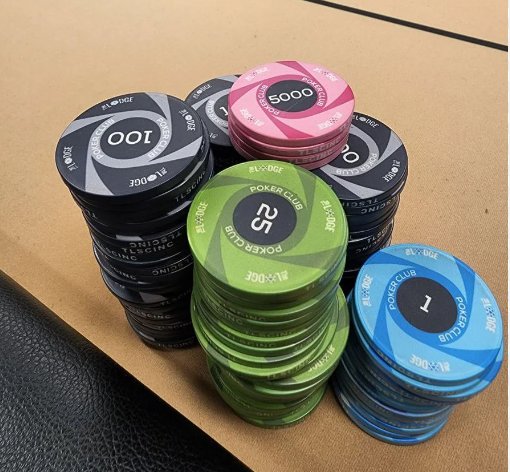
The standard recommendation for a cash game is to buy in with 100 big blinds.
Jumping into a cash game can feel daunting, especially when considering the optimal buy-in. Many players wonder about how many big blinds for cash game they should bring to the table. Getting this right is crucial for managing your risk and maximizing your potential.
A proper buy-in provides sufficient room for maneuvering and playing your game effectively. Having too few big blinds could limit your options. Conversely, starting with too many can increase variance and risk.
Knowing the common practices can help improve your game from the start. So, let’s dive into the details of what constitutes an appropriate buy-in and why.

How Many Big Blinds for Cash Game?
Okay, so you’re diving into the exciting world of poker cash games, and you’re probably wondering, “How much money should I bring to the table?” It’s a really important question, and the answer often comes down to the concept of “big blinds.” Thinking about your stack size in big blinds, instead of just dollar amounts, is a smart way to play poker. It helps you compare your stack to the size of the pot and other players’ stacks. This method is much more beneficial than looking at just the money amount you have at the table.
Understanding the Big Blind
Before we talk about how many big blinds are best, let’s make sure we all know what a big blind is. In a poker game, there are blinds—small blind and big blind—which are forced bets. These bets get the action started. The big blind is usually double the small blind. For example, in a $1/$2 cash game, the small blind is $1 and the big blind is $2. The big blind, in essence, serves as the fundamental unit for measuring your stack size and the stakes you’re playing.
Why Big Blinds Matter
Why not just talk in dollars? Well, using big blinds makes things way easier for a few reasons. First, it lets you easily compare different stakes. A 100 big blind stack in a $0.25/$0.50 game feels the same as a 100 big blind stack in a $5/$10 game. It’s about the number of big blinds, not the amount of money. Second, it gives you a more immediate idea of the betting structure of the game, and how much freedom you will have in the game. Third, it makes it easy to calculate pot odds, and assess how much risk you are taking with your money. Let’s say you have 100 big blinds, you have more room to play various hands, and take a shot at winning a bigger pot. If you have less big blinds, like 20 big blinds, your game plan will be much different.
The Common Starting Stack Sizes
There’s not just one “right” number of big blinds to start with, but there are commonly accepted ranges. Let’s explore a few:
The 100 Big Blind Standard
The most common advice you’ll hear is to start with 100 big blinds. This is the standard, and for a good reason. With 100 big blinds, you have enough chips to play a full range of poker hands. You can afford to make plays, win big pots, and not worry too much about going broke. This allows for a balanced game, where skill and careful strategy are most important.
Short Stack (20-50 Big Blinds)
Using fewer than 50 big blinds is considered short stacking. This style is generally riskier but allows a player to play with less capital. Short stacking strategy changes the game significantly because you have limited space to maneuver. You’re usually looking for spots to go all in, meaning you’ll play fewer hands, but each hand you do play becomes more critical. It can be a good strategy if you are learning to play poker, or if you do not have much money, but you need to understand how to play short-stacked poker. It’s not great to play like a 100 big blind player with only 20 big blinds, because you will loose money in a long run, so it requires adjustments.
- Pros of Short Stacking:
- Requires less investment
- Can be good for a beginner, to learn the game
- Easier to make decisions
- Cons of Short Stacking:
- Less room to maneuver
- Limited opportunities for big wins
- Can be very risky
Deep Stack (150+ Big Blinds)
Going above 100 big blinds, we get to deep stack poker. This is where you have a lot of flexibility in how you play. You can try more complex moves, or make big bets, and have a more wider range of play. With this amount of stack size, you have more opportunity to make big profits. However, with more freedom, also comes more risk. For a new poker player, it may not be the best approach, because you need experience to deal with big pots, and to make important decisions for the large sums of money.
- Pros of Deep Stacking:
- More freedom and flexibility
- Opportunities to win big pots
- Allows for more complex strategies
- Cons of Deep Stacking:
- Requires more capital
- Can be overwhelming for beginners
- More risk involved
Choosing the Right Number of Big Blinds For You
Now, let’s get to the important question – how many big blinds should you bring to the table? Here are some things to think about:
Your Skill Level
Are you a poker newbie? If you’re just starting, sticking with 100 big blinds is usually the best bet. This gives you enough wiggle room to learn the ropes and make some mistakes without losing your shirt. As you get better and more comfortable, you can try playing with different stack sizes. Don’t try to play with less than 50 big blinds if you are not familiar with the short-stack strategy. If you are already an experienced player, you might enjoy playing with 150 or more big blinds, and if you play well, you can make more money. If you are a solid player, you will usually try to play with the maximum amount of big blinds that table or the game allows.
Your Comfort Level
Think about how much risk you are comfortable taking. Some players feel fine risking 100 big blinds, while others prefer to play with less risk. Don’t feel like you have to bring the maximum allowed amount of money, just because it is allowed, bring the amount you are okay with. It is the better option for your long term health to play with the amount you are comfortable playing with, because it will help you to reduce stress in the game.
The Game You’re Playing
The game itself can change the ideal stack size. Some games play more aggressively, and the standard stack is bigger, and some games are more tight, and the stack sizes are smaller. You need to know how your opponents are playing, and what is the usual stack size at the table, and if you are comfortable to play with that. Also, some online platforms have specific rules regarding minimum or maximum buy-ins, so it is important to be aware of this, and play by the rules.
Your Goals
What do you want to achieve in the poker game? Are you trying to make big plays and win huge pots? Or are you just trying to have a fun session and learn along the way? If you want to play more aggressively, and try more bluffs, then it is recommended to play with 100 or more big blinds. If you are trying to play more patiently and carefully, then playing with less big blinds can work out well for you. However, you need to understand the strategy for the lower big blinds, because this strategy is completely different from playing with 100 big blinds.
Adapting Your Strategy Based on Big Blinds
Your strategy has to shift depending on how many big blinds you have. Here’s a quick look:
100 Big Blinds
With this amount of big blinds, you can play a balanced game. You can play both strong hands and bluff more often. You have a greater margin for error. You are not in the situation, where you have to go all in almost every time. This allows you to play more hands, and make better decisions, and potentially win bigger pots. This is a standard stack for a reason, because it allows you to play every kind of style, and it is usually the best stack for most of the players.
Less than 50 Big Blinds
If you are playing with less than 50 big blinds, you have to play much more tight. This means, that you have to play much stronger hands, and not try to bluff too often. You are constantly trying to find a situation, when you can go all in. This is not the strategy you want to play, if you have a lot of big blinds, because it is very risky. However, if you have less big blinds, you have to play this strategy, because that is the only way to survive.
150+ Big Blinds
With this stack size, you have a lot of flexibility and freedom. You can play almost any hand you want, and there is less risk if you go all in, since you have a lot of extra money. This can be a really good situation, because you can make bigger bets, and take advantage of your opponents, if you are more skilled than them. However, if your opponents are more skilled, you can quickly lose all your money if you are not careful. The deep stack poker strategy can be very complex, and you have to be a very good player to play it well.
Tracking Your Stack and Re-Buying
Always pay attention to your stack size, in terms of big blinds. If you go below your comfortable level, it’s time to think about rebuying. Rebuying is when you add more chips to your stack. Most poker rooms allow you to rebuy if you get below a certain amount, often 100 big blinds. It’s usually a good idea to keep your stack around 100 big blinds, especially if you’re still learning, because this strategy will help you to play a balanced game, and reduce the amount of money you lose.
It’s also important to mention here, that you have to be disciplined with your money. If you lose your stack, and start chasing your losses, you will usually end up losing more money, and it will be bad for you in the long run. Try to play every session with a clear and open mind, and try to not let your emotions control you.
Big Blinds in Tournaments
While we’ve mostly talked about cash games, big blinds are also important in tournaments. However, in tournaments, the blinds increase over time. This means your stack size, in terms of big blinds, is constantly changing. This means that strategy will be different at the start of the tournament, then in the later stages of the tournament. In the beginning, the blinds are small, so you have a lot of freedom with your chip stack, but at the end, the blinds are so big, that you will often be all in.
Early Stages
In the early stages of a tournament, you have a lot of big blinds to work with. You can play more hands and try different moves. This is usually a good time to play your normal strategy, because the blinds are not too big yet.
Middle Stages
As you move into the middle stages, your stack size decreases in big blinds, and you have to play more carefully. You might need to tighten your hand ranges and focus on the spots where you are ahead. You can still make some plays, but you have to be more careful, since your big blind count is not that high anymore.
Late Stages
In the late stages, you usually have much fewer big blinds. This means you have to play very tight, and be ready to go all in often. If you survive the early and middle stages, you will get to this late stage, and if you manage to win a few big pots, you can often win the entire tournament.
Table Stakes and Big Blind Buy-in Rules
Understanding table stakes is crucial to managing your big blinds. Table stakes mean that you can only lose the amount of chips you have on the table at any given time. You can’t reach into your pocket for more money during a hand. However, you can usually buy more chips between hands if you go below a certain limit. Most casinos and online poker sites have rules about minimum and maximum buy-in amounts, usually expressed in big blinds. It is crucial to know this before starting any game.
Practicing and Improving
The best way to get better at figuring out how many big blinds to play with is by practicing and studying. Track your results, see which stack sizes work best for you, and keep learning. You can also learn from more experienced players, and ask for advice, or watch tutorials online. The most important thing is to not stop improving.
Also remember that every game is different, and you have to try to adjust your strategy according to the conditions. If you are playing in a game where everyone is very passive, you should try to play more aggressively. If you are playing in a game where people are more aggressive, then you should try to play more passively. These are the strategies that work in the long run, but for short term, anything can happen in poker, so you have to be ready for that.
Figuring out how many big blinds you need for a cash game is a key part of playing poker. Remember, 100 big blinds is a great starting point for most players, but the right number for you depends on your skill level, comfort, and the game you’re playing. Understanding how stack size affects your strategy will make you a better and more profitable player. By paying close attention to your big blind count, and adapting your strategy accordingly, you can improve your game. Happy playing!
Poker Blinds | Poker Tutorials
Final Thoughts
For cash games, a typical starting stack is 100 big blinds. Some players prefer deeper stacks, around 200 or 300 big blinds. This allows for more post-flop play and reduces the impact of variance.
However, 100 big blinds is standard and provides a good balance between flexibility and manageability. Deciding how many big blinds for cash game depends on your risk tolerance and playing style. Consider your comfort level and the game dynamics when selecting your stack size.

