
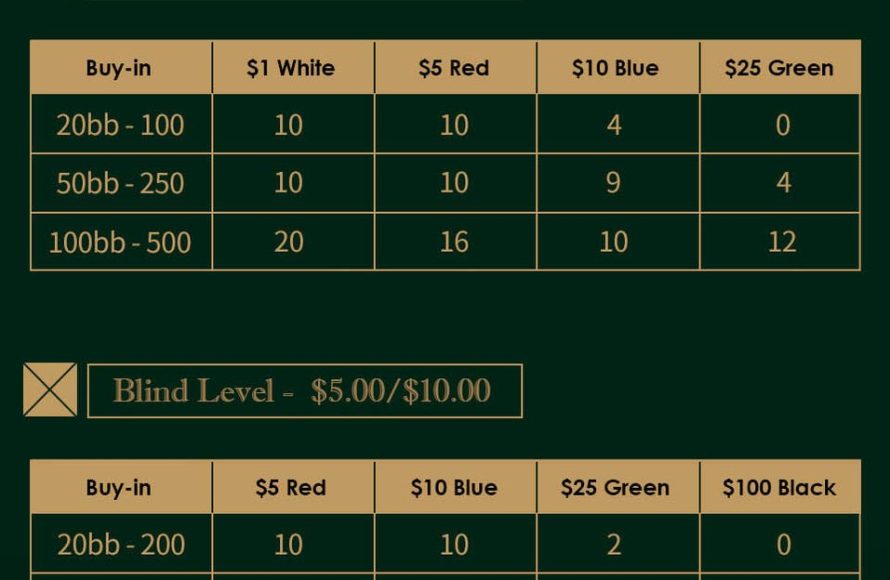
For a typical home poker game with 6-8 players, a set of 300-500 chips usually provides an adequate supply, allowing for varying betting levels.
Ever found yourself staring at a mismatched pile of pennies and wondering if you have enough for your poker night? Figuring out how many chips for a poker game can feel like a puzzle, especially when you want to avoid constant re-buys. The right chip count ensures smooth gameplay and keeps everyone engaged.
Too few chips, and the game ends quickly. Too many chips, and it can get confusing. So, understanding the ideal number becomes very important for a fun and well-paced game. Let’s dive into how many chips you need for the next poker night.

How Many Chips for a Poker Game?
Deciding how many poker chips you need for a game can feel like a big puzzle. It’s not just about having enough chips; it’s about making sure everyone has a fair chance to play and that the game runs smoothly. Too few, and you’ll be stuck making lots of change. Too many, and it can get confusing. Let’s figure out the right amount together!
Understanding the Basics of Poker Chip Sets
Before we dive into the numbers, let’s talk about what makes up a poker chip set. Usually, they come in different colors and values. This is important because each color represents a different amount of money. Think of it like coins – pennies are worth less than quarters. It’s the same with poker chips!
A standard set often includes:
- White Chips: Usually the lowest value (like $1).
- Red Chips: A mid-range value (like $5).
- Blue Chips: Often higher than red (like $10 or $25).
- Green Chips: Even higher value (like $25 or $100).
- Black Chips: The highest value in most standard sets (like $100 or $500).
Sometimes you might see other colors like yellow, orange, or purple, depending on the specific set. The key is that everyone playing knows what each color is worth.
Factors That Influence the Number of Poker Chips Needed
Several things affect how many poker chips you’ll need. Let’s explore them:
Number of Players
This is a big one! Obviously, the more people playing, the more chips you will need. A two-player game will need far fewer chips than a ten-player game. It’s like making cookies – you need more ingredients when you’re baking for a bigger group.
Type of Poker Game
The kind of poker you’re playing also matters. A casual game with low bets will need fewer chips compared to a high-stakes game. Games like Texas Hold’em are more fast-paced with frequent betting, where as a game of low limit poker with small betting amounts will not need a large quantity of chips.
Cash Games
In cash games, the chips directly represent money. Players can buy in again if they run out. Therefore, you’ll need enough chips so that players can rebuy in game. For this type of game, having a large quantity of chips is necessary, so players aren’t always waiting for the dealer/host to make change.
Tournament Games
In tournaments, players start with a fixed number of chips, and they can’t buy more during the game. You need fewer chips per player, but you’ll need to figure out how many to start each player with so that it will last throughout the game.
Chip Values and Starting Stacks
The value of your chips and the size of each starting stack plays a very important part. If you’re using $1, $5, and $25 chips, a player will need a larger stack than if you are using $5, $25, $100 chips. Deciding the correct chip breakdown ensures that players can make the different bets they need to. It is important to think about this when deciding the right amount of chips for each person to start with.
Re-buys and Add-ons
Will you allow players to buy back in if they lose all their chips? Some games allow this, especially cash games. If so, you’ll need to prepare for having extra chips on hand.
Calculating the Ideal Number of Chips Per Player
Let’s get down to the math. A good rule of thumb is to have at least 30-50 chips per player for a casual game. For tournaments, this number might be slightly less as the re-buys and add-ons are not always applicable.
A Basic Starting Stack
For a standard cash game, a good starting stack could be:
- 20 White Chips: Lowest value, good for small bets and blinds.
- 15 Red Chips: Mid-range value for average bets.
- 10 Blue Chips: For larger bets and raising the stakes.
- 5 Green chips: For higher bets or when you’re feeling confident.
- 2 Black chips: For big bets or a single large bet.
This is just a general example, you can adjust these depending on the game you are playing and the chip values available to you.
Adjusting for Different Stakes and Game Types
Remember, the number of chips you need is a starting point. Here are some ideas on how to adjust for different games:
- Low-Stakes Games: You might need fewer high-value chips and more lower-value chips.
- High-Stakes Games: You’ll need more high-value chips so players don’t run out quickly.
- Tournament Games: Start with a set amount, like 1,000-2,000 points, and use more low value chips at the start so that players can bet easily. Gradually increasing the value of the chips during the game will be important to make a tournament last.
Specific Examples
Let’s look at some examples to make things clearer.
Example 1: Casual Home Game (6 Players)
For a casual home game with six players and a $0.25/$0.50 blind structure, you could start each player with a stack like this:
- 15 White Chips ($0.25 value): Total: $3.75
- 10 Red Chips ($1 value): Total $10.00
- 5 Blue Chips ($5 value): Total $25
- 2 Green chips ($20 value): Total $40.00
This will equal an amount of $78.75 per person, making the amount of chips needed per color of chips as follows:
- 90 White Chips
- 60 Red Chips
- 30 Blue Chips
- 12 Green Chips
This is a total of 192 chips to play a game between 6 players. It is always better to have extra chips to allow re-buys or for players who might want to increase their chip count.
Example 2: Friendly Tournament (8 Players)
For a tournament with eight players, you might start each player with 1500 points worth of chips, using a system where 1 white chip = 5 points, 1 red chip = 25 points and 1 blue chip = 100 points. You could distribute the starting chips as follows:
- 60 White Chips (5 points each): Total: 300 points
- 30 Red Chips (25 points each): Total: 750 points
- 15 Blue Chips (100 points each): Total: 1500 points
This is a total of 105 chips per person, making the amount of chips needed per color of chips as follows:
- 480 White Chips
- 240 Red Chips
- 120 Blue Chips
This is a total of 840 chips for the tournament. Again, having a few extra in each denomination is always best for games such as these.
Example 3: High-Stakes Cash Game (4 Players)
For a higher-stakes game with four players, you would want to use chips with higher denominations. If the smallest chip is worth $5, you might want to distribute chips like this:
- 15 Red Chips ($5): Total $75
- 15 Blue Chips ($25): Total $375
- 10 Green Chips ($100): Total $1000
- 5 Black Chips ($500): Total $2500
This would equal an initial buy in of $3950. If you have 4 players with this kind of buy in, you will need the following amount of chips.
- 60 Red Chips
- 60 Blue Chips
- 40 Green Chips
- 20 Black Chips
This is a total of 180 chips to start off the game. In this type of game, it is crucial to have extra chips available as the buy-ins can be high.
Tips for Managing Your Chips
Once you know how many chips you need, here are a few tips for keeping things organized:
- Chip Trays: Use chip trays or cases to keep your chips neatly organized.
- Clear Denominations: Make sure each color and value is clear, and be consistent with the values you are assigning each chip.
- Regular Counts: Take time to count chips in between hands so that there is no confusion with the amount each player has.
- Backup Plan: Always have some extra chips. It’s better to have too many than not enough.
- Chip Etiquette: Teach players good habits like making stacks in even piles so the totals are easier to see.
Special Situations and Considerations
Large Games with Many Players
If you’re having a really big game, you might need more than one set of chips. This will help ensure you have enough for everyone. If you don’t have enough chips, you can assign the chip values to a lower value. As long as all players are aware of the different values of the chips being used, it doesn’t matter if you are using 5c and 25c or $5 and $25, as long as you have enough to get the game running.
Custom Chip Sets
If you have custom chips with specific values, make sure they match the game you’re playing. You need to have a clear explanation for every player so they know the chip values. Making a cheat sheet with the values can be a good way to make sure all players are clear on the values.
Using Different Colors and Designs
Poker chips have many different colors and designs. It is good to have different colours and to stick to standard value amounts to prevent any confusion with your home games. This can make it much easier for all players to understand the amount they have in front of them.
Calculating how many chips you need for your poker game is not as hard as it first appears. When you use the rules above and adapt them to your own games you can make sure you have a successful and fun poker game for all players.
How to Count Poker Chips | Poker Tutorials
Final Thoughts
Determining chip counts greatly impacts your game. For a casual game with 6-8 players, 300-500 chips suffice. Remember, denominations should allow for small and large bets. Consider each player’s buy-in amount when setting chip values.
A tournament setup requires more chips than a cash game. A larger starting stack means you need a greater number of chips per player. Ultimately, the correct ‘how many chips for a poker game’ depends on the structure you want and the number of players you have.

