
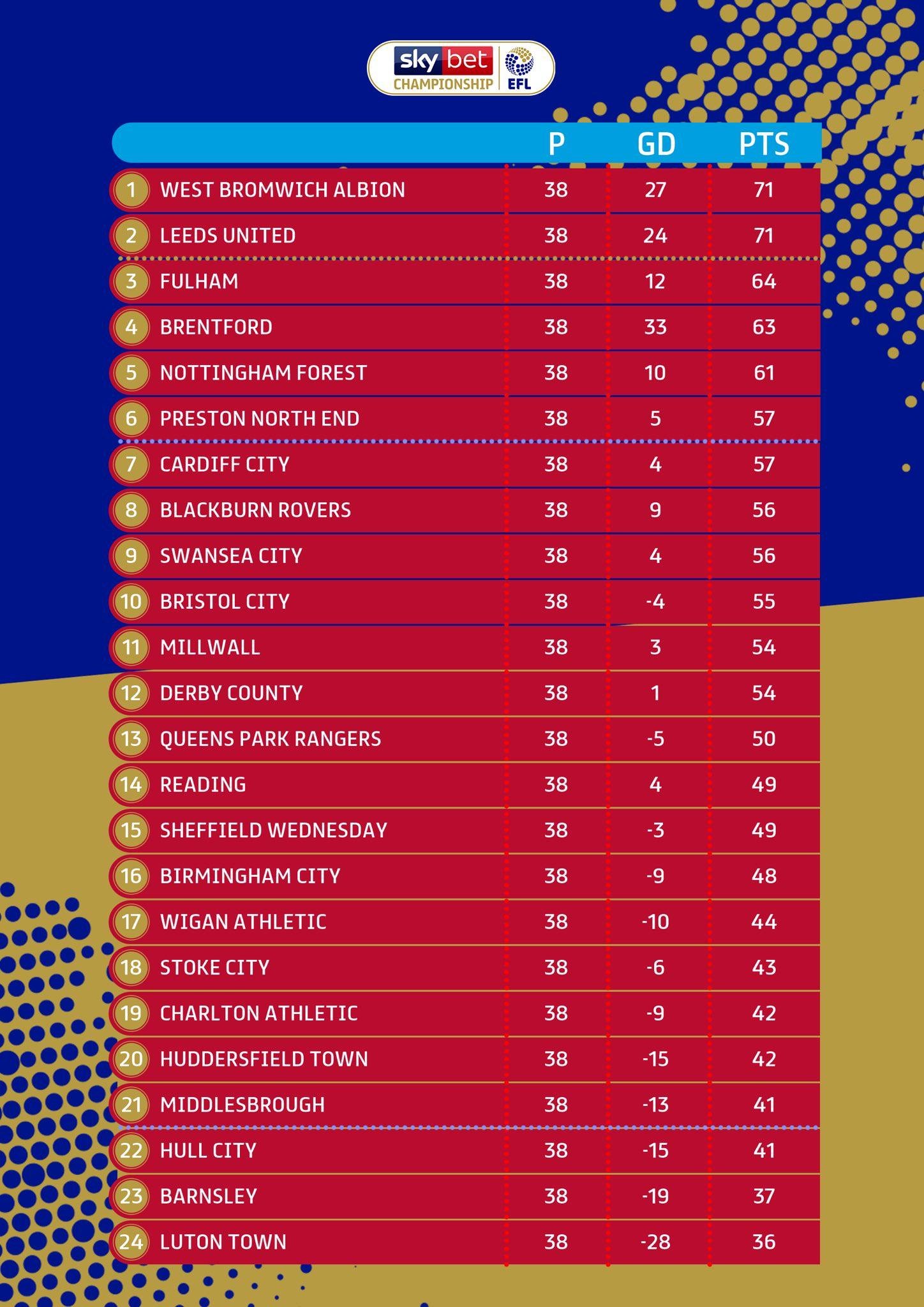
There are 46 regular season games in the Championship, plus play-off matches for the top teams.
Ever wondered about the sheer volume of football played in the second tier of English football? It’s a demanding league, full of action and twists, but how many games are in the Championship? Fans often find themselves pondering this question as the season progresses.
The number of matches can seem overwhelming, especially when compared to shorter leagues, yet the championship keeps fans captivated until the very end. With so many games, it’s no surprise the league is known for its unpredictability.

How Many Games Are in the Championship?
So, you’re a fan of the Championship, and you’re wondering how many games there are in a season? Well, you’ve come to the right place! It’s a pretty straightforward answer, but let’s dig into the details to make sure we understand everything. Knowing how many games each team plays helps us follow along with the standings, predict who might get promoted, and figure out which team might be fighting to stay in the Championship League.
The Basics: A Full Championship Season
In a standard Championship season, each team plays a total of 46 games. That’s a lot of football! But how do they come up with that number? Well, the league is structured in a way that ensures every team gets to play each other twice – once at their home ground, and once at the opponent’s ground. This is called a “home and away” system. This means that in order to calculate total number of game in championship, you must first know the number of teams. There are 24 teams in the English championship league. Each team plays other 23 teams twice each (once at home and once away). So, you just multiple 23 by 2, which results 46. This simple rule gives the result, that each team in Championship plays 46 games.
The Home and Away System
The beauty of the “home and away” system is that it keeps things fair. Playing at home gives a team an advantage, with the support of their local fans. So, having every team play each other both at home and away even the playing field. It creates a balanced schedule where each club faces the same challenge of travel and the same benefits of home crowd. Let’s think about it like this: if your favourite team, let’s say, “Team A” plays “Team B,” they’ll first play on Team A’s field, and then later in the season, they’ll play again on Team B’s field. It’s that simple!
Breakdown of the 46 Games
Let’s make this even clearer. Imagine a big calendar of Championship games.
- Each team has 23 opponents.
- Each opponent will be played twice.
- This means every team will play 23 home matches and 23 away matches.
- This means each team plays a grand total of 46 games in the Championship season.
The Championship League Table: Keeping Track
As the season moves on, all of these 46 games make up the Championship league table. This table is super important because it shows how well each team is doing. Each win will give three points. Each draw will give one point. And of course, if a team loses, they don’t get any points. At the end of the season, the top two teams in the Championship league standings get promoted to the Premier League, which is the highest level of English Football. The teams in places three to six then take part in the Championship playoffs, where they get a second chance to fight for a place in the Premier League. The bottom three teams in the Championship get demoted to League One, the league below the Championship. Keeping an eye on the league table helps to see how many games each team has won, drawn or lost and see where each team will stand at the end of the season, whether for promotion, playoff or relegation.
What Happens If Games Are Canceled or Postponed?
Sometimes, things happen that force a game to be canceled or postponed. Maybe the weather is really bad, or something else occurs that means it’s not safe or possible to play. When this happens, the game will be rescheduled to a later date. This way every team will still get to play their full 46 games. These rescheduled games can sometimes mean a team has to play lots of games in a short period, which can be hard on the players.
The Importance of Knowing the Number of Games
Knowing that each team plays 46 games is very important for many reasons. For one, it gives a clear overview of the challenge each team faces throughout the season. This helps fans in their discussions, whether about a team’s performance, if they’re on course for promotion or if they are in real danger of relegation. Let’s take a look at few more ways that the number of games matters:
- Fairness: With 46 games, it is a balanced system that allows each team to prove their strength over the season.
- Planning: Teams can plan their season, strategize for each game and know what they are looking at in terms of their training schedules.
- Fan Engagement: Knowing the number of games helps the fans to follow the league. Fans can anticipate matches, attend games, and follow their team more closely.
- Player Fitness: Managing player fitness throughout a 46-game season becomes a vital part of the strategy.
- League Table: The points from each game decide where a team stands on the league table.
The Championship Play-offs: A Few Extra Games
We talked about the regular 46-game season. But what about the play-offs? After the 46 regular season games, the teams who finished 3rd to 6th in the league take part in an additional series of matches. The teams are paired according to their final league position. Third place plays sixth place and fourth plays fifth. They play each other twice, once at home and once away, much like a regular season game. The winner of these two matches proceed to the final. The final is just one game. So, teams participating in the play-offs play at least two more games, and maybe even three if they reach the final. These playoff games are a high-stakes affair with the ultimate reward of promotion to the Premier League for the winner. These games are not part of the regular 46-game season.
Playoff Game Breakdown:
Here’s a breakdown of how the play-off games work:
- Semi-Finals: The 3rd place team plays the 6th place team and the 4th place team plays the 5th place team in a two-legged tie (home and away). This means a team could play two play-off games.
- Final: The winners of each semi-final tie then meet in a single game (one match at Wembley) to determine who will get promoted. This adds one more game on top of the two from the semi-final stage.
Impact of the Game Schedule
The 46-game season can be tough, as it can put physical and mental pressures on the players. These are highly competitive games, with most of them being close. This can result in injuries, fatigue and can affect the team’s performance at times. The schedule has a number of effects on all the clubs. Here are few impacts:
- Player Rotation: Teams often rotate their players to ensure no one gets too tired.
- Squad Depth: Clubs need a strong team to ensure there is cover for injuries or suspensions.
- Travel: Teams need to travel all over the country for away games, which adds more stress on them.
- Strategy: Managers need to come up with different strategies to get positive results.
- Fan Support: Regular games mean that fans have to support their teams throughout the season.
Understanding the Championship Calendar
The Championship season usually starts in August and ends around May. This means that there are almost 10 months of matches. The games are usually played on weekends, but there are many mid-week games as well. The holiday season is very busy with lot of matches. This calendar ensures each team gets their 46-game regular schedule plus extra play-off matches that are on top of the 46-game schedule.
So, there you have it! The Championship is full of excitement, drama, and 46 regular season games per team. Each game has a huge impact on where the teams stand in the league. You also have the play-offs that determine the last team to get promoted to the premier league. We hope this has answered all of your questions about how many games are in the Championship.
How Many Games In A Championship Season? – The Racket Xpert
Final Thoughts
The championship series typically includes a set number of matches. Determining how many games are in the championship depends on the specific sport or competition. A best-of-seven format is quite common, where the first team to win four games takes the title.
However, other formats exist. Some championships use a single elimination bracket. In this case, only one game per matchup occurs. So, the answer to how many games are in the championship must be assessed each time.

