
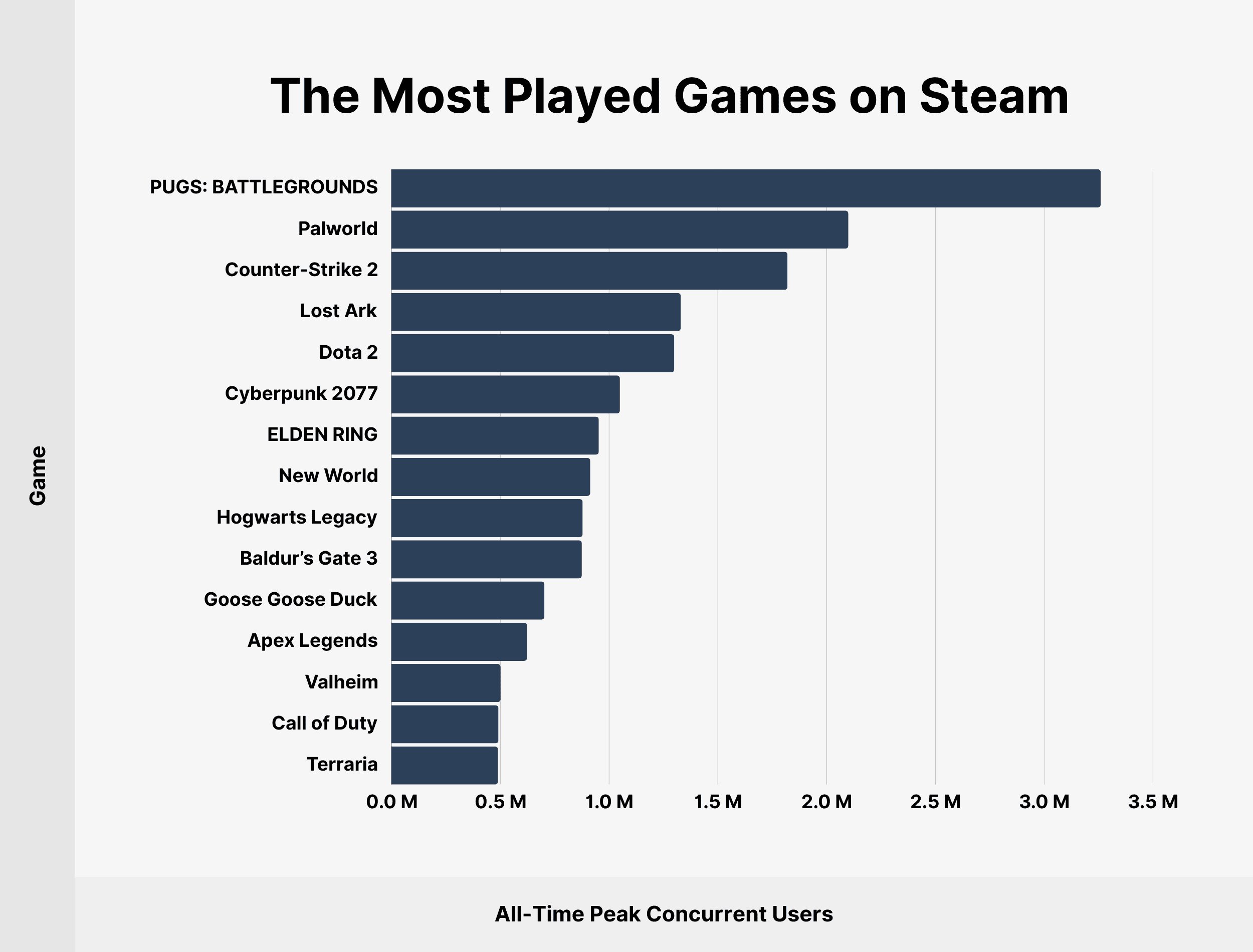
There are currently over 50,000 games available on Steam.
Ever wondered about the sheer size of the gaming world on PC? People often ask how many games are on Steam. It’s a question that speaks to the platform’s vast library and variety.
The platform has grown rapidly since its inception. Now, there’s an incredible array of titles. From indie darlings to AAA blockbusters, it caters to every gamer’s taste.

How Many Games Are on Steam?
It’s a question that pops into the minds of many gamers: just how many games are actually on Steam? It feels like there are endless choices, and honestly, you wouldn’t be wrong for thinking that. The number is quite large, and it keeps growing all the time! Let’s dive into the fascinating world of Steam and figure out just how many games you can find there.
The Ever-Growing Library
Steam is like a giant digital store for video games. Think of it as a huge, super-powered library, but instead of books, it’s filled with games. From exciting action games to brain-bending puzzles, and everything in between, it’s a place where players from all over the world come to find entertainment. The important thing to know is that the number of games on Steam isn’t fixed; it’s constantly changing as new games are released and sometimes, older ones might disappear. So, getting an exact number is a bit like trying to count all the stars in the sky – it’s a huge number and always moving!
Current Estimates of Steam Game Count
While there’s not a single, official ticker that shows the exact game count, we can look at some very reliable sources. Based on recent data and analysis from various tracking websites and industry experts, there are well over 50,000 games available on Steam. That’s a really, really big number! It means there are literally thousands of different worlds, stories, and challenges waiting to be explored.
It’s important to remember that this number is an estimate, and it fluctuates quite a bit. New games come out daily, which means that every week, the count jumps up. Also, some very old games, or titles that are no longer supported, might be removed. Think of it like a busy marketplace where new products are always arriving and some old stock gets taken away.
Why is the Number So Huge?
You might be wondering, “How did Steam get so many games?” That’s a great question! There are a few reasons for this massive collection:
Open Platform: Steam is very open to game developers. This means that anyone, from big game companies to small, independent creators, can put their game on Steam. This attracts a lot of variety and unique ideas.
Digital Distribution: In the old days, you had to buy games on disks or cartridges. Steam allows people to download games right to their computers, which is so much faster and easier. This makes it simpler for game makers to share their games with a huge audience.
Global Reach: Steam has players all around the world, and it offers games in many different languages. This attracts more developers who want to show their creations to a global market.
Indie Game Scene: A lot of the games on Steam are made by smaller, independent developers – often called “indies.” They often make really creative, fun, and unique games, adding a lot to Steam’s diverse collection.
Early Access: Steam provides a program called “Early Access”. This allows developers to release games before they’re fully complete, offering players the opportunity to try out a game in its early stages. As a result, many games launch initially in this format and eventually get fully released.
The Impact of Indie Games
Indie games have really helped boost the number of games on Steam. These smaller games can be made by individuals or small teams of people. They often have unique stories and gameplay styles you don’t see in bigger titles. The best thing is that they add a lot of different styles and fun to the entire gaming landscape.
Breaking Down the Game Categories
With so many games, it’s important to see how they’re split up. Steam has games of all kinds. Here are some major categories:
Action: These are fast-paced games where you often shoot, fight, or jump around a lot.
Adventure: In these games, you explore new places, solve puzzles, and go on big quests.
Strategy: These games require planning and smart thinking to win. Think about moving troops around or building cities.
Role-Playing (RPG): In these games, you play as a character and often go on quests, grow stronger, and shape your own destiny.
Simulation: These games allow you to experience things like driving a truck, running a farm, or even flying a plane.
Sports & Racing: If you like playing or watching sports, these games put you in the game.
Puzzle: These games make you think and solve tricky problems to move to the next level.
Casual: These games are often very easy to play and relaxing, like puzzles or simple clicker games.
Multiplayer: These are games that you can play with your friends or other players online.
This is just the tip of the iceberg, though. There are other categories and lots of crossover between them. Many games have parts of multiple types mixed together! This huge variety is what makes the game collection on Steam so exciting.
The Variety Within Each Category
It’s amazing how different games can be even inside the same category. For example, within the ‘Action’ category, you might find games with swords and shields, or games with guns and spaceships. There are even different kinds of ‘Puzzle’ games, like some that have you move tiles around, and others where you need to figure out a mystery. The variety is truly incredible, and there are games on Steam for nearly every type of player!
How to Find Games You’ll Love
With so many options, it can feel overwhelming! How do you pick a game when there are over 50,000 to choose from? Here are some ways to help you:
Steam’s Search Bar: Use the search bar to type in exactly what you’re looking for, like a specific genre or game title.
Browse by Categories: Look through the categories mentioned above to find the kind of games you enjoy most.
User Reviews: See what other players have said about a game. You can read reviews that tell you how good it is and if there might be any issues.
Steam Curator: This is where groups of people or even individuals are allowed to make recommendations of games they like. This is a great way to find new games and discover games that are popular and interesting.
Friends’ Recommendations: Check to see what your friends on Steam are playing. They might have discovered some gems that you’d like too.
Wishlists: Keep track of games that look fun by putting them on your wishlist. You’ll be notified if they go on sale, and you won’t forget about them.
Steam Discovery Queue: Let the algorithm recommend games to you. It will look at games that you have played in the past and then show similar games.
Steam’s Sales: Keep an eye out for sales where you can buy awesome games for less.
Utilizing User Reviews and Ratings
It’s very smart to read what other players have to say before buying a game. Most games will have a section where players can write their opinion of the game. Many times you can get an idea of what the game is like and whether it has any issues from the review section. User reviews are also a great source to determine if a game has a lot of replay-ability, meaning if you can play it over and over again.
The Future of the Steam Library
The number of games on Steam will keep growing. More and more developers are making incredible games, and more people are discovering the joy of gaming. We will likely continue to see an increase in the number of titles offered, and perhaps the introduction of new and creative ways for players to discover all of them. Steam is committed to connecting gamers and game creators, and it’s very likely it will remain a huge platform for years to come.
Emerging Trends in Game Development
It will be very exciting to watch how games continue to evolve. Virtual Reality (VR) games will likely grow as more people buy VR headsets. We also continue to see more games with cross-platform capabilities, allowing friends on different systems to all play together. Indie games are not going anywhere, either. These smaller teams will always produce amazing new titles that will challenge the traditional norms of gaming.
In conclusion, the library of games on Steam is enormous and continually expanding, offering a wide range of gaming options for everyone. It’s a dynamic platform that not only connects players with engaging games but also fosters a community of developers pushing the boundaries of interactive entertainment. With the platform’s continued growth and the constant influx of new and varied titles, gamers will always have an abundance of worlds to explore and stories to experience.
How to see the Player Count on ANY GAME (Steam 2022)
Final Thoughts
Currently, there are an incredible number of titles available. The precise figure fluctuates often. Valve consistently adds new games.
Keeping an exact count is difficult due to constant updates. However, you can explore a vast catalog. It includes diverse genres and experiences.
Estimates suggest over 50,000 options, but this changes. Understanding how many games are on steam requires constant tracking. The number continues to grow.

