
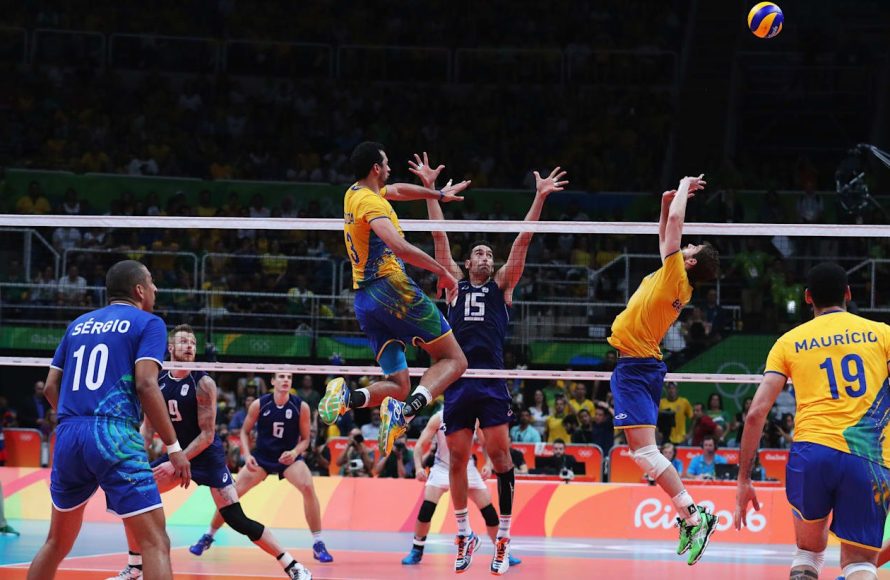
A volleyball match consists of either three or five games.
Volleyball, a fast-paced and exciting sport, often leaves spectators wondering about its structure. A common question is, how many games in a match of volleyball? It’s a simple yet vital piece of information for both casual viewers and dedicated fans.
The number of games differs depending on the competition level. Understanding these variations adds to the appreciation of this dynamic team sport.

How Many Games in a Match of Volleyball?
Okay, let’s dive deep into the heart of volleyball – how many games are in a match! It’s a question that might seem simple at first, but there’s actually a bit more to it than just a single number. The answer can change depending on the level of play and the specific rules being followed. Don’t worry; we’ll explore all the ins and outs together so you’ll be an expert by the end!
Understanding Sets vs. Games
Before we talk about the number of games, it’s important to understand something called “sets.” In volleyball, a match is made up of several sets. Think of sets like individual mini-games that, when added together, make up the whole match. Winning a set is what leads to winning the entire match. So, when someone talks about “how many games” they’re usually referring to “how many sets” make up a volleyball match. It’s common for people to use the words “games” and “sets” interchangeably, but it’s good to know they essentially mean the same thing in this context. Now, let’s figure out how many of these sets are usually in a match.
The Standard Match Length: Best of Five
In most competitive volleyball matches, particularly at the high school, college, and professional levels, teams usually play a “best of five” format. This means that a team needs to win three sets to win the whole match. It’s kind of like a race to three.
What does “best of five” mean? It means the first team to win three sets, no matter the scores in the other sets, is the winner of the match.
Do teams always play all five sets? No, they do not! If one team wins three sets before the end, the match is over. For instance, if a team wins the first three sets, there is no fourth or fifth set. It’s a win in three straight sets.
This best-of-five format adds a lot of excitement. Imagine a team starts strong and wins the first two sets. The other team needs to win the next three sets to win the match, creating a dramatic comeback possibility!
Here’s a simple way to see how it works:
| Scenario | Set 1 | Set 2 | Set 3 | Set 4 | Set 5 | Winner |
|---|---|---|---|---|---|---|
| Team A wins first 3 sets | Team A | Team A | Team A | – | – | Team A |
| Team A wins sets 1, 2 and 4 | Team A | Team A | Team B | Team A | – | Team A |
| Team A wins sets 1 and 2, Team B wins set 3, Team A wins set 4 and 5 | Team A | Team A | Team B | Team B | Team A | Team A |
| Team B wins sets 1 and 2, Team A wins set 3, Team B wins set 4 and 5 | Team B | Team B | Team A | Team B | Team B | Team B |
Variations: Best of Three Matches
While the “best of five” format is very common, some volleyball competitions use a “best of three” format. In this case, a team needs to win only two sets to win the entire match.
When might you see a “best of three” match? You might find this format used in lower-level leagues, friendlies, or when time is a constraint. Also, many beach volleyball tournaments, and sometimes even early rounds of large indoor tournaments, use the best of three format.
What does “best of three” mean? Simply, the first team to secure two set victories wins the entire volleyball match.
Do all 3 sets get played? Just like in a best-of-five format, the match ends when one team wins two sets. This means the third set is unnecessary if a team dominates the first two sets.
Let’s take a look at how a best-of-three match might play out:
| Scenario | Set 1 | Set 2 | Set 3 | Winner |
|---|---|---|---|---|
| Team A wins first 2 sets | Team A | Team A | – | Team A |
| Team A wins set 1, Team B wins set 2, Team A wins set 3 | Team A | Team B | Team A | Team A |
| Team B wins first 2 sets | Team B | Team B | – | Team B |
Understanding Set Lengths and Scoring
Now that we know how many sets are in a match, let’s also take a look at the set lengths and how points are awarded. These scoring rules are important for understanding why the number of sets is set up this way.
Rally Scoring: Keeping Things Moving
Most volleyball games today use what is called “rally scoring”. Rally scoring means a point is awarded on every single rally, no matter which team served the ball. Before rally scoring, only the serving team could win a point. Can you imagine that? Games would take much longer, and often not be as exciting.
Winning a Set: Reaching a Target Score
To win a set in volleyball, a team needs to reach a certain score and win by at least two points.
Standard Score: Typically, the first four sets in a best of five match are played to 25 points. This means a team has to reach at least 25 points to win that set.
Winning by Two Points: But it’s not that simple! You also have to win by at least two points, so a set cannot end 25-24. If the score goes to 24-24, then play continues until one of the teams gains a two-point lead, such as 26-24, 27-25, and so on.
The Deciding Set (5th Set): If there is a fifth set in a best-of-five match (if the score is tied 2-2), the last set is different. The deciding set is only played to 15 points instead of 25, still requiring a two point margin for victory.
Best of Three Sets: In a best-of-three match, all sets are usually played to 25 points with a two point winning margin.
Here is a table to make it easier to understand:
| Set Type | Points to Win | Need a 2-Point Lead |
|---|---|---|
| First 4 sets (Best of 5) | 25 | Yes |
| 5th Set (Best of 5) | 15 | Yes |
| Any set (Best of 3) | 25 | Yes |
Why These Numbers? The Strategic Element
Now, you might be asking, why this specific number of sets and points? It’s not random! There are strategic reasons for both the set formats (best of three or five) and the scoring system.
The best of five format is designed to test the depth and consistency of a volleyball team. A team cannot rely on one good set. It must perform consistently well over several sets to win the game. This gives a complete view of the team’s overall ability.
The best of three format is faster and can allow for more matches within a tournament. It also places a big emphasis on winning a set, where as the best of five is about finding a way to win over the course of the whole match.
Rally scoring ensures that points are won on every play, making the game quicker and more exciting. It eliminates the slower, more tactical play of side-out scoring and makes every play important.
The 25-point target with a two-point advantage creates a balance between a set length that allows for momentum shifts, and also keeps matches from lasting too long. That two point winning margin means that games do not end when either team gets to 25, ensuring the game is fair, and that teams that are close in skill have to fight for a good result.
The 15 point fifth set in the best of five match makes sure that games don’t become too long even if a close match goes all the way. It also keeps the excitement high right up until the end of the last set.
Beach Volleyball: A Slight Variation
Beach volleyball, while sharing core similarities with indoor volleyball, often has variations in the format. Let’s explore the set formats common in beach volleyball:
Best of Three: Beach volleyball typically uses a best-of-three format. This means the first team to win two sets wins the match.
Set Lengths: The first two sets are played to 21 points (rather than 25), and they must be won by a minimum of two points, just like in indoor volleyball.
Deciding Set: The deciding third set, if needed, is played to 15 points (not 25), and still needs a two-point margin of victory to win the match.
Why the differences?: The shorter matches are partly due to the physicality of playing in sand and in outdoor weather conditions, which can be tough. It also allows for tournaments to move more quickly.
Youth Volleyball and Modified Rules
Often, when younger children are learning to play volleyball, modified rules and set formats are introduced to make it simpler, more manageable, and better suited for their age and skill level. These are some things you may see.
Shorter Set Lengths: The point total to win a set might be reduced to allow for shorter game lengths. You might see sets played to 15 or 21 points.
Best of Three Matches: Often the best of three sets will be used instead of the best of five matches to keep the time manageable for young players.
Simplified Rules: Other simplified rules will be incorporated to make the game easier to understand and to learn for the beginner players.
Emphasis on Learning: The focus will be less on competitive winning, and more on understanding the rules and having fun with the sport.
Keeping it all in Perspective
So, as you can see, the answer to the question “how many games in a match of volleyball?” isn’t just one number. There’s a fascinating mix of best of three and best of five formats, standard and shortened sets, and a variety of unique rules based on playing style or age group.
Understanding the differences can help you better appreciate the strategy, endurance, and fun of the sport. Whether you are watching or playing, knowing how many games (or sets!) to expect keeps you in the action. Keep all of these points in mind, and you will be able to follow the flow of any volleyball match, no matter the level!
The number of games or sets in volleyball is not a fixed number; it changes depending on the level of play and the type of tournament. However, now you should have a solid idea about the differences. Remember, the best-of-five format is common in many competitive settings, but you’ll see best of three matches in different contexts as well. Now go out there and enjoy the game!
This volleyball save is INSANE! 😲 #Shorts
Final Thoughts
A volleyball match usually consists of multiple games. Most competitive matches use a best-of-five format. The first team to win three games wins the match.
Knowing how many games in a match of volleyball is crucial. Some less formal settings may play best-of-three. It is important to understand the specific rules.

