
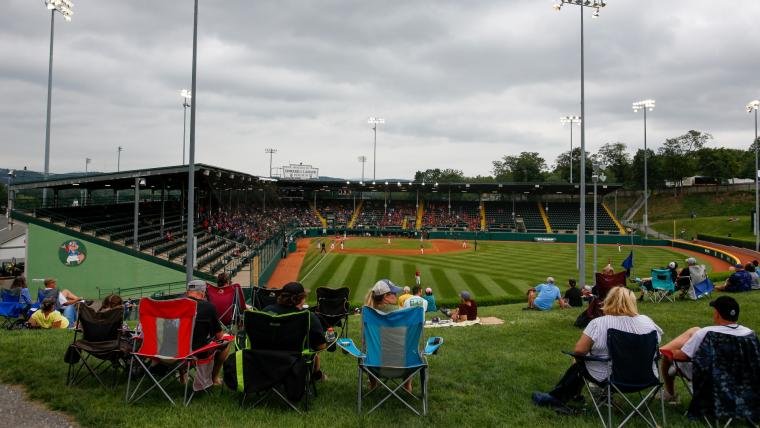
There are six innings in a standard Little League game.
Ever wondered how long those exciting baseball games last? When kids are playing, the length is a little different than the pros. So, how many innings in a little league game? It’s a common question parents and new fans often ask.
Unlike major league baseball, where they play nine innings, the little league version has a specific structure. These rules help keep the games appropriate for younger players. This difference allows more kids to participate, keeping the games engaging and fun.

How Many Innings in a Little League Game?
Okay, let’s dive deep into the exciting world of Little League baseball and figure out just how many innings you can expect in a game! It’s a question that pops up a lot, whether you’re a brand-new player, a seasoned coach, or a parent cheering from the sidelines. While the answer might seem simple, there’s actually a bit more to it than just a single number. We need to consider different age groups and levels within Little League. Get ready, because we’re about to break it all down!
Understanding the Basics: What’s an Inning Anyway?
Before we talk about the number of innings, let’s make sure we’re all on the same page about what an inning actually is. Think of an inning as one complete cycle where each team gets a chance to bat and try to score runs. An inning is divided into two parts: the top and the bottom. During the top of the inning, the visiting team bats, while the home team plays in the field. Once the visiting team makes three outs, it’s time for the home team to bat during the bottom of the inning, while the visiting team takes the field. After the home team gets three outs (or scores enough to trigger the mercy rule in some cases), one full inning is done. It’s a lot like a mini-game within the big game!
The Standard Number of Innings in Little League
For the most part, when you think of a standard Little League game, you’re likely thinking of the divisions where games are usually 6 innings long. This is typical for many divisions including, but not limited to, the Minor League and Major League divisions. This six-inning structure is designed to provide enough playing time without being too exhausting for young players, keeping games reasonably paced.
Typical Divisions and Their Inning Counts
While six innings is very common, it’s not the only standard. Different Little League divisions and age groups have different rules. Here’s a general look:
- Tee-Ball: Usually, Tee-Ball doesn’t focus on innings like other divisions. Instead, they often play for a set time, such as one hour or one and a half hours, or until each player gets an opportunity to bat in an inning. This helps keep the focus on learning and having fun instead of keeping a complex game structure, and it is very important for the very first experience for a young player.
- Coach Pitch/Machine Pitch: At this stage, you might see a shift towards more structured innings. However, these divisions often have time limits as well, meaning they might play a specified number of innings or until a time limit is reached. This is very important at this stage, because it teaches the basics of baseball and prepares young players for more competitive baseball games. Games may run 4-6 innings, keeping the focus on development rather than competition.
- Minor League: This is when things start to resemble standard baseball a bit more, with games generally being around 6 innings long. This is where they are starting to play a standard 6 innings baseball game and is more competitive than Coach Pitch or Machine Pitch level, this league prepares the kids for major league.
- Major League: The Major League division usually also plays 6-inning games. This level is generally the highest level within a local little league, where the kids demonstrate everything they learned over the years in the little league experience.
- Intermediate (50/70): This division which is designed for kids moving towards full sized baseball fields typically plays games with a 7-inning structure, it’s designed to give these players more game experience at the bigger baseball field, where the distance between the base and pitching mound is bigger than previous leagues.
- Junior League and Senior League: These divisions play full length 7-inning games, giving them experiences of playing time at the level of full sized baseball fields.
It’s always a good idea to double-check with your local league for the exact number of innings, as rules can vary slightly from place to place. You can also check the official Little League rulebook or website for specific information.
Understanding Time Limits
While the number of innings is important, time limits also play a significant role in Little League games, especially at the younger divisions. These time limits are designed to make sure the game doesn’t go on forever, and keep kids engaged. The time limits in place also ensures that parents, coaches and kids schedules are not affected greatly due to the long games.
Why Time Limits?
Time limits serve several important purposes:
- Pace of Play: Time limits help ensure games move along at a reasonable pace and prevents long drawn out games that would tire young kids.
- Player Safety: Time limits make sure that young players are not playing for excessive amount of time, this prevent excessive physical exhaustion for these young kids.
- Scheduling: Time limits help maintain a consistent schedule, making it easier to plan games and practices.
How Time Limits Work
Here’s how time limits typically work in conjunction with innings:
- Time Limit Takes Precedence: If a time limit is reached before the full number of innings is completed, the game is stopped at the end of the current inning, or even mid-inning if the time limit hits in the middle of an inning, depending on specific league rules.
- Example Scenario: Let’s say a 6-inning game has a 2-hour time limit. If, after 1 hour and 45 minutes, the teams have only completed four innings, the game will conclude at the end of the fifth inning, or immediately when the time is up even if it’s not the end of the inning.
It’s essential to know both the number of innings and the time limit set by your local league to fully understand the game’s parameters.
Tie Games and Extra Innings
Sometimes, the game is tied at the end of regulation (the standard number of innings). So what happens then?
Tie Games
In many Little League regular season games, tie games are allowed to stand. This can be particularly true if the time limit is reached. However, rules may differ during tournament play.
Extra Innings
If the game is tied at the end of the last inning, and it’s tournament game, or time permits in some leagues, you may see extra innings played to determine the winner. These usually continue until one team is ahead at the end of an inning. However, even in these situations, time limits can sometimes come into play. Here’s what you should know:
- Time Limits Still Apply: Even in extra innings, the game will end if the time limit is reached, possibly ending in a tie during regular season or if the time limit is hit in the middle of the extra inning.
- Rules Vary: Some leagues might implement specific rules for extra innings, such as placing a runner on second base to start each extra inning, to speed up play, and avoid fatigue of the players.
Again, it’s very important to know the local league’s specific rules for tie games and extra innings.
Special Rules: The Mercy Rule
The mercy rule is something you may encounter in a Little League game, so it’s good to be aware of it. This rule is implemented to prevent very one-sided games from going on longer than necessary.
How the Mercy Rule Works
The basic idea is that if one team gets a significant lead, the game might end early, ending the game immediately at that time instead of continuing the game until 6 innings or the time limit is up. The mercy rule number of runs lead can vary depending on the league, and the level of the game, but usually it is 10, 12, or 15 runs.
- Ending the Game: If a team is ahead by a certain number of runs at a specific point in the game, such as by 10 runs after the 4th inning, the game will end right there, meaning that all of the innings do not have to be played out if the score gap reaches the maximum limit as per the mercy rule.
- Purpose of the Rule: The rule is there to prevent unnecessary lopsided games and to protect young players’ morale and safety.
Example of a Mercy Rule
For example, in a league with a mercy rule of 10 runs after 4 innings, if the home team is leading by 11 runs when the visiting team bats in the top of the 5th, the game will conclude at the end of the top of the fifth, because the run differential is over 10, and it reached after 4 complete innings.
Understanding the mercy rule is important, as it can end a game before all innings are played.
Adjustments for Younger Divisions
When it comes to younger kids, especially in Tee-ball and Coach Pitch levels, there are frequently adjustments to make the game more age-appropriate. These adjustments can involve playing for a set amount of time rather than focusing on innings, as well as many other adjustments. Here’s what to expect:
Time-Based Games
Younger divisions often have a focus on playing for a set time, rather than innings. The focus is on fun, learning, and development at this age, more than the competitive structure of baseball. Games are kept shorter so it helps the young kids engage in the game better and keeps them from getting bored with long drawn-out games. Here are the time limits:
- Fixed Time: Games often have a set time limit, such as an hour and half an hour. Once the time is reached, the game ends, no matter how many innings were played.
- Less Focus on Score: The emphasis is often on teaching basic skills and giving everyone a chance to play, rather than just winning.
Adjusted Rules
Adjustments in rules are very common in younger divisions of little league. Here are some common changes:
- No Strike Outs: Kids might have the opportunity to keep hitting until they put the ball in play.
- Smaller Fields: Younger divisions might play on smaller baseball fields, designed for the ability of the smaller players.
- No Stealing: Stealing might be disallowed until the player gets older to keep the game simpler.
The purpose of these modifications is to ensure kids develop a love for the game and learn basic skills without the added pressure of complex rules.
Checking Local League Rules
It’s incredibly important to check with your local Little League to get specific details on innings, time limits, and other game rules. Rules can vary between leagues based on factors such as the level of competition, the age of players, or even simply the preferences of the league. Here’s why it is important:
Why Check Local Rules?
Local leagues often have some flexibility in how they operate and can have specific rules or modifications that they make. Always check the local league rules!
- Slight Variations: Rules may differ slightly from the standard Little League guidelines.
- Specific League Decisions: Local leagues often make their own rules to match their specific needs.
- Up-to-Date Information: Rules can change, so always refer to the current year’s rulebook or league website for the latest information.
How to Find Local League Rules
Here’s where to look for information:
- League Website: Most leagues have a website with game rules, schedules, and contact information.
- League Handbooks: Many leagues provide a handbook with all of the rules for the season.
- Coaches and League Officials: Your coach and league officials are often good sources of information.
By checking your local league rules, you can be sure you have an accurate understanding of the game and can prepare accordingly.
So, while the usual length of a Little League game is around six innings, it is important to be aware of time limits, mercy rules, extra innings, and changes in rules for different divisions, which can all affect the total amount of playing time in a game. Always check with your local league for their specific rules to ensure that you are fully prepared and know what to expect!
How Many Innings Is The Little League World Series? – The Baseball Xpert
Final Thoughts
A standard little league game features six innings. However, this can change based on local rules or time limits.
For younger divisions, the game length might be shorter. These modifications aim to keep the games appropriate for the players. Therefore, ‘how many innings in a little league game’ isn’t always a fixed answer, it’s usually six.

