
Minor league baseball games typically have 9 innings, just like Major League Baseball.
Ever wondered about the length of a baseball game outside the big leagues? You might be curious how many innings in a minor league baseball game they play. Well, the structure largely mirrors the top level.
Most minor league contests are indeed nine innings long. This provides a consistent playing experience for both players and fans. The goal is to maintain a standardized format for all levels of professional baseball.

How Many Innings in a Minor League Baseball Game?
Okay, let’s talk baseball! We all know the big leagues play nine innings, but what about the minor leagues? It’s a great question and one that many baseball fans wonder about. The quick answer is that most Minor League Baseball (MiLB) games also have nine innings, just like Major League Baseball (MLB). But, there are a few cool exceptions and things that can make a game a little different. So, let’s dive in and learn all about the innings in minor league baseball!
The Standard Nine Innings
The foundation of almost all professional baseball, including the minor leagues, is the nine-inning game. When you go to see your local minor league team play, you’re typically settling in for a standard nine-inning match. This format is designed to give both teams plenty of opportunities to score runs and showcase their talent. You’ll see the same pattern of top of the inning (when the visiting team bats) and bottom of the inning (when the home team bats) that you’re used to seeing in MLB. The main goal is always the same: score more runs than the other team by the end of the nine innings. This consistency helps young players get accustomed to the rhythm and pace of professional baseball, preparing them for a possible future in the major leagues.
Why Nine Innings?
You might wonder why baseball chose nine innings as the standard. Well, it goes back a long way! In the early days of baseball, there were different rules and lengths, but over time, the nine-inning game became the standard. It was long enough to allow for a good amount of action and strategy, but not so long that it became tiresome for players or fans. The number of innings allows for a good balance of offense and defense and provides a structure that allows for lots of twists and turns. It’s a time-tested format that continues to thrill fans today.
Exceptions to the Rule
While nine innings is the norm in Minor League Baseball, there are a few situations where you might see a game that’s not nine innings. These situations usually revolve around weather, doubleheaders, or special league rules. Let’s check out some common ones:
Shortened Games Due to Weather
One of the most common reasons for a game to be shorter than nine innings is bad weather. Rain, lightning, or even extreme heat can cause a game to be delayed or stopped. If a game is stopped before it becomes an “official” game, sometimes called a “complete” game, the game may be suspended and resumed at a later time. However, if a certain number of innings are played – typically 5 innings, or 4 ½ innings if the home team is ahead – the game will be considered an official game, even if it can’t continue due to weather. A called game is official and the score at the time of the interruption will be the final result. A game called early will be the official final score.
So, how do they decide when to call it?
- Rain Delay: The game is temporarily paused due to rain. The teams will wait to see if the weather clears up.
- Suspended Game: If the weather continues to be bad or the game can’t be finished the same day, the game could be suspended. If an official game has not been played (5 innings or 4 1/2 innings if home team is ahead) the game is continued at a later date to its full 9 innings.
- Called Game: If a game has reached the official game mark but can’t continue due to weather it becomes a “called game” and the score at the end of the last completed inning is final.
Seven-Inning Doubleheaders
Sometimes, to make up for games that were rained out or because of schedule constraints, teams play doubleheaders. In a doubleheader, teams play two games in one day. Doubleheaders were once commonly played at 9 innings each, but in recent years, it’s become increasingly common for these to be seven-inning games, in Minor League Baseball. This decision was made to reduce the physical demands on players on a long day. The rules for doubleheaders are pretty simple:
- Two games are played back-to-back.
- Each game is only seven innings long instead of the standard nine innings.
- It lets teams get all games played in one day for various reasons.
Special League Rules
While rare, there might be certain rules for specific leagues or tournaments that could change the number of innings in a game. This is often seen at lower levels of the minor leagues or in special events. Typically these are not full season rules and are used in specific situations. These variations are used to experiment with rules or meet time constraints. This doesn’t happen very often, but it’s something to be aware of.
Extra Innings in Minor League Baseball
What happens if the game is tied after nine innings? Just like in the Major Leagues, Minor League Baseball games go into extra innings. The goal is to break the tie. But they handle extra innings a little differently in the Minors. Let’s look at these differences in detail.
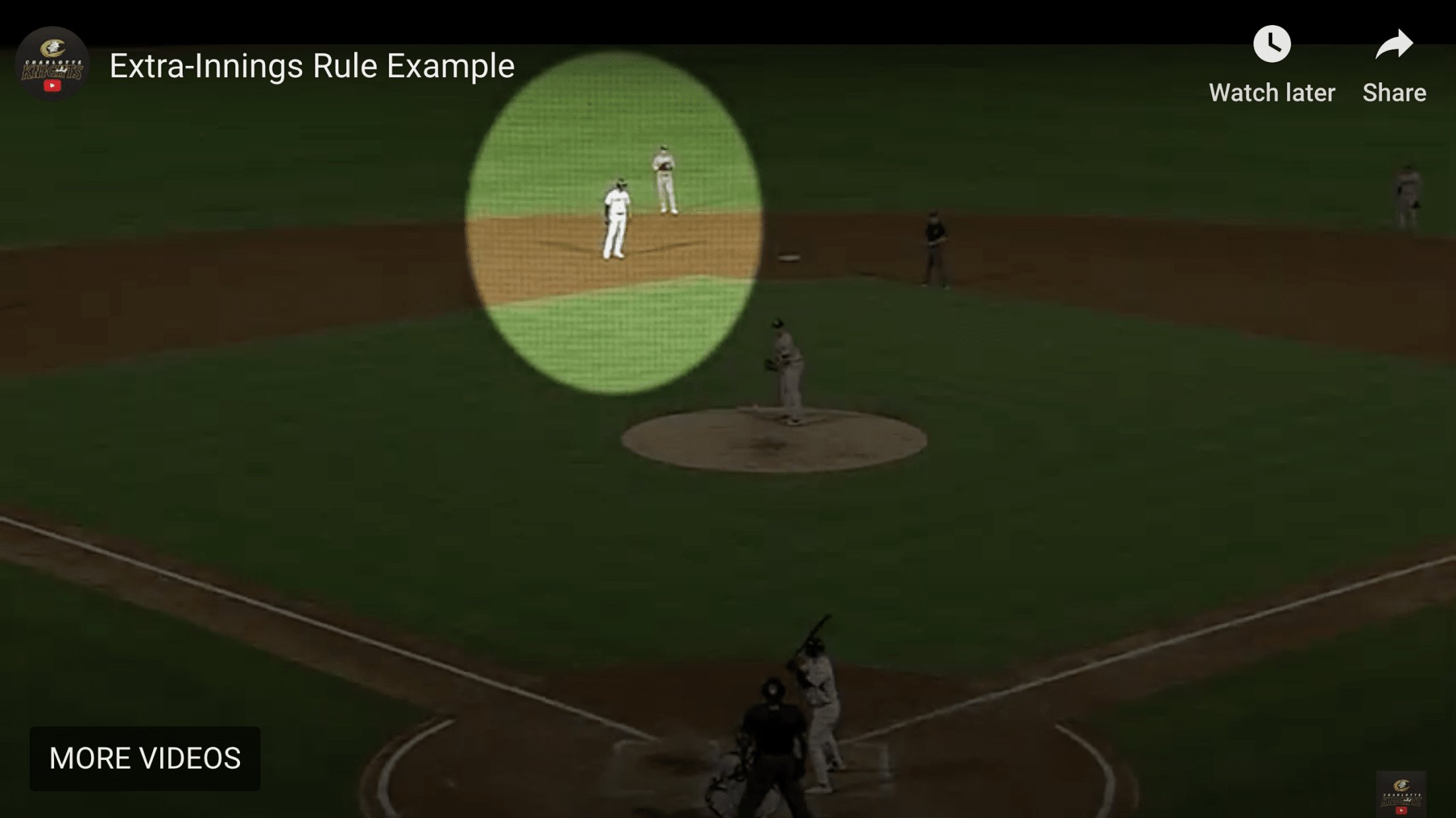
The “Ghost Runner” Rule
A few years ago, a new rule was put in place for extra innings across baseball, but it was implemented first in the Minor Leagues. Instead of starting the tenth inning with the bases empty, a runner is placed on second base to start the inning. This is often called the “ghost runner” rule or the “runner on second rule.” The runner on second base is the player who made the last out in the previous inning. This rule is designed to make the extra innings shorter and more exciting. It also reduces the strain on pitchers. The “ghost runner” helps speed up the end of games. Here’s why they use this:
- Shorter Games: The game doesn’t go on forever. The runner on second makes it more likely a team will score quickly.
- More Action: A runner in scoring position makes the game more exciting with the possibility of a quick win.
- Less Strain on Pitchers: Pitchers are used less when games don’t go on for many extra innings, so it is better for the players.
The Importance of Extra Innings
The extra innings in a game are critical for fans and the players involved. For the players, extra innings can be a chance to show their skills under pressure. For fans, these innings are packed with drama and anticipation. The “ghost runner” rule enhances the excitement of the extra innings, making it more thrilling. These extra innings can be a memorable part of the baseball game.
Why the Rules Are Important
Understanding the rules of baseball, including how many innings are played, is essential for enjoying the game fully. Each aspect of the game – the number of innings, the rain rules, and the “ghost runner” rule – is there to make the game fair and exciting. It’s beneficial for fans and players to understand these guidelines. Understanding these rules will help in getting the whole experience of baseball.
Player Development and Consistency
The rules in the minor leagues are designed with player development in mind. By mostly sticking to the nine-inning standard, young players develop the stamina, mental focus, and consistency necessary to play professional baseball. The minor leagues prepare the players for every level of baseball and the standard rules help them understand the game better. Players will be ready for the big leagues because of the consistent structure.
Fan Engagement
Fans are more engaged when they understand the game and are aware of any possible rules. Being aware that the game is usually nine innings, except for specific situations, helps fans understand when the game will end or why it may end sooner. It also helps them understand the excitement behind extra inning games and the reason for the “ghost runner” rule. These rules make for a better fan experience. If the fans know the game well, it makes the experience more enjoyable for everyone.
Minor League Baseball: More Than Just a Game
Minor League Baseball provides a pathway for players to reach the Major Leagues. The consistency and structure of the game are essential for the development of young athletes. Understanding the rules, including how many innings are in a game, enhances the enjoyment for both fans and players. The different circumstances surrounding game length also make it interesting for all involved.
In summary, while most Minor League Baseball games are the standard nine innings, there are some variations due to weather, doubleheaders, or special rules. It’s a good idea to know all the rules that are there and why they are there. Understanding these rules makes the game much more fun for all fans. So, the next time you go to a minor league baseball game, you’ll be prepared to understand what’s happening on the field, no matter what the situation.
How Many Innings In Minor League Baseball? – The Baseball Xpert
Final Thoughts
Minor league baseball games generally consist of nine innings, same as major league contests. Some leagues or specific circumstances might introduce exceptions. These variations usually involve shorter games during doubleheaders or similar situations.
Therefore, when asking ‘how many innings in a minor league baseball game’, the answer is typically nine. Remember to confirm any unique rules for the specific league you are following, to be certain.

