
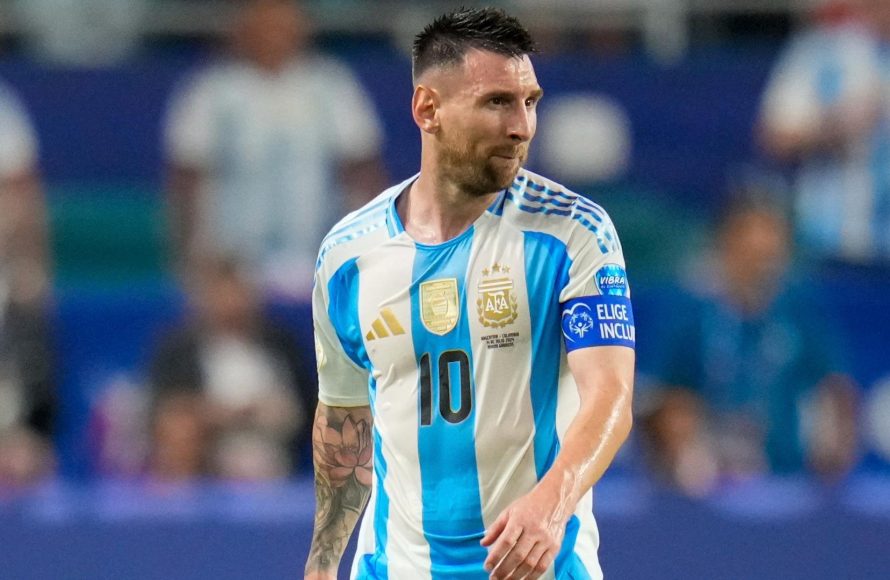
An Olympic soccer game lasts for 90 minutes, divided into two 45-minute halves, with a 15-minute halftime break.
Ever wondered how long those intense Olympic soccer matches actually are? The fast-paced action can leave you breathless, making time seem to fly by. Understanding the structure of the game is key to fully appreciating it.
Knowing how many minutes in Olympic soccer game gives you the foundation to plan your viewing schedule. The standard timing also helps compare it with other soccer competitions. This simple detail allows for better understanding the flow of a match.

How Many Minutes in an Olympic Soccer Game?
So, you’re curious about how long an Olympic soccer match lasts? That’s a great question! It’s not as simple as saying “90 minutes,” although that’s the most common answer. Let’s dive into the details of the game clock in Olympic soccer, and see what makes it tick (or rather, what keeps it running!). We will explore the standard game time, any extra periods that might get added, and other factors which can impact the overall length of the game. Knowing how much time there actually is to play, we can get much better at watching and enjoying the thrill of the soccer competitions at the Olympic Games.
The Standard Game Length: 90 Minutes of Action
At its core, an Olympic soccer match follows the rules set by FIFA (Fédération Internationale de Football Association), which is the international governing body for soccer. This means the standard length of a game is 90 minutes. This 90 minutes is broken down into two halves, with a break in the middle.
Breaking it Down: Two 45-Minute Halves
Just like in a regular professional soccer game, an Olympic soccer match is divided into two 45-minute halves. This means that each team gets 45 minutes to try and score goals, and 45 minutes to defend their goal.
- First Half: The match kicks off and play continues for 45 minutes.
- Half-Time Break: After the first half ends, there is a short break of 15 minutes. This allows players to rest, and coaches to give instructions and make plans for the second half.
- Second Half: Once the break is over, the second 45-minute half begins.
The clock counts upwards from 0 to 45 minutes in each half. The referee is in charge of keeping the time during the match. The referee does not stop the clock when the ball goes out of bounds, or when a player is injured. Instead they add time to the end of each half to make up for those interruptions in playing time. This time is called “stoppage time” or “added time”. We will talk more about that in a bit!
Stoppage Time: Making Up for Lost Minutes
As mentioned before, during a soccer game the ball doesn’t stay in play every minute of those 45 minute halves. Sometimes the ball goes out of bounds, players get injured, or there may be substitutions, which means that there might be some time taken away from the 90-minute of play. That is why “stoppage time” also referred to as “added time” is very important. The referee adds up all these stoppages and adds this time onto the end of the 45-minute half. So the game can be slightly longer than 90 minutes. This stoppage time is not fixed, it will vary depending on the number of delays in the game. If a lot happens during one half, there will be more time added to the end of that half.
Factors Affecting Stoppage Time
Several factors can lead to extra minutes at the end of each half:
- Injuries: If a player is injured during the match and needs attention, time is added to the clock. The longer the injury break, the more time that is added.
- Substitutions: Each team gets to substitute a certain number of players during a game. Each substitution takes some time so the referee adds that time at the end of the half.
- Time Wasting: If a team tries to waste time, for example by taking a long time to take a throw-in or free kick, the referee can add extra time to compensate.
- Other Delays: Any other delays, such as a problem with equipment or the ball, can also lead to added time.
The referee decides how much extra time is needed, and displays the extra minutes on an electronic board held up by the fourth official. So it is not exactly the same, and it varies depending on the circumstances of the game. Stoppage time can add up to 2-3 minutes, or even much longer, especially if there are big injuries or a lot of stoppages.
Extra Time: When a Winner Must Be Decided
Sometimes in the Olympic games, especially during the knockout stages (like the quarterfinals, semifinals, and the final), we need to decide a clear winner. It cannot be a draw. What happens if the score is tied after the standard 90 minutes, including all the stoppage time added to it? Well then, we go into “extra time”.
Two 15-Minute Periods
When a game goes into extra time, it is again, divided into two periods. Each of these periods are 15 minutes long. There is a short break between the extra time halves where players can have a drink.
- First Extra Time Period: Another 15 minutes of play begins.
- Short Break: There is a short break of just a few minutes.
- Second Extra Time Period: If no team has scored in the first 15 minute extra time period, then another 15 minute of play begins.
It is important to note that unlike the standard 45 minute halves, there is no stoppage time added to each 15 minute extra time period. The clock is usually stopped to account for some of the stoppages, which is not the same as stoppage time, but a referee will stop the game for any major stoppages like a serious injury. During extra time, both teams will try hard to get a winning goal to avoid penalties.
Penalty Shootouts: The Final Decider
What happens if the score is still tied at the end of the 30 minutes of extra time? Well, if the match is still a draw after extra time, the winner is decided by a penalty shootout! This is where players from each team take turns trying to score a penalty shot against the opposing goalkeeper. It is a very tense and exciting moment.
How a Penalty Shootout Works
Here is how a penalty shootout normally works in the olympic soccer game:
- Five Penalties Each: Each team takes five penalty kicks, alternating with the other team.
- Most Goals Wins: The team with the most goals after five rounds wins the game.
- Sudden Death: If the score is still tied after five rounds each, they go to “sudden death.” This means that teams continue to take penalty shots until one team scores and the other doesn’t.
A penalty shootout can add anywhere from about 10-20 minutes onto the total length of the game. It depends on how many rounds it takes to decide a winner. It is always exciting to watch, as we see the players try to keep calm under pressure.
So, What is the Total Time for an Olympic Soccer Match?
After taking into account all the different aspects of playing time, we can summarize the different lengths of an Olympic soccer match:
The exact time of an Olympic soccer game will vary, depending on if there is extra time, and how much stoppage time is added. But, we can say that it will roughly fall within these guidelines:
- Standard Game Time: 90 minutes (two 45-minute halves) + stoppage time. This is the minimum a game will last.
- Game with Extra Time: 90 minutes + stoppage time + 30 minutes (two 15-minute extra time halves). This is how long the game will last if it is still a draw after 90 minutes.
- Game with Penalties: 90 minutes + stoppage time + 30 minutes extra time + penalty shootout. This is the longest that an olympic game can last.
So, while 90 minutes is the standard playing time for an Olympic soccer game, it’s important to remember the extra time and possible penalty shootouts. All these elements make the matches interesting, and also much longer to watch!
Keep an eye out for stoppage time because that really is unpredictable! Be prepared to watch the game for over two hours if the game goes into extra time and penalties. The intensity of the game always seems to increase as the clock winds down, so every minute of play is worth watching.
Understanding how long an Olympic soccer match lasts is key to appreciating the game. Remember it’s not just the 90 minutes on the clock – it’s also the added time, extra time, and the possibility of a nail-biting penalty shootout!
How Long Is a Women's Olympic Soccer Game? – The Sport Xpert
Final Thoughts
A standard Olympic soccer game lasts 90 minutes. This playing time divides into two 45-minute halves. Referees add extra time for stoppages during each half. These additions account for injuries and substitutions.
Therefore, ‘how many minutes in olympic soccer game’ is typically 90, excluding added time. This time provides opportunity for exciting plays and memorable moments in the tournament.

