
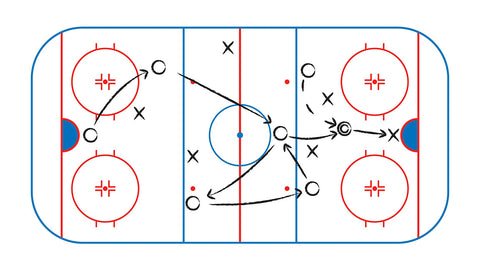
A hockey game has three periods.
Ever wondered how long the action on the ice actually lasts? It’s a common question for both new fans and those wanting a refresher. The basic structure of a match centers around these sections, but how many period in a hockey game are there?
Understanding this fundamental aspect helps you follow the flow of the game. Each period provides a different set of challenges and opportunities for both teams. This structure ultimately contributes to the exciting nature of the sport.

How Many Periods in a Hockey Game?
Alright hockey fans, let’s dive deep into the exciting world of ice hockey and talk about something super important: the periods! Just like in a school day, where you have different classes, a hockey game is split up into different sections. These sections are called periods, and understanding how they work is key to enjoying the game. So, let’s get started and explore everything you need to know about periods in a hockey game.
The Standard Three-Period Format
In most professional and high-level hockey games, like the NHL (National Hockey League), games are played using a standard format of three periods. These periods are the main building blocks of a game. Each period is 20 minutes long, but that’s only when the clock is running. The game clock stops whenever the whistle blows, such as for penalties, goals, or when the puck goes out of play. So even though each period is scheduled for 20 minutes, it can feel much longer. Let’s take a closer look at how it works.
How Long is One Period in Hockey?
As we just mentioned, each period in an NHL, or similar professional hockey game, is 20 minutes long. This refers to actual playing time, not the total time it takes to complete the period. This means that the game clock only runs when the puck is in play. When play stops, so does the clock. The real time spent on one period can be much longer than 20 minutes due to stoppages. These stoppages are due to multiple reasons, including:
- Penalties
- Goals
- Puck going out of play
- Injuries
- TV timeouts
Because of these interruptions, a single period in professional hockey usually lasts between 30 to 40 minutes in real time, sometimes longer.
Breaks Between Periods
After each period, there is a break between the play. In most levels of hockey, these are called intermissions. Typically, an intermission lasts around 15 to 18 minutes in most professional leagues. This break is very important as it gives the players time to rest, hydrate, talk about their game plan, and just generally get ready for the next period. The intermission also allows the ice crew to resurface the ice and remove the grooves created from the skates. This ensures a smooth, level playing surface for the next period.
Why Three Periods?
Why does hockey use three periods instead of two or four? This is a great question! The three-period system evolved over time. Initially, some hockey games had two halves, like other sports. However, it was decided that three shorter periods would provide a better flow to the game. The intermissions allow the players to regroup, and this keeps the game faster paced and more entertaining to watch. It also helps with television broadcast schedules, allowing for more commercial time in between periods. This allows for a consistent pacing that has come to be a hallmark of hockey.
Variations in Period Lengths
While three 20-minute periods are standard for professional and high-level amateur hockey games, the period lengths can be different for youth hockey leagues and other levels. Here are some common variations you might encounter:
Youth Hockey Period Lengths
For younger players, the period lengths are shorter to accommodate their fitness level and attention spans. Common period lengths in youth hockey include:
- 10 to 15-minute periods for younger age groups (U8, U10).
- 15-minute periods for intermediate groups (U12, U14).
- Some older youth leagues might use 20-minute periods, similar to adult hockey.
These shorter periods allow for better development and keep the game fun for younger children.
Differences in Other Leagues
You may also find differences when watching other professional or semi-professional leagues outside the NHL, or when playing in adult recreational leagues. These can vary based on organizational preferences and specific competition rules. In some situations, these might include:
- Shorter periods (15-18 minutes) for some leagues.
- Variations in intermission lengths.
- Potentially a different game structure (like non-traditional formats) if they have an alternative setup.
It’s important to check the specific rules of a tournament or league if you are unsure about period lengths. There is no universal rule. In most cases, the higher the level of play, the more likely it will be standard 20 minute periods.
Overtime and Shootouts
Sometimes, a game is tied after the three regulation periods. In this case, the game can go into either overtime or a shootout depending on the league or tournament. This adds an additional exciting element to the game of hockey. Let’s talk about how it works.
Overtime in Hockey
If the game is tied at the end of the third period, the teams play an additional period, usually referred to as overtime, to decide the winner. In the NHL, overtime in the regular season is played with only three skaters per team. This creates more open ice and more chances for scoring. The first team to score in overtime wins the game, it is called sudden death. The overtime period is five minutes long in the regular season. However, in the NHL playoffs, overtime is different. It uses full 20 minute periods, and each period is sudden death, meaning the first team to score wins the game. There are no shootouts during playoffs in the NHL.
Shootouts in Hockey
If the game is still tied after the overtime period in the regular season, many leagues, including the NHL, then move into a shootout. In a shootout, each team has a series of attempts to score against the opposing goalie. The team with more goals in the shootout wins the game. Each team will select three players to go one by one against the opposing goalie. If the teams are still tied after three attempts, the shootout will go into a sudden death format. Each team will then select players one by one until a winner is declared. It’s a tense and exciting way to finish a game. However, the NHL does not use a shootout during playoff games. Playoff games continue until one team scores, no matter how long it takes.
Key Takeaways About Hockey Periods
Let’s go over the main things we’ve learned about periods in a hockey game:
- Most professional and high-level hockey games have three 20-minute periods.
- The game clock stops during stoppages, so periods can take longer than 20 minutes in real-time.
- Intermissions between periods provide time for rest and ice resurfacing.
- Youth hockey often has shorter period lengths.
- Games tied after regulation may go to overtime and/or shootouts.
Knowing how periods work will help you fully understand and appreciate the flow of a hockey game.
The Importance of Each Period
Every period in a hockey game is important. Each provides opportunities for teams to take control of the game. Here’s a look at the significance of each period:
First Period: Setting the Tone
The first period is often about feeling out the opponent. Teams establish their play style and try to get an early lead. Sometimes, it’s about getting the first shot, and other times, it’s about playing more conservatively. Teams that have a fast start to the first period may carry that momentum through the game. It is very important to establish a good defensive structure and establish the pace of the game. However, if the first period is a slow start, or if one team gets too aggressive, then the other team can take advantage.
Second Period: Adjustments and Strategies
During the second period, teams start making adjustments based on how the first period went. Coaches often will tweak their strategies and make changes to the player lineups or style of play. This is often where you see teams really start to compete as the players get tired. By now, the teams have a much better understanding of each other. It is a crucial period for teams to change the pace of the game and play style. It is important that teams learn to take advantage of each play.
Third Period: The Final Push
The third period is often the most crucial because this is where teams try to secure the win. Teams leading try to maintain their lead, while teams losing often push hard to tie the game. Players may try to play with more effort, and as a result, they may be more prone to mistakes or penalties. Often the third period is the most exciting part of the game to watch. In some cases, it can decide whether a game goes to overtime.
Understanding Game Flow
Understanding the period structure is essential to following the game’s flow. The ebb and flow of play often changes dramatically during each period. In the beginning, players are fresh and the pace of the game is very fast. As the period goes on, players get tired and mistakes are more frequent. There can also be momentum swings during each period, for instance a power play goal might lead to additional goals as the team has more energy. Recognizing how each period fits in the bigger picture will make you a better hockey fan. You can also see the impact that the intermissions can have on a team. Sometimes a team that is playing poorly will get a new boost of energy after a break, and come back out and play better.
Penalties and Power Plays
Penalties are a common occurrence in hockey, and can disrupt the flow of play during a period. If a player commits a penalty, the opposing team gets a power play. A power play means that the penalized player’s team will play with one less player, sometimes two, for a certain time, or until the other team scores. If the team with the man advantage scores, this is called a power play goal. Penalties and power plays can often be very important for influencing the outcome of the game. It is important to understand these rules as they are a common occurrence in the game.
By having an understanding of the importance of each period, you will have a greater appreciation for the game of hockey. You will better understand the strategies that coaches and players use to try and achieve success.
So, there you have it! You are now well-versed in the exciting world of periods in a hockey game. Whether you’re watching the NHL, or a local youth game, understanding the structure of three periods, intermissions, overtime, and shootouts will help you enjoy the game even more. Keep an eye on the clock, listen for the whistle, and most importantly, cheer on your favorite team!
How long is a hockey game?
Final Thoughts
A standard hockey game features three periods. Each period lasts 20 minutes of actual playing time. These periods separate the game into thirds.
The game clock stops when play halts, like during penalties or puck out of bounds. Thus the total game time exceeds 60 minutes. To summarize, how many period in a hockey game? There are three.

