
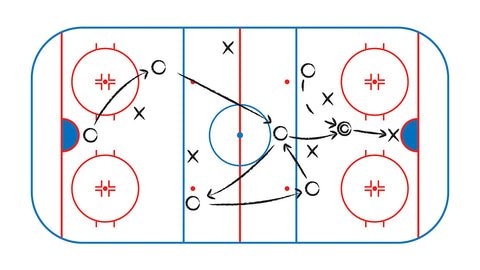
There are three periods in an ice hockey game.
Ever wondered about the structure of a hockey match? It’s a fast-paced, exciting sport, but how exactly is it divided? The question of how many periods are in an ice hockey game is a common one for new fans.
Each period offers a chance to see incredible action on the ice. Knowing the game structure helps you follow the play more easily. These three segments of play are crucial for understanding hockey.

How Many Periods Are in an Ice Hockey Game?
Okay, let’s dive right into the heart of ice hockey. When you watch a game, you’ll see players skating hard, passing the puck, and trying to score goals. But how is the game broken up? The answer is periods! A standard ice hockey game is divided into three main periods, and each of these periods lasts for 20 minutes of actual playing time. That means that if the clock stops because of a penalty, or the puck going out of play, or anything else the clock doesn’t continue ticking away those 20 minutes, that’s why it is called “actual playing time.” It’s not just one big chunk of 60 minutes, but three smaller chunks with breaks in between. Now, let’s get into the details of what this looks like.
The Standard Three Periods
So, the core of every ice hockey game, at least at the professional and major amateur levels, is those three periods. Why three and not four or five? Well, it’s a good balance between having enough time for the action, and allowing players to get rest and regroup. The game is designed this way to make sure the players can give their best performance throughout the game. Think of it like a play with three acts, each as important as the last.
Each period is 20 minutes long, as already mentioned, and the clock only runs while the puck is actively in play. This means that if the game is stopped for any reason, like a player is called for a penalty, or if the puck goes out of bounds, the clock will pause. This is so each team is guaranteed 20 full minutes of play time per period. The standard setup has been a part of ice hockey for many years and ensures a consistent and exciting game to watch.
Breaks Between Periods
After each period, there’s a break. These breaks are really important for the players. They are the best time for players to rest and recharge before going back out onto the ice again. Also, coaches use this time to talk to their players, make any necessary adjustments to their strategies, and get the players set up for the next period.
Here’s what these breaks typically involve:
- Intermission: The break between periods is called an intermission. The first intermission is after the first period, and the second one is after the second period.
- Time: The intermissions in professional hockey, like the NHL, are usually 15 to 18 minutes long. This includes the time it takes for the players to get off the ice and for the Zamboni to resurface it (more on that later).
- Strategy: Coaches use the intermission to discuss strategy and plan for the next period. It’s a crucial time for teams to adapt and improve.
- Player Rest: Players use this time to hydrate, rest, and receive medical attention if needed. It’s a critical chance to recover physically.
Overtime in Hockey: What Happens When the Score is Tied?
Sometimes, a game ends and the score is tied after all three periods. Then things get a little different. That’s when we go into overtime. Overtime is a special extra period that happens only if there is a tie at the end of the regular three periods. The rules of overtime can change depending on what league you’re watching.
Regular Season Overtime
In the National Hockey League (NHL) during the regular season, overtime is a 5 minute period of play. It is played with only three skaters per side, as opposed to the usual five, plus a goaltender. This is called 3-on-3 hockey. The idea of having fewer players on the ice is that this creates more space for players to move and creates more scoring chances. If a goal is scored in overtime, the game is over immediately and that team wins. This kind of overtime also promotes more exciting gameplay. If no one scores during the five minutes of overtime, the game goes to a shootout.
Playoff Overtime
In the NHL playoffs, the overtime rules are quite different. Instead of the 3-on-3 play, the teams will play 5-on-5 hockey. Each overtime period is a full 20 minutes long, just like a regular period. They continue to play overtime periods, one after the other, until a team scores a goal. Because of this sudden-death format, playoff games can sometimes take a very long time. A single playoff game can be much longer than a regular-season game. The game could end at any time with one goal, making it even more exciting and nerve-wracking.
Other League Rules
Rules for overtime can differ depending on the league and even the level of hockey (youth, college, professional). Some leagues might do a different kind of overtime or a shootout right away after regulation. So, it’s always a good idea to know the rules for the specific game or league that you are watching. For instance, many leagues outside of the NHL use a 4-on-4 overtime format, and they may not have a shootout at all. These kinds of variations in the rules keep the game exciting to watch, and they give the players even more chances to use their skills.
Why Have Periods?
You might be thinking why do they even have periods in the first place? It’s a good question. It is because the periods help keep the game fair and enjoyable. Periods aren’t just random breaks in the game they’re there for several important reasons.
- Fairness: Having three periods makes sure both teams have chances with the ice and get adequate rest between shifts.
- Strategy: These breaks are a chance for coaches to re-assess strategies and make crucial changes.
- Physical Demands: The intense skating and physical activity need rest periods. Periods give players time to breathe and recover.
- Entertainment: Intermissions can be more than breaks, they also provide moments for fans to grab snacks or do other fun activities.
The Zamboni and Ice Care
One of the things you will notice during each intermission is that the Zamboni comes out to resurface the ice. A Zamboni is a special machine that smooths out the ice, cleans away the snow and ice shavings, and lays down a thin layer of fresh water that freezes almost instantly to create new, smooth ice for skating on. These Zamboni breaks are very important because they improve the quality of the ice for the players. Without it, the ice would get very uneven and very difficult for players to skate on, or move around very fast. The Zamboni allows the players to glide on the ice at their full potential and ensures a great experience for the audience to watch. It helps keep the game at a high level.
Why Good Ice Matters
The quality of the ice makes a huge difference. Imagine trying to run very quickly on a bumpy road compared to a smooth sidewalk. It’s way easier on a smooth surface. The same is true for ice hockey. Good ice is fast ice, allowing players to glide easily and handle the puck better. When the ice is not properly taken care of, it can get choppy and slow and will impact the game’s pace. Also, poor quality ice can lead to players tripping more easily. That’s why the maintenance of the ice during each period is so important for the players safety and overall gameplay.
Variations in Period Lengths
Most of the time, periods are exactly 20 minutes long. However, there are a few times when you might see the length of a period changed. Typically, the changes are only at the younger levels of the sport.
Youth Hockey
When young kids start to play ice hockey, they don’t usually play full 20-minute periods. The periods are shorter, sometimes 12 or 15 minutes each. They will still have three periods though. This is done so the younger players can focus and learn the game without getting too tired. It also helps with focusing the player’s attention, and makes it an enjoyable experience for them. It’s all about gradually introducing young players to the game.
Other Levels
Even in some adult leagues, or recreational levels, periods might be a bit shorter. Some leagues will often be adjusted to be shorter because of time constraints, or to match the physical ability of the players. But for the major professional leagues, like the NHL, those 20-minute periods are the standard and consistent to ensure the same experience for every player and for the fans in attendance.
The Role of the Clock
The clock is a very important part of an ice hockey game. It keeps track of the time left in each period. The game clock is always visible, either on the scoreboard or on the screens for broadcast, so everyone can track how much time is left. If a penalty is called, or if the puck goes out of play, the clock will stop, and it won’t restart until play begins again. This “stop time” can make a 20-minute period actually last a lot longer than 20 minutes. The importance of this clock management is a strategic element of the game. Coaches and players need to pay attention to how much time is left and adjust their plays accordingly. The timing element of a hockey game adds another layer of thrill and drama to the game.
Penalties and Time
Penalties are a big part of the game. When a player commits a foul, they must sit in the penalty box for a certain amount of time, while their team plays short-handed. The time varies according to the penalty, from two minutes for minor infractions, to five minutes for major penalties, to even a game misconduct if the infraction is very severe. However, while the clock does stop for a minor penalty, the time in the box runs concurrently with the game clock. So if there are 1:40 remaining in the period, the penalized player will be back on the ice 20 seconds into the next period. This also adds a layer of excitement and strategy to the game. When a team is playing with fewer players, the other team has an advantage. They have one more player on the ice to try and score a goal, which is called a powerplay. Players need to be careful not to commit too many penalties, otherwise the team may end up losing the game.
The Importance of Understanding Periods
Understanding how many periods are in ice hockey game is really crucial to understanding and enjoying the game. The way that hockey is designed, the periods, the breaks, and the overtime rules add a lot of complexity and thrill. Every game is an event, it is not just a straight 60 minutes of gameplay. The three 20 minute periods, the intermissions, the overtime rules, the Zamboni – all of these parts are important to how the game is played and how it is enjoyed. When you understand all the components of a hockey game, it makes the experience of watching it even more exciting. So next time you watch a hockey game, keep these things in mind!
In the world of ice hockey, these three periods of action set the stage for everything, from the strategies teams use to the excitement the fans feel. These periods aren’t just arbitrary divisions of time; they’re the foundation of the game and bring an organized and strategic structure to the action of this fast-paced sport. So now, you know the ins and outs of those three important periods.
How Many Periods In Ice Hockey? (Explained)
Final Thoughts
An ice hockey game consists of three periods. Each period is 20 minutes long. These periods are separated by intermissions, giving players a rest. The game’s structure is pretty consistent at all levels.
The number of periods remains constant, regardless of the league. This helps create a familiar rhythm. So, when people ask, “how many periods are in an ice hockey game?”, the answer is always three.

