
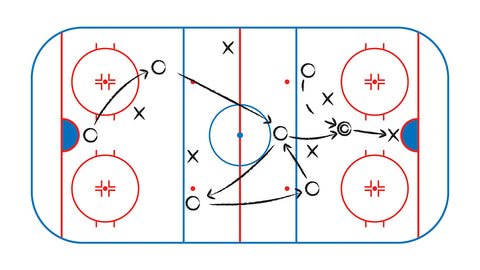
There are three periods in an NHL game.
Ever wondered how long the action lasts on the ice? It’s a question many new hockey fans ask. Understanding the structure of a game is crucial to enjoying the fast paced action.
One common question is how many periods in an NHL game? The answer is a standard three, each lasting 20 minutes of playing time. These periods are separated by intermissions, providing a break for the players.

How Many Periods in an NHL Game?
Okay, let’s get right to it! If you’re wondering how many periods are in a regular NHL (National Hockey League) game, the answer is always three. That’s right, every standard NHL game is broken up into three separate chunks of play, which we call periods. Each of these periods is 20 minutes long, but there’s much more to the story than just that simple fact. Let’s dive in and explore what makes up a complete NHL game, from start to finish.
The Structure of an NHL Game
So, you know there are three periods. But how does it all work? Think of it like a play with three acts. Each period has its own start and end, and there are breaks in between to give players a chance to rest, strategize, and get ready to go again.
The Twenty-Minute Periods
As I mentioned earlier, each period in an NHL game lasts for 20 minutes of actual playing time. But what do we mean by “actual playing time?” Well, the clock only runs when the puck is in play. So, if the puck goes out of bounds, a penalty is called, or the referee blows the whistle for any reason, the clock stops. This means that a standard 20-minute period in hockey can sometimes take much longer than 20 minutes of real time. This stop-start nature of the game adds to the tension and excitement.
Intermissions: The Breaks Between Periods
Between each period, there are breaks called intermissions. These breaks are vital for the players, as they allow them to catch their breath, get some fluids, and receive instructions from their coaches. The first and second intermissions are each 17 minutes long. During this time, players typically go to the locker rooms, where they can rehydrate, adjust their equipment and listen to their coaching staff. These breaks aren’t just for the athletes though! For many, they are also time to hit the concession stands for snacks and drinks, or simply relax and chat with the people they came with. For those watching at home, the intermission often includes analysis and replays of the periods, giving a chance to recap everything that happened.
The Start of Each Period
At the start of each period, the game begins with a face-off. This is where two players stand at center ice and try to gain control of the puck when the referee drops it between them. The team that wins the face-off has the first chance to attack. The first face off happens at the start of the first period. At the start of second and third period there is another face off.
Why Three Periods?
You might wonder, why three periods? Why not two or four? The three-period structure has become a tradition in ice hockey. This has developed through the sport’s history and provides an interesting balance. It allows for a good amount of gameplay while still allowing players to rest and recover. The intermissions are not just important for the physical wellbeing of the athletes, but also for tactical adjustments that teams may need to make. It gives the coaches opportunities to change strategies and give clear instructions to their players, based on what’s been going on throughout the game.
What Happens If the Score is Tied After Three Periods?
What occurs when the score remains tied after three periods of play? This is where things get interesting. In the regular season, if the game is tied after the third period, there is a five-minute overtime period. In this overtime, each team plays with only three skaters and one goalie each. This is referred to as 3-on-3 overtime. It makes for a more open style of hockey, and it’s designed to encourage the game to end with a goal, instead of the tie. If a goal is scored during the overtime period, that team wins the game. If no one scores during the overtime period, then the game goes into a shootout, where players from each team take penalty shots, one by one. The team that scores the most goals in the shootout is declared the winner of the game. During the playoffs, the overtime rules are a little different. Instead of a five minute sudden death overtime period, there is a 20 minute sudden death period. If no goals are scored during the sudden death overtime period, there is another sudden death overtime period. There is no shoot out in the playoffs. These extra periods of play continue until one team scores.
The Importance of Overtime
Overtime adds a lot of suspense to an NHL game. With only three players on each side, the ice becomes more open. This makes for fast action, more scoring chances and edge-of-your-seat excitement. The shootout adds another layer of intensity as it pits the best shooters against the opposing goalies. When watching a game that goes to overtime, everyone feels the tension. Fans are on the edge of their seats, wondering who will score the winning goal. In playoff hockey, multiple overtime periods add an element of endurance, testing each team’s strength and grit.
Other Factors Affecting Game Length
While the standard game is set for three 20-minute periods, several things can make a game last longer. Penalties are one of the biggest time extenders. When a player commits a penalty, the game clock stops. Depending on the severity of the penalty, the offending team will play short handed for a set time. This can be a 2-minute minor penalty, a 4-minute double minor penalty, or a 5-minute major penalty. This penalty time does not count towards the overall time on the clock for a period, so it may add several minutes to the game time. Time outs can also affect the overall game length. Each team is allowed one 30 second timeout per game. When the coach calls a timeout, the clock will stop. This gives the coach and team time to strategize and make a play call. If there are injuries during the game, that can also extend the game length. If a player is injured and can’t get up right away, the referee will stop the clock, and medical staff will tend to the player before play can start again. And of course, the more goals that are scored, the more time that is added to the game to do face-offs.
What About Other Hockey Leagues?
While the NHL is the premier league, there are other professional leagues around the world with their own rules. Most other professional hockey leagues and amateur leagues use the same three 20-minute period format as the NHL. However, there might be slight differences in the intermission lengths and in overtime rules for other leagues and amateur levels. For example, some leagues use different length overtime periods, or may not use the shoot-out. Also the penalty time for other leagues and amateur levels are the same as the NHL but they can differ from junior or college hockey leagues.
Key Differences in Game Length Factors
Let’s compare some elements that can affect the game length in different leagues or circumstances. Here’s a table to help you visualize these differences:
| Factor | NHL | Other Professional Leagues (Generally) | Amateur Leagues (Generally) |
|---|---|---|---|
| Standard Period Length | 20 minutes | 20 minutes | 20 minutes or less |
| Intermission Length | 17 minutes | Can vary, but often similar to NHL | Can vary, may be shorter |
| Overtime Format | 5-minute 3-on-3 or a shootout in regular season, 20 minute sudden death in playoffs | Can vary, may not use shootout | Can vary, shorter overtime or no overtime |
| Penalty Time | 2,4,5 Minutes | 2,4,5 Minutes | 2,4,5 Minutes |
| Timeouts | One 30-second timeout per team | May vary from league to league | May be one or none at all |
Understanding the flow of an NHL Game
The three-period structure isn’t just about time. It also affects the flow and strategy of the game. Coaches might change their game plans after each period, depending on what’s happened. For example, if a team is behind going into the third period, you may see a very offensive game with the coaches trying to get their team to score more goals. If a team is ahead going into the third period, you may see a more defensive game where the team will try to protect their lead.
How Each Period Can Differ
- The First Period: Typically features high energy as players are fresh. Both teams will come out fast and try to impose their will upon the other team.
- The Second Period: This period often sees the most adjustments. Coaches make changes to their lines and game plan based on the first period. There is also a change in direction of play, so teams are now attacking the other goal.
- The Third Period: Often is the most dramatic period. Teams are trying to tie the game if they are behind or are trying to keep their lead if they are winning. It is the last chance for both teams to make adjustments, and to make a final push for the victory.
The Role of Time-Outs and Penalties in the Game Length
As we mentioned before, timeouts and penalties can significantly impact how long an NHL game takes. Let’s explore them in a bit more detail.
Timeouts
A timeout is like a pause button for coaches to talk to their players. Each team gets one 30-second timeout each game. Coaches use timeouts to make adjustments on the fly, change lines, make substitutions, and to give players a quick break. Sometimes, when teams are struggling or making mistakes, or when the momentum seems to be on the other team’s side, a timeout may be used to try to stop the other team from dominating the game. These short pauses give time for a quick team huddle, and allows for a moment to reset. It can also be useful for a team that is tired, since it stops the action and gives their players a break.
Penalties
Penalties are what stops the clock, and can often have a huge impact on the game. When a team commits a penalty, the player sits out for a set time. This is called the penalty box. These penalties may give the opposing team a power play where they have the advantage with more players on the ice than the other team. Common penalties include tripping, hooking, interference, and holding. Penalties also include more serious offenses like cross-checking, high-sticking, and fighting. Depending on the infraction, players could sit for two minutes, four minutes (for a double minor), or five minutes. A major penalty could even result in a player being ejected from the game. When a team is on the power play, the clock still runs normally. However, when a goal is scored by the team that has the power play advantage, the penalty ends. Penalties may also be called at the end of a period, where the power play will then carry over into the next period, which can have a significant impact on game strategy.
Beyond the Three Periods: The Psychology of NHL Games
The three-period format impacts the psychological aspects of the game. Think about the fans’ perspective. The game’s length allows them to get involved and emotionally invested in the outcome. It’s more than just an athletic competition; it’s an emotional journey. The slow burn of the first period may build the tension. The second period provides the tactical twists, and the third period is all about the dramatic finish. The periods give rise to ebbs and flows that can test not only the player’s athleticism, but their mental fortitude as well. The rhythm of the game and the breaks between periods allow coaches to get into their player’s minds and psyche them up for a comeback, or calm them down if they are getting too aggressive. The three period game is not just about the actual time on the clock, but also about strategy and the emotional highs and lows of the game.
The Final Buzzer and Beyond
When the final buzzer sounds at the end of the third period (or overtime!), the game is officially over. It might be a moment of celebration for one team or a moment of disappointment for the other. The players, coaches, and the crowd might be cheering, disappointed or simply catching their breath. In the end, the structure of three 20-minute periods in an NHL game creates a consistent, and compelling experience for both fans and players. It creates tension and drama that makes it exciting and thrilling to watch.
So, there you have it! An NHL game has three periods, each 20 minutes long, with intermissions in between. The rules of NHL are pretty straightforward, but the intensity and strategy within the games provide a thrilling experience. While the standard game is set for three periods, many factors, from penalties to overtime, can affect the final time. Whether you are watching from the arena, or watching from home, the excitement of an NHL game is undeniable!
How Many Periods In NHL? – The Winter Sport Xpert
Final Thoughts
An NHL game consists of three periods. Each period is 20 minutes long, and they are separated by intermissions. Therefore, the answer to ‘how many periods in an nhl game’ is definitively three.
These three periods make up the standard playing time for a game. Extra time, such as overtime, only occurs if the game remains tied at the end of the three periods. The number is always the same, regardless of playoffs.

