
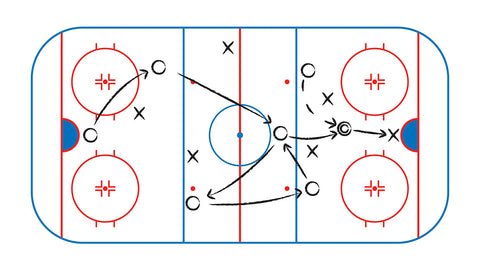
There are three periods in a standard hockey game.
Ever wondered about the structure of a hockey game? It’s a fast-paced sport with specific time divisions. Understanding how the game flows is important. So, how many periods in hockey game are there?
The game breaks down into distinct sections, each with its own play and strategy. These sections allow for breaks and shift in momentum. It is essential to know the number of these parts.

How Many Periods in a Hockey Game?
Let’s dive deep into the exciting world of ice hockey! One of the first things you’ll want to understand about this fast-paced sport is how a game is structured. It’s not just one long continuous skate; instead, it’s broken down into chunks called periods. So, how many of these periods make up a standard hockey match? And what happens between them? Well, buckle up, because we’re about to explore all the details.
The Standard Number of Periods
In most professional and competitive hockey leagues around the world, you’ll find that a regulation hockey game consists of three periods. This is the standard format, whether you’re watching the NHL (National Hockey League), the Olympics, or a major international competition. Each period provides a separate segment of playing time, and this system allows for breaks, strategy adjustments, and of course, plenty of exciting action!
How Long is Each Period?
Now that you know there are three periods, you might wonder, “how long does each period last?” In the NHL and most professional leagues, each period is 20 minutes long. These are full, stop-time minutes. This means that if the puck goes out of play, there is a penalty, or there’s a stoppage for any reason, the game clock stops. This ensures that all 20 minutes of each period are spent with active play. Think of it as 20 minutes of pure hockey action each period!
Time-Outs and Stoppages
As mentioned, the clock stops in certain situations. Beyond penalties and the puck going out of play, teams can also call time-outs. These brief breaks give the coaches a chance to talk to their players, and the players a chance to catch their breath. The clock also stops when a goal is scored or after a penalty is called and during commercial breaks in televised games. All these stoppages make it so the clock does not accurately reflect the amount of time elapsed in real life.
Breaks Between Periods
After each period, there is a break for players to rest and the ice to be resurfaced. The break between the first and second periods, as well as the break between the second and third periods, is usually 15 to 17 minutes. This intermission allows players to re-energize, coaches to discuss strategy, and the ice to be cleaned and smoothed using a specialized machine called a zamboni. It is very important to have the ice at its best for the players to skate on, so the zamboni is a key piece of equipment in any hockey game.
Total Game Time:
If we add up the periods, a typical game is 60 minutes in play. However, with the stoppages for penalties, breaks, goals, etc., a typical hockey game is significantly longer than this 60 minutes. You will usually find the game to last for an average of two and half hours. So, plan accordingly if you are headed to an in-person game, or settling in to watch a match on TV.
Overtime: What Happens if the Score is Tied?
Sometimes, after the three periods, the score might still be tied. In this case, the game goes into overtime. Overtime rules vary depending on the league and level of play, but here are some common scenarios:
- NHL Regular Season: In regular season NHL games, there is a 5 minute overtime period, and teams play with three players on the ice, instead of the normal five. It is called “3 on 3 overtime”. If no one scores within those 5 minutes, the game goes to a shootout, where each team takes a series of one-on-one shots at the goalie.
- NHL Playoffs: During the playoffs, overtime is different. Teams play 20-minute periods of sudden-death overtime with the normal amount of 5 players on each team. This means that they keep playing period after period until one team scores a goal, and that team wins the game. There are no shootouts in playoff hockey.
- International Hockey: Most international tournaments, such as the Olympics and the World Championships, use 10-minute or 5-minute overtime periods followed by a shootout. The exact overtime format can depend on the rules of the specific tournament.
- Other Leagues: The overtime rules for other leagues and levels of play can vary. Some leagues might use longer or shorter overtime periods, or even use a straight shootout with no overtime play at all.
Variations in Period Length: Beyond the NHL
While the 20-minute periods are standard in the NHL and many other professional leagues, not all hockey is played with the same time formats. Here are some variations you might encounter:
Youth Hockey
In younger leagues, period lengths are often shorter than the standard 20 minutes. This is to accommodate the younger players’ shorter attention spans and lower physical endurance. For example, some youth hockey leagues have 10 to 15-minute periods. These shorter periods help keep the games engaging for the young players and ensure they get the most out of their playing time.
College Hockey
College hockey generally follows the 20-minute period format, similar to professional leagues. However, the rules about overtime may vary depending on the specific league and tournament format. You’ll need to check the specific rules for each league if you’re watching a college game.
Other Professional Leagues
While the NHL sets a common standard, some professional leagues in different countries may have minor variations in period lengths or overtime rules. These variations don’t normally deviate too far from the norm, but it’s good to be aware that the rules can vary.
Why Three Periods?
You might be wondering why hockey games are divided into three periods in the first place. There are several reasons for this. First, the break between periods provides an opportunity for players to rest and recover, since hockey is a very physically demanding game. It also allows time to regroup and come up with new strategies, as well as to give the players water and make sure they are healthy. Second, the intermission breaks allows for the ice to be resurfaced, which maintains the best playing condition for the athletes. Third, the breaks create a natural structure for the game, making it more engaging for both players and fans. So, the three-period format is not just random; it is a thoughtfully designed aspect of the sport that helps contribute to the quality and flow of the game.
A Table for Quick Reference
Here’s a quick summary table to help you remember the key points:
| Aspect | Description |
|---|---|
| Number of periods | 3 |
| Length of each period | 20 minutes (stop-time) |
| Intermission between periods | 15 to 17 minutes |
| Total regulation play time | 60 minutes |
| Overtime (if needed) | Varies, 5 minutes in NHL Regular Season, 20 minutes in NHL Playoffs |
| Youth Hockey Periods | 10 to 15 minutes |
Understanding how many periods are in a hockey game and how they all fit together is essential for any fan or aspiring hockey player. From the standard 20-minute periods to the different rules for overtime, each aspect contributes to the excitement and strategy of the game. Now you are ready to sit back and enjoy any hockey game you watch or maybe even play in one yourself!
How Many Periods In Ice Hockey? (Explained)
Final Thoughts
A standard hockey game features three periods. Each period lasts 20 minutes of actual playing time. Between these periods are intermissions.
These intermissions allow players to rest and strategize. Knowing how many periods in hockey game helps follow the action. A typical hockey game structure revolves around these three playing segments.

