
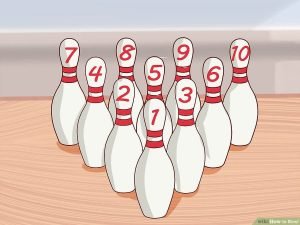
There are ten pins in a standard bowling game.
Have you ever wondered about the setup before you take your shot? The satisfying crash of pins is a core part of the game, but exactly how many pins in a bowling game are we talking about? Well, the answer is fairly straightforward, and understanding the number is key to enjoying this popular sport.
Knowing that there are ten pins arranged in a triangle formation helps in strategizing each throw. The goal, of course, is to knock down all ten pins and rack up the most points you can. Each game offers the opportunity to get a perfect score!

How Many Pins in a Bowling Game?
Let’s dive into the exciting world of bowling! At its heart, bowling is all about knocking down pins. But exactly how many pins are we talking about in a standard game? Well, the magic number is ten. Yes, that’s right, a full set of pins in a regular game of ten-pin bowling consists of ten pins. These aren’t just randomly placed though; they’re set up in a specific triangle formation, making it fun and challenging to knock them all down.
The Classic Triangle Formation
The way the pins are arranged is as important as the number of pins. You’ll notice that the pins form a triangle when you go to a bowling alley. This triangle isn’t just for looks; it’s the foundation of the game. Let’s break down how this triangle is set up:
- The First Pin (The Headpin): Right at the very front of the triangle sits the number one pin. This pin is also often called the headpin. It’s the pin that is most often hit first in any bowl.
- The Second Row: Directly behind the headpin, you’ll see two pins. These pins are numbered two and three and sit side by side.
- The Third Row: Next in line, we find three pins. These pins are numbered four, five, and six.
- The Fourth Row: Finally, at the back of the triangle, there are four pins. These are pins number seven, eight, nine, and ten.
This particular arrangement is standard across all ten-pin bowling, from local alleys to professional tournaments. This means whether you’re bowling for fun with friends or competing at a high level, you’ll always encounter the same ten-pin setup.
Why Ten Pins?
You might wonder, why ten pins? It’s a fair question! The tradition of using ten pins goes way back and has become the established norm in ten-pin bowling across the globe. While other variations of bowling exist with different pin counts and arrangements (like candlepin bowling with its thinner pins), ten-pin bowling is by far the most popular form. The ten-pin setup offers a good balance of challenge and playability. It’s not too easy to knock them all down with every ball, but with the right technique, a good bowler can consistently aim for strikes and spares.
Pin Weight and Dimensions
Besides the arrangement, the pins themselves have standard sizes and weight. These specifications ensure consistency and fair play in bowling. Here are the typical pin specifications:
- Height: Each pin is about 15 inches tall.
- Weight: The pins usually weigh between 3 pounds 6 ounces and 3 pounds 10 ounces. This standard weight is very important so that every pin falls with the correct energy and is not affected by lighter or heavier pins.
- Material: Bowling pins are usually made from maple wood with a plastic coating. This provides a good combination of durability and the right impact for falls.
These specific dimensions and weight ensure the game is consistent and enjoyable across different bowling alleys.
The Aim of the Game
Now that you know there are ten pins, let’s quickly review what we are trying to do with the game. The main point of bowling is to knock down all ten pins with a bowling ball. You get two attempts (in most frames) to knock them down, and the scoring depends on how many pins you can knock down. If you are able to knock them all down with your first attempt, this is called a ‘strike’, and you move onto the next round. If you need your second attempt to knock all the pins down, this is known as a ‘spare’. The scoring in bowling is pretty complex, but the base is to get all ten pins knocked down every single round if you can!
Variations of Bowling and Pin Count
While ten-pin bowling is the most common, it’s worth noting that other bowling variations exist. These alternative versions often have different numbers of pins, pin shapes, and even different ways of playing.
Candlepin Bowling
This is a popular bowling style in parts of the northeastern United States. Instead of ten wide, hefty pins, candlepin bowling uses ten thin, cylindrical pins that look a bit like candles. These pins are much harder to knock down, and players often use a smaller ball with no finger holes. This style of bowling is quite different from regular ten-pin bowling and is known to be significantly harder to get good scores in.
Duckpin Bowling
Another variation, commonly found in parts of the U.S. and Canada, is duckpin bowling. This version uses ten shorter and squatter pins compared to ten-pin bowling, the pins are also not quite as thin as candlepins. The balls used in duckpin are also smaller and don’t have finger holes. This variation introduces another unique spin to the bowling game.
Nine-Pin Bowling
In some countries in Europe, you will come across nine-pin bowling. As the name implies, this game involves nine pins, arranged in a diamond shape or square shape, instead of ten pins in a triangle shape. It is a very popular social sport.
Five-Pin Bowling
In Canada, five-pin bowling is a popular variation. This game uses only five pins, arranged in a V shape, each with different scoring values. This game often uses smaller balls, without finger holes. The game aims to try to knock down different pins to gain different values, and it’s considered to be a very strategic bowling style.
The Importance of Pin Arrangement
The triangle arrangement of the ten pins in standard bowling is not arbitrary. It’s been specifically designed to create a challenge for bowlers. The headpin, for instance, is the easiest to hit straight on, but hitting it directly often doesn’t guarantee a strike. A slightly angled shot, aimed for a specific pocket, is usually required to send the pins flying and knock down all ten. The pins also interact with each other; a well-placed hit can cause pins to ricochet and take out other pins. So, it’s not just about hitting a pin head on, it’s about understanding the physics and how the pins will fall.
Learning the Basics for Beginners
If you’re new to bowling, remember that there are always ten pins set up at the end of the lane in a triangle. Understanding this basic setup is the first step to enjoying the game. While getting a strike might seem difficult at first, with practice you can improve your aim and learn how to get better scores. Don’t be discouraged if you are having trouble getting the pins down at first, bowling takes time and practice.
Advanced Bowling Techniques
Even though we have established that there are always ten pins in bowling, there are some more advanced bowling techniques for getting good scores. Advanced bowlers are very strategic with their shots, understanding exactly where to hit the pins to get the best results. Here are a few of those advanced techniques:
The Pocket Shot
As we mentioned before, a direct hit on the headpin rarely gets a strike. The best way to get strikes is to hit the pocket. The pocket shot is an angled approach to the pins, striking either between the 1 and 3 pins for right-handed bowlers, or the 1 and 2 pins for left-handed bowlers. This angle results in the pins knocking into one another, and it is the best method for getting consistent strikes.
Hooking the Ball
Hooking the ball is a technique where you put a spin on the ball so that it curves as it goes down the lane. The spin helps to bring the ball into the pins with more force. This requires a good wrist action and a good understanding of the lane and the oil on the lane. Hooking the ball helps to get more strikes than just bowling the ball straight down the lane.
Reading the Lanes
Lanes in different bowling alleys are often oiled differently. The oil patterns on the lane can impact how the ball will move, so a good bowler will be able to analyze and read the lanes and adjust their throw accordingly. Understanding the lane is an important skill to develop and will greatly improve a bowlers scores.
The Fun of Bowling
Beyond the rules and techniques, bowling is a great activity for all ages and skill levels. Whether you’re bowling for fun with friends, participating in a local league, or working your way up to professional competition, remember it all revolves around knocking down those ten pins. The game of bowling offers the best of both worlds between friendly competition and a fun casual activity. There are also a lot of social benefits for bowling, including the ability to meet new people and stay active and healthy.
Ten Pins and the Future of Bowling
The ten-pin system, despite some different variations, is still extremely popular. Modern bowling alleys are still being designed around this standard, and it is likely that this number of pins is going to remain the norm for the foreseeable future. With new technologies coming into bowling, like lane sensors and automated scoring, the ten pins will remain at the heart of the game. Whether you’re just getting started with bowling or you’re a seasoned veteran, it’s important to understand this basic aspect of bowling.
So, the next time you step up to the lane, remember there are always ten pins waiting for you! These ten pins, set in their triangle formation, are the essence of the game we all enjoy. Each time you bowl, you are contributing to the long history and great culture of this enjoyable game.
Scoring Bowling
Final Thoughts
A standard bowling game uses ten pins. Players aim to knock all the pins down each frame. Scoring systems vary, but the target remains the same.
Each frame provides opportunities to score. how many pins in a bowling game? It’s always ten pins, positioned in a triangle. They’re ready for you to hit them with the ball.
The consistent setup lets you focus on your technique. Understanding how many pins are in a game is fundamental. You need this to know the target you are aiming for each frame.

