
Game engines provide the core tools and framework for developing video games, handling tasks like rendering graphics, managing physics, and processing user input.
Ever wondered how your favorite games come to life? It’s not magic, but rather a clever piece of software. We often hear about game development, but what do game engines do exactly? They are the workhorses behind the scenes.
These engines act as a central hub, giving developers a unified platform. They manage the complex technical stuff. This enables creators to focus on crafting engaging gameplay and story.

What Do Game Engines Do?
Have you ever wondered how video games come to life? How do those amazing characters move, those worlds feel so real, and all the different things happen when you press a button? Well, a lot of the magic comes from something called a game engine. Think of it as the super-powered toolbox that game developers use to build their games. It’s not a single thing, but a collection of tools and systems that help make game creation much easier and faster. Instead of coding every single thing from scratch, developers use a game engine’s ready-made features to bring their game ideas into reality. Let’s explore in detail what these game engines actually do.
The Core Functions of a Game Engine
At its heart, a game engine handles many of the complex technical details, allowing game developers to focus more on the fun and creative parts of making a game. These core functions can be grouped into several key areas:
Rendering Graphics
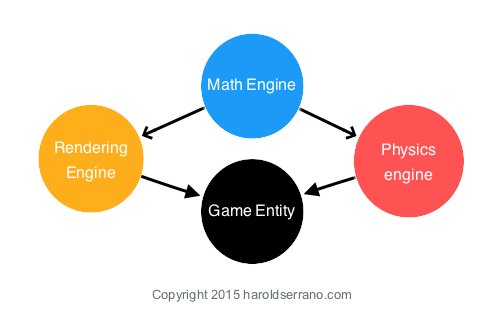
This is what makes the game look good. The rendering engine takes all the information about the game world (like where objects are, what they look like, what color they are, how light shines on them), and then creates an image on your screen. It’s like the artist that draws what you see in the game. Without a proper rendering system, games would just be a bunch of lines, shapes, or even just a blank screen. Game engines handle how 3D objects are drawn (with their surfaces, lighting and textures), how different special effects like explosions or smoke are rendered and how all of this looks crisp on various screens.
Handling Physics
Physics is what makes things behave realistically in a game. When a character jumps, or a ball bounces, or objects fall because of gravity, that’s the physics engine at work. It simulates how objects interact with each other, applying forces, collisions, and momentum, to create realistic movement and interactions. Game engines come with pre-built physics systems that developers can use, saving them from having to write their own complicated physics code. These systems help make the game world feel tangible and grounded.
Consider these things that a physics engine helps with:
- Gravity: Making objects fall to the ground.
- Collisions: Deciding what happens when two objects bump into each other.
- Friction: Affecting how objects slide and slow down on surfaces.
- Forces: Applying pushes and pulls to objects.
Managing Audio
Sound is a huge part of creating an immersive game experience. Game engines have audio systems that handle everything related to sound, from background music to the sound effects of a character’s footsteps and the whoosh of a sword. These systems can also do things like spatial audio so sounds seem to come from specific directions, as well as adjusting sound volume. A game engine’s audio feature makes sure you hear all the sounds at the right time and at the right volume.
Input Handling
When you press a button, move your mouse, or use a joystick, the game engine must be able to understand your actions. Input handling is the part of the engine that deals with receiving this input from keyboards, mice, controllers, touchscreens, and translating it into actions in the game. This makes sure the game responds to player controls smoothly and accurately.
Artificial Intelligence (AI)
This is what makes game characters seem like they have brains. AI within a game engine helps create the behaviors of non-player characters (NPCs), such as enemies, allies or animals. AI is what dictates how they react to you, how they move, what their goals are, and how they decide to attack or defend. It is also used for things like pathfinding. Game engines provide AI systems to help developers make their games more interesting and challenging.
Scripting and Programming
Game engines let developers write code (or scripts) to create unique game mechanics and behavior. This could be used to make a character jump higher, create a new powerup, or trigger a special event. Scripting allows developers to add logic and customization to the game. It gives the game developers flexibility to create whatever their imagination allows.
Asset Management
A game consists of many pieces: images, models, sounds, music, animations, and more. Game engines have asset management systems that help developers organize and use all these resources. This also allows for better performance and memory usage and keeps the game’s files in an organized way.
How a Game Engine Simplifies Game Development
Without game engines, making games would be incredibly difficult and time-consuming. Imagine having to write every single line of code for even simple things like rendering a single cube or making a character walk. It could take forever to make even a small game. Game engines help game developers by:
- Providing Ready-Made Tools: Game engines come with a lot of pre-built tools that developers can use, such as physics systems, rendering tools, and animation tools. This means developers don’t have to write everything from scratch and can focus on the game’s unique parts.
- Standardizing the Development Process: Game engines bring consistency to the process of game development. Developers can work with standardized tools and frameworks. It is especially useful for collaborative projects with multiple developers on a team, as they work with familiar systems and tools.
- Improving Efficiency: By giving developers ready to use systems, game engines save considerable time and effort that otherwise would be spent coding low level technical functionalities. With the help of game engines, more time is available to concentrate on the creativity, gameplay, and artistic elements of a game.
- Facilitating Cross-Platform Development: Some game engines allow developers to build a game once and then deploy it on multiple platforms like PCs, mobile devices, and consoles. This is really helpful because developers don’t need to rewrite their games for each different platform.
Popular Game Engines
There are several popular game engines available, each with its own strengths and special features. Here are a few you might have heard of:
Unity
Unity is one of the most popular game engines. It’s known for being user-friendly and its versatility. It is used for creating both 2D and 3D games. It is used to create games for mobile, PCs, consoles, and even VR. Unity also has a huge community. Its large asset store provides pre-built resources and extensions that can make development even easier.
Unreal Engine
Unreal Engine is another very well-known engine, known for its top-notch graphics capabilities. It has become popular for developing high-fidelity, visually stunning games. It’s often used for more demanding 3D projects, especially console games, as well as simulation. Unreal has features like advanced lighting, physics, and rendering tools.
Godot Engine
Godot is a free and open-source game engine. It’s gaining popularity for its ease of use and its versatility. Godot provides a complete set of features, with a 2D and 3D game development environment. It’s a good option for people who are just starting to make games as well as those who want to develop more complex projects.
Other notable engines
There are many other game engines out there, each with its own focus and benefits. Some of these include:
- GameMaker Studio: Perfect for 2D games, with a user-friendly interface and good scripting tools.
- CryEngine: Known for its high-quality graphics, used in games that have a lot of detail.
- Source Engine: This engine was used in several popular games such as Half-Life, Counter-Strike and Portal, and is still used today.
- Lumberyard: A free engine from Amazon, it has good cloud support and can create very detailed games.
How to Choose a Game Engine?
Choosing the right game engine is a critical step in game development. It depends on different factors that can influence the project’s result. Consider the following things:
Type of Game
Some engines are better for 2D games, while others are better for 3D ones. You have to choose the engine that is best suited to your game type. If you’re making a simple puzzle or platformer, a 2D engine might be enough. But, if you’re making a large 3D world, you’ll need a stronger 3D engine.
Complexity and Scalability
For small games or projects, any engine would work. But for bigger, more complex games, you have to pick an engine that can handle the complexity and can scale up as your game project grows. Make sure the engine’s features and its structure can support your project.
Programming Knowledge
Some engines, like Unity, are easier for beginners to learn and use because they use a visual scripting approach. Others, like Unreal Engine, might need more coding skills. Your game development team’s skill level in code is very important when picking the best game engine. Some have visual tools that can help, but some require solid programming knowledge.
Platform Support
Where do you want your game to be played? If you want it on PCs, consoles, mobiles, or all three, you need an engine that can handle different platforms. Make sure the engine supports your target platforms.
Cost and Licensing
Some game engines are free to use, while others require payment. You must consider the costs involved when picking an engine. Also, pay attention to the licensing terms, because they can affect how you can use the engine and the resources you make using it.
Community and Support
A strong community and good support system will help when you run into any issues. A large community usually means more learning resources are available. A community that has a lot of developers can help you solve problems easily, plus a lot of online documentation and videos available online.
The Future of Game Engines
Game engines keep getting more sophisticated with each passing year. Technology gets better, and engines adapt and add new things. Here are some areas where game engines are going to be even better in the future:
Real-Time Ray Tracing
Ray tracing makes lighting in games look ultra-realistic by simulating how light actually works in the real world. More game engines are starting to include real-time ray tracing so that games will look better than ever before.
AI-Powered Tools
AI is being used more and more in game engines to help with tasks such as creating realistic environments and characters. AI will help developers make more creative and interactive games.
Cloud Integration
Using the cloud will enable game developers to do things like collaborative work, distributing game content, or playing games directly from the cloud. This will allow players to access games from anywhere, without having to install anything on their device.
Simplified Development
Game engines are becoming more accessible, with simpler tools. Engines also help speed up and streamline different parts of the development. More people will be able to create games, and that would bring in even more new creative ideas.
In short, game engines are the magic behind video games, allowing developers to build those fun and amazing worlds that you love to explore and play in. They continue to improve and offer new features that are creating the gaming experiences of today and of the future.
How Game Engines Work!
Final Thoughts
Game engines provide essential tools for game creation. They handle graphics rendering and physics simulation. Game developers use them to build game worlds and program interactions.
So, what do game engines do? They manage all the complex technical aspects of game development. This allows creators to concentrate on design and gameplay. The engine is the core of the whole game.

