
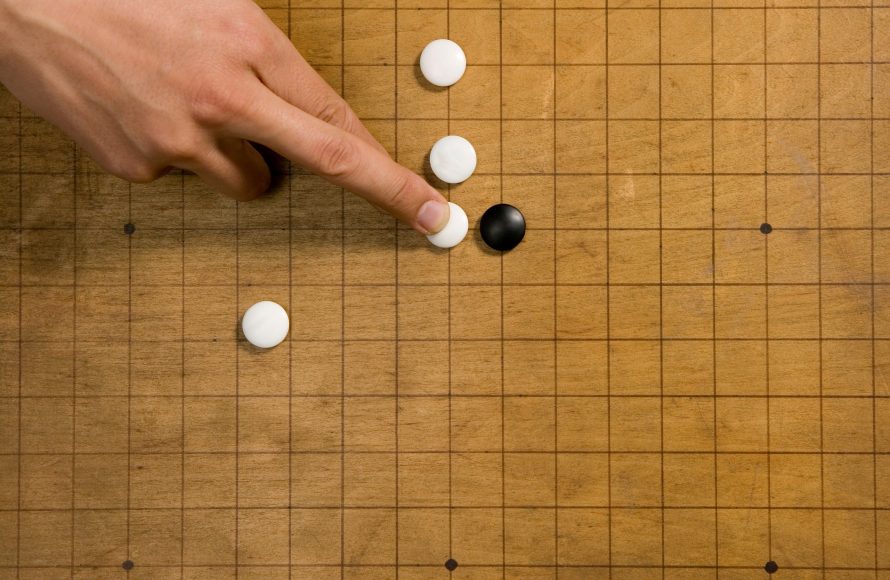
The estimated number of possible outcomes for the game of Go is approximately 10761, a figure far exceeding the number of atoms in the observable universe.
It’s truly mind-boggling to contemplate the scope of certain games. We often think of chess as complex, but consider Go. The sheer scale of ‘how many possible outcomes for the game of Go’ is what sets it apart. The answer dwarfs even the most gargantuan numbers we typically deal with.
This astonishing figure hints at the immense depth and strategic potential within this ancient board game. It explains why even powerful computer programs have struggled to truly ‘solve’ it in the way chess has been.

How Many Possible Outcomes for the Game of Go?
The game of Go is known for its incredible complexity. While a game like chess has a large number of possibilities, Go takes it to a whole new level. When we try to figure out exactly how many different ways a game of Go can unfold, we quickly bump into some mind-bogglingly large numbers. Let’s explore what makes calculating these outcomes so tricky and why the number is so unbelievably massive.
Why Go Is So Complex
To understand why Go has so many potential outcomes, we first need to look at what makes the game different from others. Here are a few key reasons:
The Size of the Board
Most games like chess use a smaller board. Chess, for example, has 64 squares. Go, on the other hand, is typically played on a 19×19 grid. That means there are 361 intersections where a player can place a stone. This dramatically increases the number of possible moves.
Simple Rules, Deep Strategy
The basic rules of Go are surprisingly simple. Players take turns placing black or white stones on the intersections. The goal is to control more territory than your opponent by surrounding areas with your stones. Although the rules seem easy, the strategic possibilities are incredibly deep. This leads to a massive range of different game states.
The Nature of the Pieces
Unlike chess where each piece has different movement patterns and functions, in Go, all the stones are the same. This might seem like it would simplify things, but it actually does the opposite. The complexity comes from how these identical pieces interact with each other on the board, creating intricate formations and control of territory.
The Challenge of Calculating Outcomes
Now, let’s get to the tricky part: figuring out how many possible ways a game of Go can go. It’s not as simple as adding up all the moves. There are a few factors that make it so hard to calculate:
Branching Possibilities
Each move in Go creates a new set of possibilities for the next move. This creates what we call “branching possibilities,” like a tree where each branch splits into more branches. The further the game goes, the more the tree grows, exponentially increasing the number of different game states.
The Effect of the Board State
Unlike games where moves are more restricted, in Go the position of every stone changes the landscape of available moves. So, when calculating total outcomes, you have to factor in the positions of all 361 intersections at every single move combination, which multiplies the possibilities to a huge number. There’s a reason why a computer can’t just see a simple pattern to “win” at every single Go board situation.
No Simple Formula
Because of these factors, there is no straightforward mathematical formula to figure out the exact number of possible outcomes. We are not simply adding or multiplying numbers in a chain. This makes estimating and calculating the answer a very difficult task.
Estimating the Number of Outcomes: It’s HUGE!
Even though we can’t calculate the number exactly, computer scientists and mathematicians have developed ways to estimate it. And the estimates are mind-bogglingly large. Let’s explore how they arrive at these numbers.
The Shannon Number
You might have heard of the “Shannon number” in the context of chess. It estimates the game’s complexity at around 10120 possible games. But as mind blowing as that is, Go absolutely dwarfs chess in terms of complexity. That is because the average branching factor is higher in Go, and also because games in Go tend to last for a longer time, creating a greater possibility of moves.
Go’s Estimated Number
Estimates of Go’s complexity vary, but many place it at around 10360, a number often referred to as a “googolplex,” a truly gigantic number, that dwarfs other similarly complex games. To put that into perspective, consider this.
- 10360 is a 1 followed by 360 zeros.
- The number of atoms in the observable universe is only estimated to be around 1080.
- If each possible Go game outcome was a separate universe, there would be more possible Go game outcomes than there are atoms in our universe.
Yes, it’s really that big. These mind-boggling comparisons help us understand the incredible vastness of possibilities in Go. It’s not just a little bigger than other games, it is significantly, unimaginably larger.
Why It’s Hard to Comprehend
The sheer scale of 10360 is so vast that it’s beyond our ability to truly grasp. Numbers like these are abstract and it is incredibly difficult for our human brains to conceive, because our normal life has no connection with numbers at that kind of scale. To try to think about it, try picturing all the grains of sand in all the world’s beaches. That is a massive number. Yet the number of possible Go games is still far, far larger. This is why Go is often considered the most complex game ever devised by humans.
Go Complexity and Artificial Intelligence
The sheer complexity of Go made it a huge challenge for computer scientists working on artificial intelligence (AI). For a long time, it was considered nearly impossible for a computer to defeat a professional human Go player. The massive number of possibilities meant that simple methods of brute-force calculation (trying out all the moves) were completely ineffective. Here’s why:
Traditional AI and Go
Early AI programs excelled at games like chess that required detailed calculation of possibilities. However, they failed at Go. It was not enough to know all the possibilities. Human Go players didn’t calculate all the possibilities. They use a kind of intuition and understanding to know what moves will be strategic. These approaches were impossible for traditional AI algorithms.
The Rise of Deep Learning
Everything changed with the advent of deep learning. Deep learning algorithms allow computers to learn patterns and strategies from massive amounts of data. This allowed them to play Go not by just calculating outcomes, but by learning strategic patterns. This is what led to the famous AlphaGo program developed by Google DeepMind.
AlphaGo’s Breakthrough
AlphaGo, using deep learning and neural networks, was able to achieve something thought impossible a few years before. It was able to defeat world-class human Go players by developing an understanding of the game that had not been achieved before. The ability of AI to not only compute the possibilities but to learn also changed the game of artificial intelligence.
Go As A Benchmark
Go has become a benchmark for AI progress. The immense number of possibilities combined with the need for strategic insight have made it an ideal test case for pushing the boundaries of artificial intelligence. It pushes scientists to think about learning processes in a different way.
Other Factors Influencing Outcome Numbers
While we’ve covered the big factors, there are some other points worth considering that also influence the number of possible game outcomes:
The Length of the Game
The longer a Go game goes, the more possibilities there are. Some games finish relatively quickly, but many continue with very intricate moves for many steps. This variability in game length further adds to the number of different outcomes.
Variations in Playstyle
Each player brings their own individual approach and strategies to the game. This means that, even in the same type of situation, players will choose a slightly different way to make a move. This causes game outcomes to differ drastically.
Ko Rule and Its Impact
Go has a special rule called the “ko rule”. The ko rule prevents a player from immediately re-capturing a stone after it has been captured. This rule prevents games from entering an infinite loop, which would not be calculable. Even this seemingly small rule introduces another layer of complexity to calculate.
The Ongoing Fascination with Go’s Complexity
The vast number of possible outcomes for the game of Go is a testament to its enduring appeal. It provides:
A Deep Challenge
Go is not a game you can easily understand. It requires strategy, learning, and patience. Many lifelong players find that they are still improving their game after decades. It is that deep challenge that gives the game its lasting fascination.
A Source of Inspiration for AI
The complexity of Go will continue to drive advancements in AI for years. It’s a difficult puzzle that pushes the boundaries of computer learning and understanding.
A Unique Playing Experience
Every Go game is unique because of the immense range of possibilities. Players can never be entirely sure what the next game will hold, and that creates lasting entertainment.
Ultimately, the truly massive, nearly infinite, number of possible outcomes for a game of Go is what makes the game so captivating. It represents a world of possibilities and a challenge to the intellect. While we can only estimate this number, it highlights just how complex, deep, and fascinating this ancient game is.
How many chess games are possible? – Numberphile
Final Thoughts
The sheer number of possible board configurations makes calculating precise outcomes incredibly complex. Scientists estimate that the game of go possesses more possibilities than atoms in the observable universe.
Therefore, determining exactly how many possible outcomes for the game of go is an ongoing mathematical and computational challenge. The potential variations are mind-boggling.

