
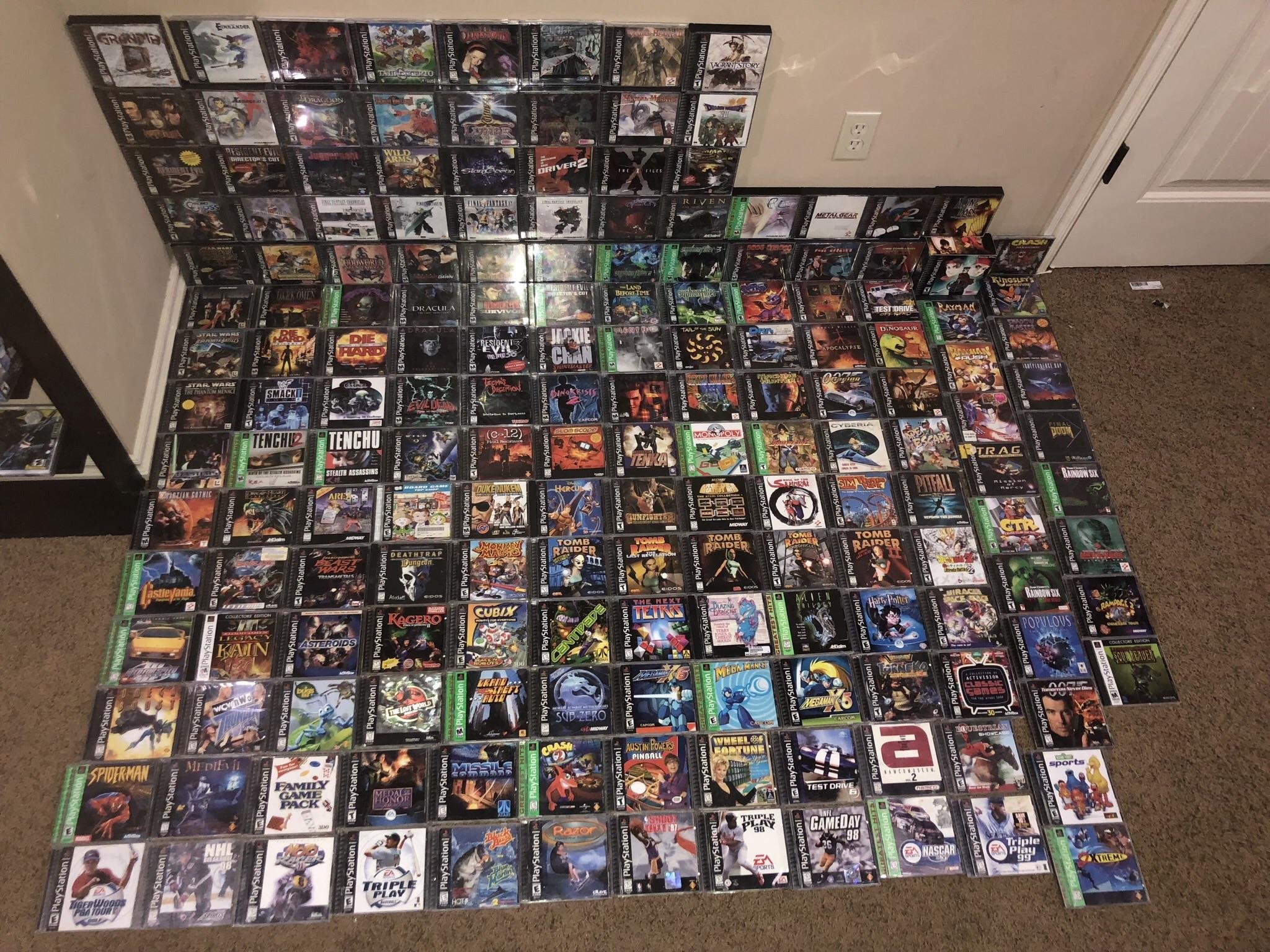
There are approximately 2,418 PlayStation 1 games released worldwide.
Ever wondered about the sheer volume of classic titles on the original PlayStation? It’s a question that often pops up for retro gamers: how many ps1 games are there? The console boasts a library filled with iconic adventures and genre-defining experiences.
It’s difficult to pinpoint an exact number because regional releases varied. Still, most sources agree on a number close to 2,418 titles. This figure includes all those releases around the world.

How Many PS1 Games Are There? Exploring the PlayStation’s Vast Library
The PlayStation, or PS1 as many people affectionately call it, was a super cool game console that changed the world of video games! It brought us amazing stories, awesome characters, and hours upon hours of fun. But have you ever wondered just how many games were released for this groundbreaking system? It’s a question that many gamers, both young and old, ask. Let’s dive deep into the treasure chest of the PS1 and see what we can find.
The Officially Released PS1 Games: A Global Count
Figuring out the exact number of PS1 games isn’t as easy as you might think. Why? Because the PlayStation was sold all over the world, and different regions got different games! It’s like trying to count all the stars in the sky – there are a lot! However, we can get a good estimate. The generally accepted figure for the total number of officially released PlayStation 1 games is around 2,418 games worldwide.
Now, this number can be a little tricky. Here’s why:
- Regional Differences: Games released in Japan weren’t always released in North America or Europe, and vice versa. This means each region had its own unique library.
- Re-Releases and Compilations: Some games were released more than once, sometimes with small changes. There were also compilation packs that included several games on a single disc.
- Limited Editions: A few games had special limited edition releases that might not be included in the main count.
So, while 2,418 is a good number to keep in mind, the actual number you might consider ‘available’ can vary slightly based on how you’re counting them.
Regional Breakdown: North America, Europe, and Japan
To really understand the scope of the PS1 library, let’s look at the big three regions: North America (NTSC-U/C), Europe (PAL), and Japan (NTSC-J). Each region had its own unique flavor.
North America (NTSC-U/C)
North America, which includes the United States and Canada, had a fantastic collection of games. Many of the most well-known and loved titles were released in this region. We’re talking classics like:
- Final Fantasy VII
- Metal Gear Solid
- Crash Bandicoot
- Spyro the Dragon
- Resident Evil 2
The North American library is known for its focus on action, adventure, and sports titles. It generally had a good mix of games for all kinds of players.
Europe (PAL)
Europe (PAL region) also enjoyed a vast selection of games, sometimes with slight tweaks compared to their North American counterparts. Some differences existed regarding cover art, game speed, and language support. The European game library was quite similar to the North American one, but it also had its share of exclusive and different versions of games. Games like:
- Tomb Raider
- Gran Turismo
- Tekken 3
- Oddworld: Abe’s Oddysee
European players saw many popular games, often with PAL optimization for their televisions.
Japan (NTSC-J)
Japan had a massive PlayStation library with lots of games unique to that region. If you explored Japanese PS1 games, you’d find many titles that were never released in the West. This is a treasure trove for fans of Japanese Role-Playing Games (JRPGs) and other unique game styles. For example, games like:
- Final Fantasy Tactics
- Parasite Eve
- Suikoden II
- Xenogears
The Japanese library had a strong emphasis on anime-style games and often featured interesting twists on genres.
Understanding Game IDs and Cataloging
Every PlayStation game, whether it’s a sports game or a role-playing adventure, has its own unique code that helps keep track of it. These are called game IDs, and they are essential for figuring out exactly what you have. The game IDs usually consist of letters and numbers and help categorize the game by region and release version. For example, an ID might look like “SLUS-00001” for a North American game. Different regions use different prefixes in game IDs. Like, SLUS for North America, SLES for Europe, and SLPS for Japan.
Many websites and fan communities use these game IDs to catalog and keep track of every game. This is how they try to determine the most accurate count of PlayStation 1 games. These databases help you keep track of your game collection and allow collectors to quickly figure out which games are from which region.
Hidden Gems and Undiscovered Treasures
Beyond the well-known hits, there were many PS1 games that flew under the radar. These hidden gems are fun to find and play. Some of these games didn’t get much attention when they first came out, but are now considered beloved by those who have played them. They might not have been big sellers, but they were often creative and imaginative. Here are some examples of less-known but wonderful games:
- Legend of Legaia: This RPG had unique combat mechanics that set it apart.
- Vagrant Story: A complex and challenging action RPG with a unique art style.
- Einhander: A stylish and fast-paced side-scrolling shooter.
- Alundra: An action RPG with tough puzzles and a memorable story.
Exploring these hidden gems can bring you a great experience of the PS1’s diverse library. There’s a whole world of fun waiting to be found beyond the usual favorites.
Emulation and the Digital Age
With the power of emulation, many older PS1 games can now be enjoyed on computers and even phones. This has brought these classic games to a new generation of gamers and has kept them alive for the older generation too. Emulators allow you to play the games by making your computer act like a PS1. Many digital stores also offer downloadable versions of classic PS1 games.
This access makes the question of “how many” games becomes a bit different. The total number of discs might remain the same, but now it’s more about the number of games that you can easily play. This also leads to preservation of the games, ensuring they aren’t forgotten. Emulation has given older generation to play the games they loved.
Factors That Influence the Count
It’s really interesting how so many things can affect the exact number of PS1 games. It is not only because of different regions but also because of many other reasons.
Regional Exclusives
Some games were released only in specific regions. For example, some great Japanese games did not get English versions. This makes the number of available games very different if you’re in Japan versus if you are somewhere else.
Revisions and Variants
Sometimes, a game might get released and then later get re-released with a few fixes or changes. These small changes might mean that the game is counted as different versions of the same game, making the count a bit confusing. Also, games can get different covers in different regions, which might lead people to think that it’s a different game.
Demo Discs
The PS1 used to have many demo discs that showed little parts of the games. While these aren’t full games, they are a part of the history of the PS1. Should they be included in the overall count? This is where the discussion of how to count can vary.
Pirated and Unofficial Games
Of course, there were also pirated or unofficial games, but these games are never included in the official counts. These are not games that the company Sony officially released, so they are not counted as official PS1 games.
The Importance of Game Preservation
With the PS1 being a big part of gaming history, it is important to keep these games available. This is why game preservation is crucial. Preservation keeps old games alive so we can still enjoy them and so they are not lost forever. Groups of video game fans and also some companies are working to keep the original games, discs, and game data. By preserving the games, we ensure that everyone, especially future generations, will have the opportunity to experience the magic of PS1 games. It’s like creating a museum for games so that everyone can learn from the past.
So, while we might not have one single perfect number for how many PS1 games there are, we can see how big and amazing the library is. From all the classics to the hidden gems, there are many games that people love. That’s why it’s so important to remember and preserve the games that changed the world of gaming. Even if the games are old, their stories and characters are still great, and they deserve to be remembered. So, whether you play an old game on an original console or on a computer through emulation, remember the fun that PS1 games brought us.
Ultimately, focusing on the total number is less important than appreciating the rich history and experiences offered by this console’s game library. It’s a testament to the impact of the PS1, its legacy continues to influence modern gaming and remain a cherished part of video game culture.
The PlayStation Project – All 1278 NTSC-U (USA) PS1/PSX/PSOne Games – Every Game (USA/NTSC-U)
Final Thoughts
In total, over 2,400 PlayStation 1 games were released worldwide. This impressive library includes titles across numerous genres, from platformers to RPGs. The quantity varies slightly depending on region due to some exclusive releases.
Figuring out exactly how many PS1 games are there requires accounting for all regions. The massive catalog is a testament to the console’s popularity and impact. This also includes many must-play games for any retro gaming fan.

