
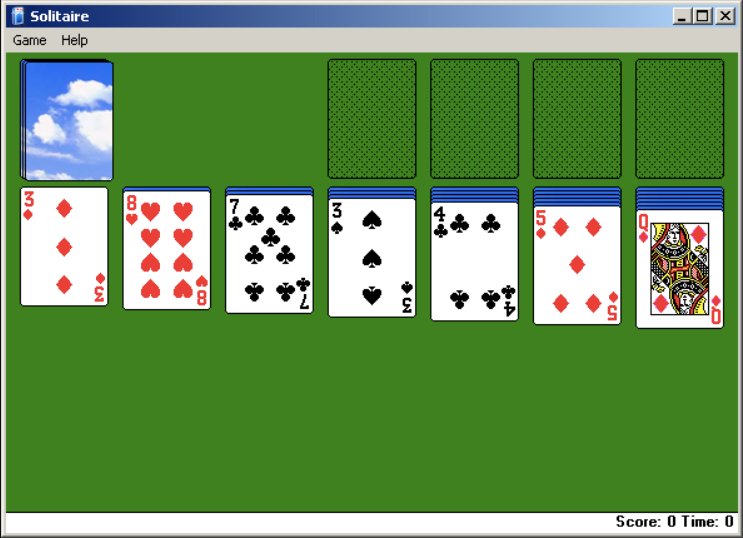
Approximately 82% of standard Klondike solitaire games are winnable with perfect play.
Ever pondered the puzzling question, how many solitaire games are winnable? It’s a query that often pops up for those who enjoy this solitary card game. Many assume that every game is beatable, but that’s not quite the case.
The truth is, not every shuffled deck will lead to a victory. Certain initial arrangements make solving the puzzle impossible. Knowing the approximate success rate can alter your approach to each new game.

How Many Solitaire Games are Winnable?
Solitaire, that classic card game we all know and love, seems so simple on the surface. You shuffle the cards, lay them out, and then try to move them around to build those neat foundation piles. But a question that often pops into players’ minds is, “Can I actually win this?” The answer, surprisingly, isn’t always a straightforward yes. It turns out that not every single game of Solitaire, particularly the most common version, Klondike Solitaire, is winnable. Let’s dive deep into why this is the case and what makes a Solitaire game solvable.
The Mystery of Winnability in Klondike Solitaire
Klondike Solitaire, often simply called “Solitaire” on most computers, is the version that most people are familiar with. Its objective is to move all cards to the four foundation piles, organized by suit and in ascending order. You achieve this by strategically moving cards around the tableau. Now, here’s the important part: not all starting layouts can lead to a win.
The Complexities of Card Arrangement
The randomness of the shuffle and initial card placement are key factors. Sometimes, the cards are just arranged in a way that creates blocks or traps you can’t get around. For instance, crucial cards may be buried too deep within the tableau piles, or the order of the face-down cards prevents you from revealing what you need to complete foundations. We can call these situations “unwinnable scenarios”. These scenarios are the core of why not all games can be solved.
Understanding the Odds of Winning
Okay, so we know not every game is winnable, but how common are those unwinnable scenarios? Estimating the exact percentage of solvable games is tricky, because there are so many different card arrangements possible. But researchers and mathematicians have done some work to provide us with an idea.
The 80% Rule? Not Quite.
You might have heard that about 80% of Klondike games are winnable. This is a common figure, but it’s actually a bit misleading. It’s more accurate to say that around 80% of games could be winnable if played perfectly. This distinction is extremely important. What this means is that many games that are solvable, can be lost through player mistakes, and sometimes when they are solved it is because of player luck. So, we are not going to call it 80% rule, it is just a fact that, most of the game, when played perfectly, have a chance to be won.
The Impact of Skill and Strategy
The “played perfectly” part of that statement is crucial. A good solitaire player knows certain strategies, such as exposing hidden cards, keeping your tableau balanced and planning out moves several steps ahead. Someone who just randomly clicks around is much more likely to lose even a solvable game. Therefore, when we talk about the win rate, we’re talking about the theoretical win rate with perfect play.
A Closer Look at the Data
Many computer simulations, running millions of solitaire games have been performed by mathematicians and computer scientists. These simulations have helped us a lot in identifying the percentage of theoretical winnability. While the numbers are always evolving, and there is no single absolute answer, most agree that the theoretical win rate, with perfect play, hovers around the 80-82% range, approximately.
Factors Affecting Solitaire Winnability
Let’s look at the specific factors that influence the likelihood of winning a game of Solitaire.
Card Distribution
The initial deal of cards is the most influential factor. Are the aces readily accessible at the beginning? Are the crucial lower-value cards buried under a bunch of higher-value cards? These kinds of arrangement can make or break your game. If you have a good deal, with visible and accessible lower numbers, it is easier to solve the game. If the important lower numbers cards are hidden beneath many higher numbers, they are much harder to reach.
The Stock Pile
The stock pile (the pile of cards faced down to be drawn from during the game) can be the key to unlocking a seemingly impossible game. However, sometimes it doesn’t contain the cards you need. The ability to go through the stockpile, whether one card at a time or three cards at a time (as in Vegas rules), influences the winnability significantly. Sometimes the card you need is buried towards the end, and you might not reach it before you are out of available moves on tableau.
The Rules of the Game
Different Solitaire rule variations can change the chances of winning. For example, a game with three-card draw is significantly more difficult to solve than a game with one-card draw. This is because you have a less control over the revealed cards in 3-card draw rule. Similarly, games like spider solitaire and FreeCell have very different rules that have an impact on winnability.
Beyond Klondike: Winnability in Other Solitaire Variants
Klondike isn’t the only game in town. Many other solitaire variations exist, each with different rules and levels of winnability.
Spider Solitaire
In Spider Solitaire, you try to build stacks of cards from King to Ace within the tableau and when completed, you remove them. This game can be played with one, two, or four suits. It is known for being quite challenging with one suit version, becoming more complex with additional suits. The four suit version can have the theoretical win rate around 30%, making it harder to solve than regular Klondike Solitaire.
FreeCell
FreeCell Solitaire is different because it features four “free cells” where you can temporarily store cards. These free cells make it much more winnable than Klondike. In fact, almost all FreeCell games are solvable with perfect play.
Other Solitaire Games
Games like Pyramid, TriPeaks, and Golf have their unique challenges and winnability percentages. Some are relatively easy, and some are hard. Some of them may also have a random element, and may have some unwinnable deals. But all of them are fun to play, even if they are hard to win.
How to Increase Your Chances of Winning
Even though some games are unwinnable, here are some strategies to boost your success rate in those that are possible.
Planning Ahead
Before you make a move, consider the consequences. Think about how your move will affect the exposed cards and how you can plan to reach cards that are face-down.
Exposing Face-Down Cards
The first aim of a good Solitaire player is exposing cards that are face down. Reveal as many face-down cards in the tableau as early as possible. This is critical to winning the game.
Moving Aces to Foundation
Whenever you see an ace, move it to the foundation right away. This will allow you to build up your sequences faster.
Building Sequences
Build sequences in tableau when possible because you can then move bigger piles around which make the cards that you need easier to reach.
Using the Stock Pile Smartly
Don’t just click the stock pile randomly. Watch closely and try to plan out the moves with cards coming from the stock pile.
Recognizing When to Restart
Sometimes, you have to admit that the card distribution is against you and the game is not winnable from the outset. Instead of wasting time, a good player recognizes this and restarts the game immediately. This helps save time, energy and effort.
The Allure of the Unwinnable Game
Even though knowing that not all games of Solitaire can be won may seem frustrating, it actually adds a level of challenge and replayability to the game. It is the unknown aspect of winnability that keeps us coming back for more. It is the challenge that makes Solitaire both interesting and addictive.
The Quest for the Perfect Solution
Each game of Solitaire is like a puzzle that needs to be solved. The fact that some games are unsolvable encourages players to try new strategies and to strive for perfection. The challenge is to understand each specific game and to make all the right moves.
Accepting Randomness
Solitaire reminds us that we don’t always have control over every situation. There’s an element of randomness, just as in life, and learning to deal with it can be valuable. So we must learn to accept this and move on to the next game when the odds are not in our favor.
Solitaire: A Game of Strategy and Chance
Ultimately, Solitaire is a mix of skill and chance. While some games are destined to be unwinnable due to the nature of card distribution, many others offer an engaging challenge that tests your strategic thinking. The fact that you know some games cannot be won, makes the game more interesting. The real question isn’t “How many games are winnable?” but rather, “How many games can I win?”. With practice, strategy, and a bit of luck, you will be able to increase your chances of success.
Solitaire is a timeless game that will continue to be played and enjoyed by many for years to come. Remember, the real fun is in the process of playing and learning, win or lose. The next time you play, remember not every game is meant to be won, and just focus on playing the game as best as possible.
Can every game of solitaire be won?
Final Thoughts
Ultimately, the exact percentage of winnable solitaire games remains a subject of debate. Estimates suggest approximately 80% of games are theoretically winnable with perfect play. However, this doesn’t mean that every player can achieve those wins.
Skill and strategic planning play big roles. The player’s choices drastically change the game’s outcome. Therefore, “how many solitaire games are winnable” is not a simple question with a single answer.

