
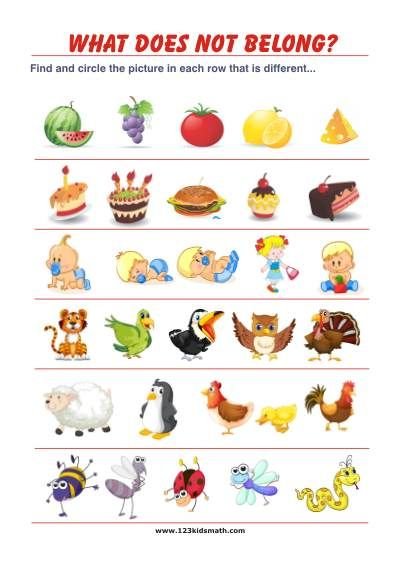
The ‘what does not belong game’ is a simple activity where players identify the item that doesn’t fit within a given set of items.
Have you ever played a game that felt both ridiculously easy and surprisingly challenging? Well, that’s the magic of the ‘what does not belong game’. It seems so straightforward—you just pick the odd one out—but it really makes you think about different categories and relationships between things. It’s a fantastic way to sharpen your mind.
The best part is, anyone can play, and you probably already have everything you need to begin. You don’t need fancy equipment or complex instructions. This simplicity adds to the overall fun and accessibility for all ages. It is truly a timeless classic.

What Does Not Belong Game: A Deep Dive
Have you ever played a game where you look at a group of things and try to figure out which one is different? That’s the “what does not belong” game! It’s a super fun way to use your brain and practice your thinking skills. This game isn’t just for kids; people of all ages enjoy trying to spot the odd one out. Let’s explore this game in more detail, looking at why it’s so great and all the cool ways you can play it.
Why Play What Does Not Belong?
The “what does not belong” game might seem simple, but it’s full of benefits. It helps in many different areas, like:
- Boosting Critical Thinking: You really need to think about what you’re seeing and decide why one thing isn’t like the others.
- Improving Observation Skills: You’ll start paying attention to details you might have missed before.
- Enhancing Vocabulary: As you play, you might learn new words to describe why something doesn’t fit in.
- Making Learning Fun: It turns practice into a game, which makes it way more enjoyable.
- Supporting Cognitive Development: For children, this game is like a workout for the brain, helping them to understand categories and differences.
So, whether you’re a kid or a grown-up, this game is a fantastic way to exercise your mind!
How to Play: The Basic Rules
Playing “what does not belong” is quite easy. Here are the basic steps:
- Gather your items: This can be anything! Pictures, words, numbers, objects – the possibilities are endless.
- Create a set: Choose three, four, or five items and place them together. Make sure that only one of them doesn’t fit the pattern.
- Look closely: Carefully examine each item and look for similar characteristics.
- Find the odd one out: Decide which item doesn’t match the others and explain why.
- Discuss the answer: Once you’ve picked the odd one, talk about the reasons that one didn’t belong.
That’s it! You’re ready to start playing this game. Just remember, there might be more than one right answer sometimes, especially if you’re thinking creatively!
Variations of the Game
The fun doesn’t stop with the basic rules. Here are some different ways to play “what does not belong.”
Visual Odd One Out
This version uses pictures or objects. For example, you might show a picture of an apple, a banana, a carrot, and a pear. The carrot would be the odd one out because it is a vegetable, while the others are fruits.
Verbal Odd One Out
In this game, you will use words. The example would be showing words like ‘run’, ‘jump’, ‘swim’, and ‘apple’. Here, ‘apple’ doesn’t fit as the rest are actions.
Numerical Odd One Out
This version uses numbers. For instance, you might have 2, 4, 6, and 7. The number 7 doesn’t fit as the rest are even numbers. You can make it even more challenging by using bigger numbers or patterns.
Category-Based Odd One Out
This involves grouping objects by category. Think of four objects: a shirt, pants, shoes, and a spoon. The odd one out is the spoon since it belongs to kitchen items, whereas others are apparel.
Pattern-Based Odd One Out
These are more tricky! For instance, you could have these shapes: circle, square, triangle, and a blue circle. The blue circle doesn’t fit because it is the only colored one, while others are all blank.
Story-Based Odd One Out
Here, you create a short story, and one part does not fit the context. For example: “The sun was shining brightly. The birds were singing. The dog barked loudly. It was snowing heavily.” In this case, the last sentence about snow doesn’t belong in the context of a sunny day.
Advanced Variations
Once you get the hang of the basic game, try some harder variations like:
- Multiple “Not Belong” Items: Sometimes there might be more than one item that doesn’t quite fit. For example, you could have “blue,” “red,” “green,” and “car.” Both car and also blue,red and green can be odd ones out based on different patterns.
- Abstract Concepts: You might have things like “peace,” “joy,” “anger,” and “shoe.” The shoe is the physical object, while others are emotions.
- Hidden or Complex Patterns: Make the rules less obvious to really get people thinking.
Tips for Playing Successfully
Here are some helpful tips for playing this game:
- Think Creatively: Don’t just focus on the most obvious answers. Sometimes, there’s more than one reason why an item might not belong.
- Explain Your Reasoning: It’s important not just to pick the odd one out, but to say why you picked it. This helps to develop thinking skills.
- Don’t Be Afraid to be Wrong: Sometimes, you might not get the right answer. That’s okay! The most important part is that you try your best and learn.
- Make it a Team Effort: Play the game with friends or family and discuss your answers. This can make it even more fun and helps everyone to learn from each other.
“What Does Not Belong” in the Classroom
Teachers often use this game in the classroom because it is a good tool for learning. It can be useful to introduce new topics, improve critical thinking, and build problem-solving skills.
Subject-Specific Applications
Here are a few ways “what does not belong” can be used in different subjects:
- Math: You might show a set of numbers, and students must spot one that’s not part of the pattern.
- Science: Students could look at a group of animals and identify the one that does not belong in that particular habitat.
- Language Arts: Students can identify the word that doesn’t fit within a particular context of grammar or vocabulary.
- Social Studies: You could show a group of flags, and students will pick the odd one, that doesn’t belong to the certain continent, etc.
Benefits in Education
Using this game in classrooms has many benefits, such as:
- Active Learning: It makes students active participants in their learning.
- Engagement: It can be a fun activity that breaks up regular classroom work.
- Differentiation: The difficulty level can be adjusted to different learners.
Making Your Own “What Does Not Belong” Game
The best part about this game is that you can make it yourself! Here are some tips for making your own game:
Gathering Materials
You don’t need anything fancy. You can use:
- Pictures from magazines or the internet.
- Simple objects from around your house.
- Words written on paper or a whiteboard.
- Numbers or shapes on flashcards.
Creating the Sets
When creating a set, always:
- Start simple: Use clear, easy-to-understand categories.
- Make sure there’s only one right answer, for beginners.
- Make sets of 4 or 5 objects.
- Try making the game more challenging as people improve.
Adjusting Difficulty
You can make this game harder by:
- Using more abstract items.
- Having multiple ways for one item to not fit.
- Creating less obvious patterns.
- Adding time limit for extra challenge.
Real-World Examples of “What Does Not Belong”
This game is a simple game that we play in our everyday lives. For example,
In Cooking
When you are making a recipe, you are using ingredients, and some of these ingredients may not be compatible, so you have to choose carefully. For example, you would never add fish in sweet desserts.
In Organizing
You might need to look through a messy room and figure out where each item fits the best. That is also a form of this game.
In Nature
You might see a group of birds, and suddenly a frog jumps, and you can instantly tell this is not the bird.
In Games
Many puzzles and riddles are based on the idea of finding the odd one out. It’s a mental game we play all the time!
Why This Game Sticks Around
The “what does not belong” game has been around for a long time because it’s both simple and engaging. It’s not just a game but is also a powerful learning tool. It does many things:
- It’s accessible: Anyone can play it, using everyday items.
- It’s adaptable: It can be modified for all ages and skill levels.
- It builds essential skills: It helps in problem-solving, critical thinking, and vocabulary.
Because of these qualities, this game remains a popular way to have fun and learn at the same time.
So, the next time you see a group of things, why not play a quick game of “what does not belong?” You might be surprised at how much you can learn while having fun!
Let's play a game! Which thing does not belong? | English Vocabulary | English Concepts
Final Thoughts
The ‘what does not belong game’ sharpens critical thinking by identifying inconsistencies within a set. Players must carefully analyze each element to find the outlier. This engaging activity promotes observation and reasoning skills.
It’s a simple yet effective method for mental exercise. This type of game proves a valuable tool for both kids and adults. It encourages quick thinking and helps refine pattern recognition.

