
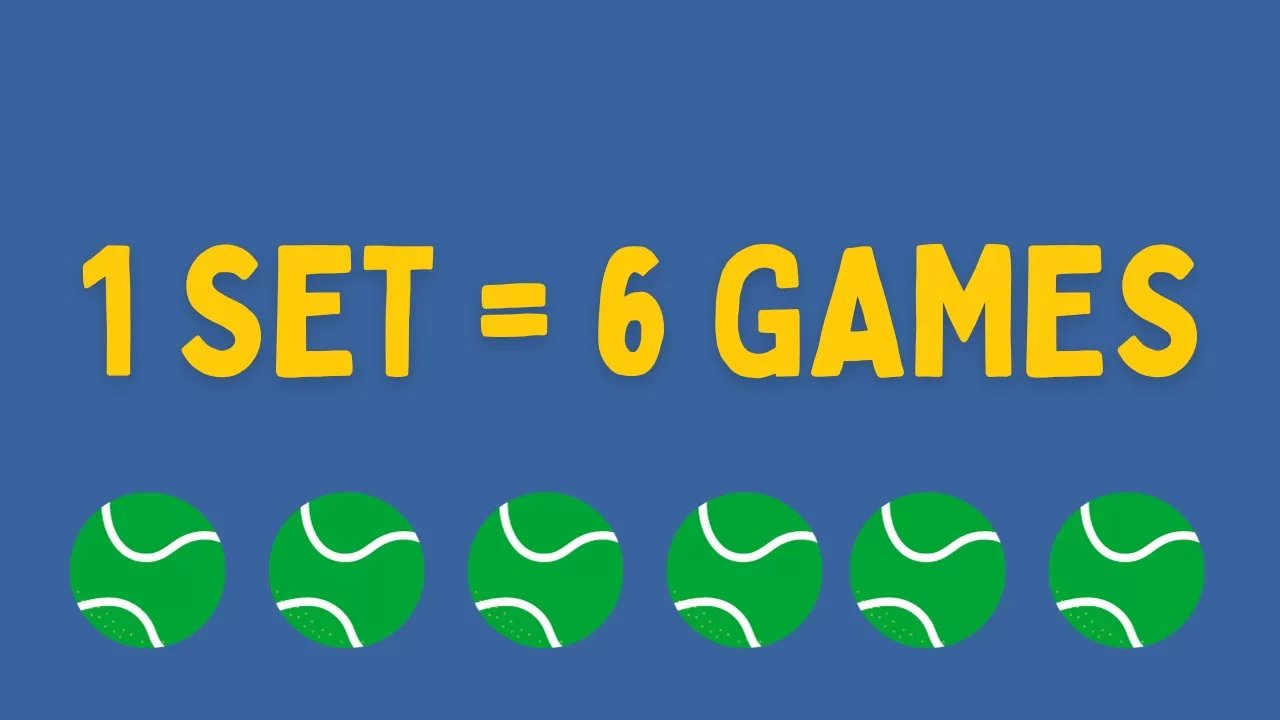
Typically, a tennis set requires a player to win at least six games, with a margin of at least two games.
Ever wondered about the scoring intricacies of tennis? It’s easy to get caught up in the excitement of a match, but understanding the fundamentals enhances the experience. One common question, especially for new fans, is how many tennis games in a set?
The rules dictate that a player needs to secure at least six games to claim a set. However, a simple 6-4 score isn’t the only way to achieve victory, as there needs to be a two game difference, which adds a layer of strategy.

How Many Tennis Games in a Set?
Okay, let’s dive into the heart of a tennis match: the set! When you watch tennis, you’ll hear people talking about sets and games. But exactly how many games make up a set? It’s not as simple as just counting to a certain number. It depends on the situation and the type of set being played. Understanding this is key to following the action and appreciating the strategy of a tennis match.
The Basics: Standard Sets
The most common type of set you’ll see is the standard set. In a standard set, a player needs to win at least 6 games to win the set. However, there’s a little more to it than that! To win a set, a player also needs to win by at least 2 games. This “win by two” rule is essential and can lead to sets that go beyond just 6 games.
What if the Score is 6-5?
Imagine one player has won 6 games, and their opponent has won 5. In this situation, the set isn’t over yet! The player who is leading with 6 games needs to win one more game to secure the set. If that player wins the next game, the score becomes 7-5, and they win the set. This is one way for a set to stretch longer than 6 games.
The Importance of the Two-Game Margin
The “win by two” rule makes tennis more exciting. It stops the set from ending with a one game difference. If the score gets to 6-6, we enter a tie-breaker. This ensures that a set always has a clear winner and gives an extra chance for the trailing player to catch up. That’s the beauty of tennis!
Tie-Breakers: When the Score is 6-6
So, what happens if the score reaches 6-6 in a set? This is where the tie-breaker comes into play. The tie-breaker is a special game that’s used to decide who wins the set. It’s like a mini-match all in one game! Tie-breakers keep a set from going on forever, and they add an extra thrill to the end of the set.
How Tie-Breakers Work
Tie-breakers have their own set of rules. To win a tie-breaker, a player must score at least 7 points. Like a standard set, a player also must win by a margin of 2 points. So, if the score gets to 6-6 in the tie-breaker, then the play continues until one player has two points lead. Here’s the process in simple steps:
- The first player serves one point.
- The second player then serves two points.
- The players alternate serving two points at a time until someone reaches 7 points with a two-point advantage.
For example, if the score is 7-5, the first player wins the tie-breaker and the set. If the score reaches 6-6, the first player to go ahead by two points wins. So, a score of 8-6 also wins the tie-breaker.
Why Are Tie-Breakers Used?
Tie-breakers are used to prevent tennis sets from getting too long. Imagine if a set kept going game after game without an end, it would be exhausting for the players and the audience. The tie-break makes sure that a set ends in reasonable time, and it creates exciting finish in tennis. They add drama and keep the tension high, making every point in the tie-breaker a critical moment of the match.
Different Scoring Systems in Tennis
While the standard set with tie-breakers is the most common format, you might sometimes come across other scoring systems. These formats are often used in different types of matches or at different levels of play. Knowing about these different ways of scoring can help you understand the game in more detail.
Advantage Sets
Before the tie-break became popular, many matches used “advantage sets.” In an advantage set, you must win by two games, even if the score goes over 6-6. For example, if the score is 6-6, then the set continues until one player wins two games in a row, so score becomes 8-6, or 7-5, 10-8 and so on. There is no tie-breaker. These sets can get very long! You might still see advantage sets at some club level matches or in certain older tournaments, but they are generally less common now.
Short Sets
Short sets are exactly what they sound like – shorter than the standard set. In a short set, the first player to win 4 games wins the set. The “win by two” rule still applies in this format, so if the score reaches 4-3, the player who is leading needs one more game. If the score is 4-4, a tie-breaker is used, similar to the standard set. These sets are often used in practice or exhibitions because they are faster and take less time.
Pro Sets
Pro sets are like very long sets. In a pro set, the first player to win 8 games wins the set. The two-game advantage also applies here. If the score goes to 7-7, the next player to go ahead by two games wins. These pro sets are designed to be longer than normal sets, giving more scope for tactics and swings in the game. Sometimes, they have a tie-break at 8-8. You might see a pro set in some kinds of smaller tournaments.
The Importance of Understanding Game and Set Scoring
Understanding how many games are in a set is so important for a tennis fan. You know exactly when a set is going to end and appreciate every single game and every single point. It makes you see the strategic choices made by each player. For example, if a player is one game away from winning a set, they might play very defensively. You can also see the intensity of a tie-break, when each point is like a make or break moment of the match.
Keeping Track of the Score
Knowing the scoring rules helps you follow the match closely. You’ll know exactly when a set is close to ending, and you will understand how important the pressure points are. When a player is up 5-3, knowing they have just one game to take the set makes every point extra important. When it is 6-6 and a tie-break is coming, that’s when you know the tension is going to increase.
Enjoying the Drama of the Match
Understanding the rules also helps you enjoy the drama and the thrill of the match. When you know how many games are left in a set and the “win by two” rule, every single point takes on a whole new meaning. You can feel the pressure building up, and appreciate the strategy of the players. Whether its a close set at 6-5, or an intense tie-break, you can be in the moment, feeling every serve, every return, and every point.
A Quick Reference Guide
Let’s recap the number of games in each type of set:
| Type of Set | Games to Win | Notes |
|---|---|---|
| Standard Set | 6 | Must win by at least 2 games; tie-break at 6-6 |
| Advantage Set | 6 | Must win by at least 2 games; no tie-break |
| Short Set | 4 | Must win by at least 2 games; tie-break at 4-4 |
| Pro Set | 8 | Must win by at least 2 games; tie-break at 8-8 (sometimes) |
How Many Sets in a Match?
Now that we’ve talked about games in a set, lets look at sets in a match. The number of sets needed to win a match varies depending on the tournament and format.
Best of Three Sets
The most common match format is the “best of three sets”. In this format, a player has to win two sets to win the match. Once they have won two sets, the match is over. This format is widely used in most tournaments and it’s perfect to give exciting and fast matches.
Best of Five Sets
The best of five sets is usually seen in the Grand Slam tournaments (like Wimbledon, US Open, and French Open). In this format, a player needs to win three sets to win the match. These are longer and more demanding than best of three matches, and they need a lot of stamina and endurance. A best of five matches can be the ultimate test for a tennis player.
So, there you have it! Understanding the number of games in a set, the tie-breaker, and the different types of sets can increase your enjoyment of tennis. Knowing these scoring rules will make you a super-fan of tennis!
It might seem like a lot to take in at first, but with a little practice, it’ll become second nature. So, next time you watch a tennis match, you’ll be able to follow the score easily and enjoy all of the excitement even more. It’s a great feeling to understand how each point plays into the overall progress of the game. Tennis can be super exciting when you understand the rules.
Tennis for dummies video | Tennis Scoring Explained
Final Thoughts
Typically, a tennis set requires a player to win at least six games. A clear margin of two games must be achieved. This means if the score reaches 6-5, one more game is necessary to conclude the set at 7-5.
However, if the score becomes 6-6, a tie-break game happens. This tie-break determines the set winner. Therefore, how many tennis games in a set can vary, usually between 6 and 7 with exception of tie break.

