
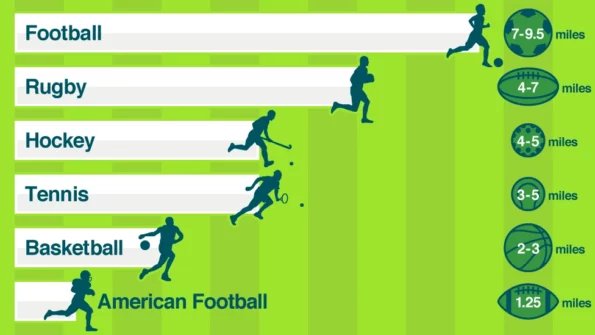
Basketball players run an average of 2.5 to 3 miles in a typical game.
Ever wondered about the sheer athleticism on display during a basketball match? It’s more than just jumping and shooting; it’s about constant movement. The question “how much do basketball players run in a game” often comes up.
These athletes are constantly shifting, sprinting, and backpedaling across the court for nearly an hour. The actual distance covered depends on their position and the game’s pace, but it’s a considerable amount.

How Much Do Basketball Players Run in a Game?
Ever wondered how much ground basketball players cover during a game? It’s not just about those incredible dunks and three-pointers. These athletes are constantly on the move, sprinting, shuffling, and backpedaling. Understanding the distances they travel can really help us appreciate their incredible fitness and stamina. Let’s jump into the details and see just how much they run in a typical basketball game.
Average Distance Covered: The Big Picture
On average, a basketball player will run approximately 2.5 to 3 miles during a single game. Now, before you gasp, remember that a game is 48 minutes long in the NBA (National Basketball Association) and 40 minutes in college basketball. That’s a lot of time to be covering ground! This distance varies widely depending on several key factors, such as the player’s position, the style of play, the game’s intensity, and even individual player tendencies.
Factors Influencing Running Distance
Not all players run the same amount. Different aspects of the game and individual players’ roles can make a huge difference.
Player Position
The position a player plays is the largest factor. Let’s break down the typical running distance by position:
- Point Guards: These players are often the engines of their teams. They dribble the ball up the court, direct the offense, and usually cover the most ground – often 3 to 3.5 miles per game. Their constant movement between offense and defense keeps them very active.
- Shooting Guards: They typically run a bit less than point guards, roughly 2.5 to 3 miles. They need to be ready to move quickly for shots and help on defense.
- Small Forwards: With their versatile roles, small forwards often travel 2.5 to 3 miles per game. Their responsibilities can shift between attacking the basket and defending the perimeter.
- Power Forwards: These guys are usually involved in rebounding and interior play. They run a bit less, generally between 2 and 2.75 miles per game, but do a lot of intense work in shorter bursts.
- Centers: Generally, centers run the least, averaging around 1.5 to 2.5 miles per game. While they might not run as far, their movements often involve explosive bursts around the basket and constant boxing out for rebounds.
Game Intensity and Pace
The pace of the game also has a big impact. Games with fast breaks, lots of possessions, and high scoring often mean players cover more ground. Think about it: if the ball goes back and forth rapidly and everyone is making quick transitions between offense and defense, players end up running a lot more than in a slower, more deliberate game. A slower game with more half-court sets, often sees less running.
- Fast-Paced Games: Expect players to run 3+ miles in games that have quick scoring, lots of turnovers, and a high number of possessions.
- Slower-Paced Games: Players might only cover 2-2.5 miles in games with deliberate play and fewer possessions.
Individual Playing Style
A player’s individual playing style also matters. A player who is constantly running to make cuts or looking for the open lane will often cover more ground than someone who’s mainly a catch-and-shoot type of player. Similarly, a defensive player who is always active in pressuring the ball and trying to get steals will log more miles than one who stays mainly in a zone defense. Consider the difference between someone like a high-energy defender compared to a player whose specialty is hitting shots from the outside.
Comparing Different Levels of Play
It’s also important to look at different levels of basketball to see how they compare in running distance. The game changes as players get more experienced and as the pace and style adjust.
NBA vs. College Basketball
NBA players tend to run slightly less on average compared to their college counterparts. The main reason for this is because NBA players often have more set plays, while college games can have more frantic pacing with less structure at times. Additionally, in the NBA there are more timeouts and media breaks, which give players a chance to rest. Here’s a general comparison:
- NBA: Average running distance is typically between 2.5 and 3 miles per game.
- College: The average distance often ranges from 2.75 to 3.25 miles due to the faster pace and fewer stoppages of play.
High School and Other Levels
High school and younger players often cover less distance than college and professional players. This is because the game is less structured and typically has a slower pace and shorter game times. Here’s a general look at the distance covered:
- High School: Players might average around 2 to 2.5 miles per game.
- Other Levels: Depending on skill level and game style, the running distance will vary, but is generally lower than what is seen in college or the NBA.
How Running Distance is Measured
You might wonder how people figure out how much running happens in basketball games. There are now advanced tracking systems that help calculate these distances and other performance metrics. These tools allow coaches and trainers to better understand how their players are working on the court.
GPS Tracking Technology
One of the most common ways to measure running distance is by using GPS tracking devices. These devices are small and lightweight and can be worn by players during games. They can accurately track a player’s movements, including running distance, speed, and acceleration. This real-time data provides valuable information for coaches and trainers who can analyze each player’s output and make changes in practice or games to maximize player performance. This technology is also useful for tracking player fatigue to prevent injuries.
Motion-Capture Systems
More complex motion-capture systems are sometimes used, often by professional teams. These systems involve cameras set up around the court that track the movement of players with great accuracy. This technology allows for an extremely precise analysis of a player’s movements, providing data not just on running distance but also on acceleration, deceleration, jumps, and directional changes. All these metrics help to create a complete picture of a player’s physical output during a game.
Why is All This Running Important?
Understanding how much running a basketball player does is essential because it highlights the demands of the game and why basketball players must have superior endurance.
Physical Fitness and Stamina
Basketball is a game that requires a high level of physical fitness. Players need to be able to run up and down the court at speed multiple times, maintain high energy levels throughout the game, and make quick directional changes. The ability to perform these actions repeatedly without getting tired is crucial. A player’s cardiovascular fitness is key to being a successful basketball player.
Impact on Performance
The distance a player runs directly impacts their performance. Players who can maintain a high work rate throughout the game often have an advantage over those who tire easily. They are more likely to be involved in the flow of the game, make important plays, and play good defense. Endurance directly impacts how well a player can impact a game during its final stages.
Injury Prevention
Understanding how much a player runs can also help in managing their workload and preventing injuries. Coaches and trainers use this data to design effective training programs and monitor player fatigue. Knowing when a player might be overexerting themselves can help in making adjustments to practice or playing time to keep them healthy.
Training to Cover the Distance
Given how much running is involved in basketball, players need to train accordingly. Training methods must focus on improving both speed and endurance so players can perform optimally for the duration of a game.
Conditioning Drills
Conditioning drills are an essential part of basketball training. These drills include running sprints, shuttle runs, and interval training, all designed to improve the players’ speed and cardiovascular endurance. This type of training prepares them for the constant motion during games and also builds their ability to run for longer periods without tiring out.
Strength and Endurance Training
Basketball training isn’t just about running. Strength and endurance training are just as important. Strength training helps players to make quick changes in direction and maintain a good playing posture throughout the game. Endurance training improves their aerobic capacity. Combined, these two types of training help prepare players for both the physical and cardiovascular demands of a basketball game.
The Role of Rest and Recovery
Just as important as the training itself is the need for rest and recovery. Basketball players put a lot of stress on their bodies during games and practices. Therefore it’s crucial that they take adequate time to recover to prevent injuries and improve their performance.
Importance of Active Recovery
Active recovery includes light activities, such as stretching or light jogging, that help promote blood flow to muscles, reducing soreness, and speeding up the recovery process. This helps to prevent injury and makes the players stronger and more capable. Active recovery days are just as vital as practice days in keeping players healthy.
Adequate Sleep and Nutrition
Finally, proper sleep and nutrition are non-negotiable. Players need to get enough sleep to allow their bodies to rest and repair and a diet that provides all the essential nutrients. The right combination of sleep and nutrition greatly impacts a player’s energy levels and overall health. Proper nutrition ensures players have the energy to perform their best on the court.
So, next time you watch a basketball game, remember that those incredible athletes are not just scoring and making plays. They are also covering a significant amount of ground every game. The distance they run speaks to their fitness, stamina, and the overall demands of the game.
Is Long Distance Running Good for Basketball?
Final Thoughts
On average, basketball players cover approximately 2.5 to 3 miles during a single game. This distance varies based on position and playing style. Guards typically run more than centers.
The intensity of running also influences the total distance. How much do basketball players run in a game depends on the pace of the match. Faster games will obviously involve more running.
Therefore, while 2.5 to 3 miles provides an estimate, individual players’ mileage differs.

