
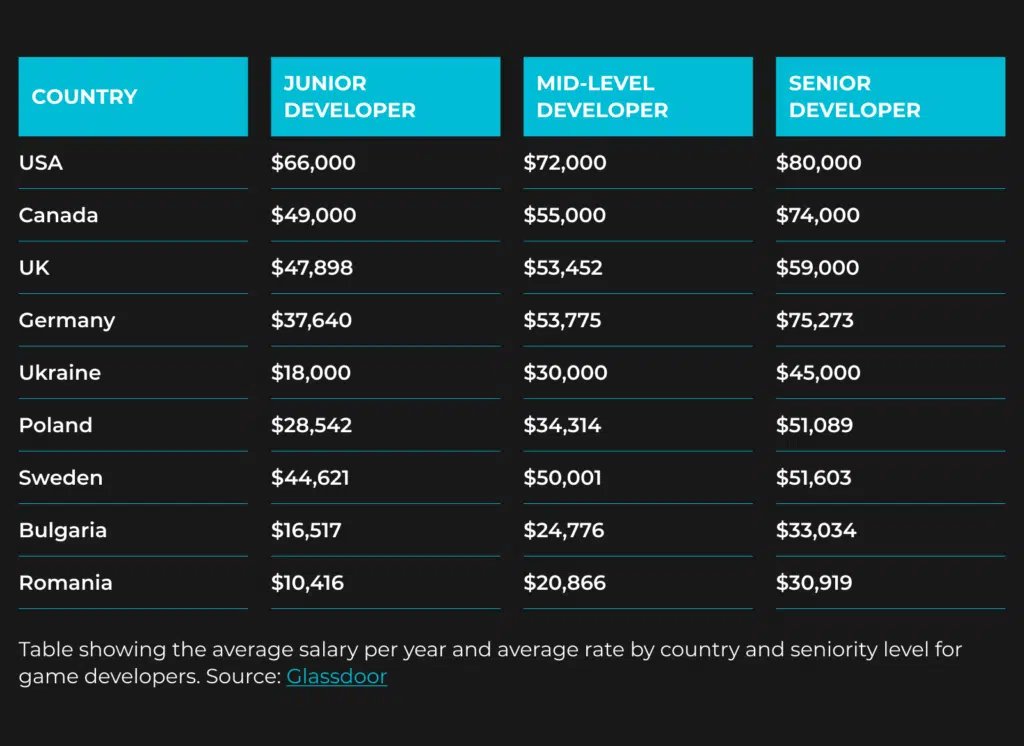
Game developer salaries vary greatly depending on experience, location, and the specific role, but generally range from $60,000 to well over $150,000 per year.
Ever wondered about the financial side of creating your favorite video games? Many people dream about working in game development, but understanding how much game developers earn often remains a mystery. This can influence a career choice or simply feed curiosity.
Salaries depend on several factors such as their expertise and skill level. The city they work in and the company size also impacts their pay. It’s a dynamic field with varying income potential.

How Much Game Developers Earn
Ever wondered how much the people who make your favorite video games get paid? It’s a question many aspiring game developers and curious gamers have! The truth is, it’s not a simple number. Like any job, the salary for game developers depends on many things. Let’s dive into the details and explore what factors affect their income, the different types of developers, and what you might expect if you choose this exciting career path. It’s going to be a journey into the world of game development paychecks!
Different Types of Game Developers and Their Earning Potential
Game development isn’t just one job; it’s a team effort with many different roles. Each role requires a specific skill set, and that affects how much each person earns. Let’s take a look at some of the common roles and what they typically make:
Game Programmers
These are the coders of the game world! They write the computer code that makes the game actually work. They create the game’s mechanics, like how characters move, how the game reacts to your button presses, and the logic that runs the game. They are crucial to making the game playable. Game programmers usually earn a good salary because coding is a tough and important job.
- Junior Programmer: This is an entry-level position. Someone might start with around $50,000 to $70,000 per year.
- Mid-Level Programmer: With a few years of experience, their pay can go up to $75,000 to $100,000 per year.
- Senior Programmer: These experts earn the most. They often get $100,000 to $150,000+ per year, depending on their skills and experience.
Game Designers
Game designers are the idea people! They plan the game’s story, characters, and rules. They think about how the game should feel and make sure it’s fun. They often create detailed documents explaining how the game should be played. Their earnings can vary greatly based on experience and the company’s size.
- Junior Designer: Starting pay could be around $45,000 to $65,000 per year.
- Mid-Level Designer: With more experience, their salary can increase to $65,000 to $90,000 annually.
- Lead Designer: Leading a game design team can earn you $90,000 to $130,000 or more per year.
Game Artists
Game artists create the visuals of the game. This includes characters, environments, items, and special effects. They use their artistic skills to make the game look appealing. Game artists have different specializations like 2D, 3D, Character artists, etc. Their pay also varies depending on the specialty and experience.
- Junior Artist: They may begin with $40,000 to $60,000 a year.
- Mid-Level Artist: As their skills improve, they might earn $60,000 to $85,000 annually.
- Senior Artist: Experienced artists can make $80,000 to $120,000+ per year.
Game Animators
Animators are the ones who bring movement to the game. They make the characters and objects move smoothly and realistically. They create the illusion of life within the game. They work closely with artists and designers to create a cohesive look. Their earnings are similar to game artists.
- Junior Animator: Starting around $40,000 to $60,000 per year.
- Mid-Level Animator: With a few years of experience, $60,000 to $85,000 is possible.
- Senior Animator: They can earn from $80,000 to $120,000+ a year.
Audio Engineers and Sound Designers
These developers work with sound, making sure the game has fitting music, sound effects, and voiceovers. They contribute to the immersive experience of a game. The importance of this role has grown greatly in recent years.
- Junior Audio Engineer: They might start at $45,000 to $65,000 per year.
- Mid-Level Audio Engineer: They earn between $65,000 and $90,000 per year.
- Senior Audio Engineer: Experienced experts could make $90,000 to $120,000+ annually.
Quality Assurance (QA) Testers
QA testers are the bug hunters! They play the game a lot to find problems or glitches. They report these issues to the developers so they can fix them. They help make sure the game is ready to be released. While QA Testers are important, their salaries are usually lower than the other roles.
- Entry-Level QA Tester: They usually start with around $35,000 to $50,000 per year.
- Experienced QA Tester: They may earn between $50,000 to $70,000 per year.
- Lead QA Tester: Lead testers can make $70,000 to $90,000 or more per year.
Factors Influencing a Game Developer’s Salary
Besides the job role itself, several factors impact how much a game developer earns. Here are the key things to think about:
Experience Level
Like most professions, the more experience you have, the higher your earning potential. A junior developer just starting out will make less than someone with 5 or 10 years of experience under their belt.
Location, Location, Location!
Where a game developer works makes a big difference. Big tech hubs like San Francisco or Seattle in the United States tend to pay higher salaries than areas with a lower cost of living. Similarly, working in a major city like London or Tokyo might mean a bigger paycheck than working in a smaller town. Cost of living also greatly affects how much salary you need to live comfortably, so it’s important to consider that when comparing salaries.
Company Size
Larger companies often have more resources and might be able to pay their employees more. Smaller, independent studios might offer lower salaries, but they can also offer a chance to work on more creative projects. It is also important to remember that there are differences between companies who develop AAA games (big-budget games) and companies who create indie or mobile games.
Specific Skills
Certain skills are highly in demand and can increase your pay. For example, experience with specific game engines like Unity or Unreal Engine is very valuable. If a developer knows many programming languages like C++, Java or Python, they will likely earn more. Expertise in areas like artificial intelligence, virtual reality (VR), or augmented reality (AR) can also boost your salary.
Education and Certifications
While not always required, having a degree in computer science, game design, or art can be very helpful. Some people go to special schools to study game development specifically. Certifications in specific software or skills can also help you stand out and earn a higher salary.
Negotiation Skills
Don’t forget that your ability to negotiate your salary is important! Knowing your worth and confidently making a case for your skills and experience is very important. Don’t be afraid to research the average salaries for your position and ask for what you deserve.
Game Developer Salary Ranges: A Quick Look
To give you a clearer picture, here’s a table summarizing the approximate salary ranges for different game development roles:
| Job Role | Entry-Level | Mid-Level | Senior Level |
|---|---|---|---|
| Game Programmer | $50,000 – $70,000 | $75,000 – $100,000 | $100,000 – $150,000+ |
| Game Designer | $45,000 – $65,000 | $65,000 – $90,000 | $90,000 – $130,000+ |
| Game Artist | $40,000 – $60,000 | $60,000 – $85,000 | $80,000 – $120,000+ |
| Game Animator | $40,000 – $60,000 | $60,000 – $85,000 | $80,000 – $120,000+ |
| Audio Engineer | $45,000 – $65,000 | $65,000 – $90,000 | $90,000 – $120,000+ |
| QA Tester | $35,000 – $50,000 | $50,000 – $70,000 | $70,000 – $90,000+ |
Note: These are just estimates. Actual salaries may vary. Always research salary data specific to your area and role.
Beyond Salary: Other Perks and Benefits
Besides their basic salary, game developers can also receive other perks and benefits. This can make a big difference in their overall quality of life and job satisfaction. Some common perks include:
- Health insurance: Good health coverage can really help developers manage the unexpected costs of medical care.
- Paid time off: Vacation time, sick days, and holidays are crucial for maintaining a healthy work-life balance.
- Retirement plans: Saving for retirement with employer matching programs provides long term financial security.
- Stock options: Some companies offer employees the chance to buy company stock at a reduced price.
- Performance bonuses: When a game does well, employees may receive a bonus payment for their hard work.
- Free games: Many game companies give their employees free copies of their games.
- Studio perks: Game studios may offer perks like free food, gaming rooms, and team building activities.
- Professional development: Some employers will pay for further education or training to help their developers grow.
The Excitement and Challenges of Game Development
While the pay and benefits are important, it’s also good to remember that working in game development is more than just a job. Game development is known for being a fast-paced, creative, and sometimes demanding industry.
On the one hand, it’s incredibly exciting to be part of a team that creates immersive worlds and fun experiences for millions of players. You get to put your creativity and technical skills into making something that can bring joy and entertainment to people around the world. On the other hand, game development can come with tight deadlines, long hours, and the challenge of adapting to rapidly changing technology. Game development is a difficult job, and it may involve a lot of time at a computer and not a lot of human interaction.
Working in game development offers a unique combination of technical skill, creative vision, and the opportunity to collaborate with a team of passionate and interesting people. Like any career, you must balance the good things with the challenging ones. Understanding all these aspects is important before you decide to start down this road.
So, how much do game developers make? As you’ve seen, it depends on many factors. What is important to consider is that game development offers interesting job opportunities for many different types of people, and the chance to make good money for doing work that you enjoy.
How Much I Get Paid as a Game Programmer
Final Thoughts
Game developer salaries vary significantly. Experience, location, and specialization influence earning potential. Entry-level positions often start lower, while experienced developers in high-demand areas command higher salaries.
Knowing how much game developers earn depends on specific roles. Senior programmers or lead designers can make substantially more than junior artists, for example. The industry is competitive, so skills and portfolio quality affect salary negotiations.

