
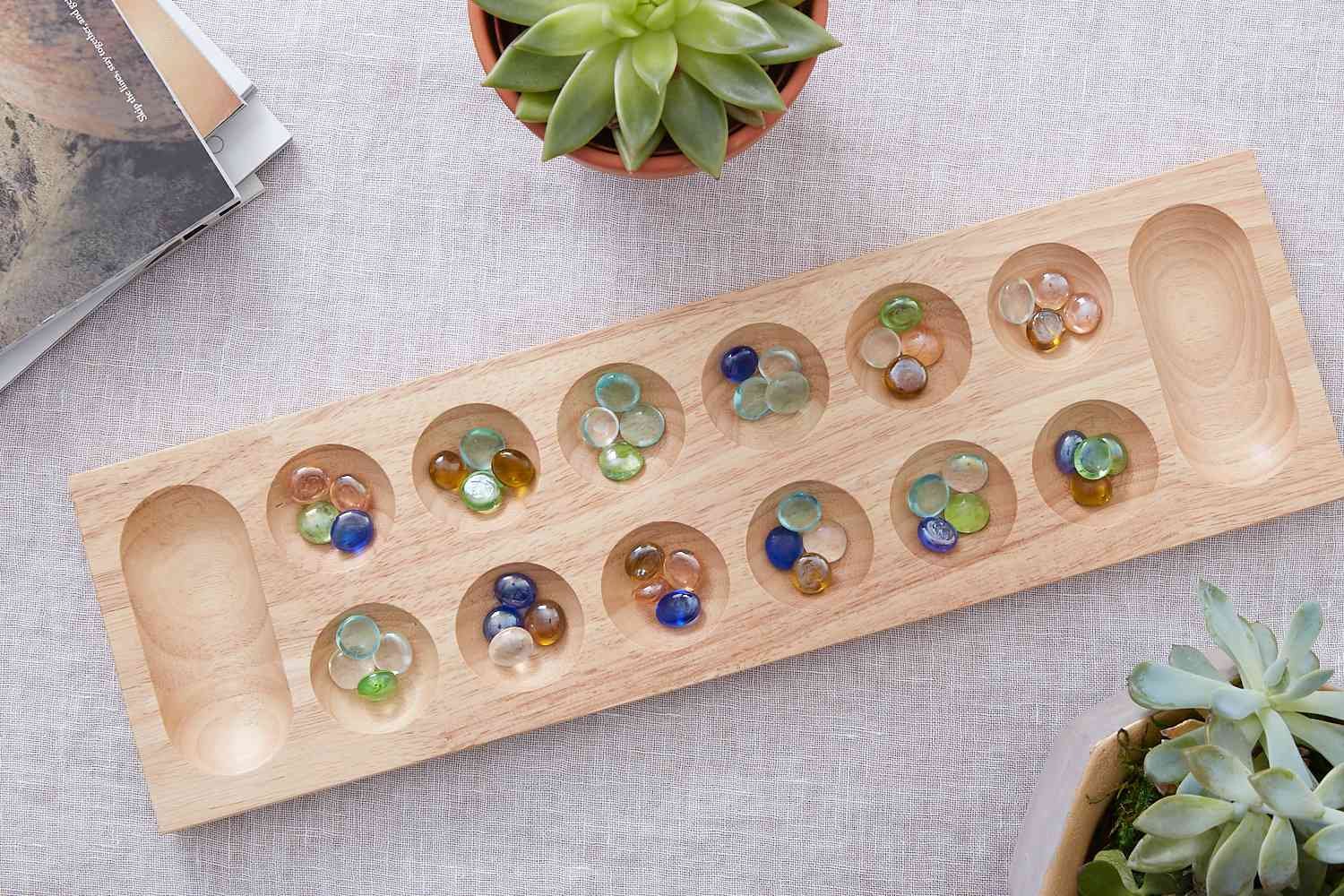
The game mancala is believed to be at least 3,600 years old, with evidence suggesting its origins in ancient times.
Have you ever wondered about the origins of some of the world’s oldest games? Perhaps you’ve pondered, how old is the game mancala? It’s a question many ask when encountering this fascinating board game.
Mancala, with its simple rules yet engaging gameplay, boasts a history stretching back millennia. We will explore its roots, which go way back to ancient societies and cultures.

How Old Is the Game Mancala?
Mancala isn’t just one game; it’s a whole family of games played all over the world! When we ask, “how old is the game mancala?” it’s like asking how old are cats? There are so many different kinds, and they’ve been around for a very long time! Figuring out the exact age of mancala is tricky, like trying to find the first grain of sand on a beach. Instead of one definite birthdate, we need to look at the clues from history and archeology. Let’s go on an adventure to see how far back mancala games really go!
The Ancient Roots of Mancala
Finding the very first mancala game is tough because early versions probably weren’t made with fancy boards or pieces. People likely used holes in the ground and pebbles or seeds as counters. These are things that wouldn’t last thousands of years for us to find! However, we do have some exciting discoveries that give us a peek into mancala’s old past. So, while we can’t pinpoint a single start date, we have some clues that help us understand the incredible timeline of mancala and its ancient origins.
Archeological Evidence
Archeologists are like detectives who dig in the ground to find old things. They have found evidence that suggests mancala games existed a long, long time ago! Let’s look at a few of these.
- Jordan: One of the oldest discoveries comes from Jordan! In a place called Ain Ghazal, archeologists found a game board carved into a stone slab. This board is thought to be around 6,000 to 7,000 years old! That’s older than the pyramids! It looks like they played a mancala game there long, long ago.
- Ethiopia: In Ethiopia, they found rock-cut boards that are thought to be thousands of years old, too. These boards are carefully carved, and the fact that they were made in rock suggests that people used them regularly.
- Egypt: While the evidence is less clear than the Jordan find, some researchers suggest that mancala-like games were known in Ancient Egypt as well. Though there isn’t a clear ancient Egyptian board, there are some drawings that hint at games involving pits, which suggests a potential mancala relative.
These archeological discoveries are very important because they help us see that mancala games are not new games at all! They show that people in different parts of the world have been playing games like mancala for thousands of years.
The Spread of Mancala Across Continents
Mancala didn’t just stay in one place. Like seeds carried by the wind, the game travelled around the world. It is believe that mancala likely originated in Africa or the Middle East, but then people started playing it everywhere, from Asia to the Caribbean and even parts of South America.
- Africa: Africa is where most believe mancala originated. There are so many different versions of mancala played in different countries and cultures in Africa. You can find people playing it in the streets, at home, or even during festivals. It shows that mancala has always been a big part of daily life.
- Asia: Mancala travelled to Asia through trade routes and cultural exchange. You can see versions of the game played in countries like India, the Philippines, and Indonesia. Each country adapted the game in their own unique way.
- Middle East: As we already mentioned, some of the oldest archeological evidence of the game is in the Middle East. Mancala continues to be a popular game across many countries in this region.
The way mancala traveled around the world is a big part of its story. It’s like a game with its own amazing journey, and every place it went added a new chapter to its book.
Variations of Mancala Around the World
It’s amazing to see all the different ways people play mancala. While the basic idea of moving seeds around pits is often the same, each culture added their own special touch to the game.
Common Mancala Board Types
You’ll see different numbers of pits, different rules for capturing stones, and even different names for the game. This shows that it’s a game that has changed as it traveled and was passed down through generations. Let’s see some of them
- Two-Row Boards: This is the most common type. Each player has one row of pits in front of them, and one large end pit, called a “store” or “home”. This type is very popular in Africa and has given rise to a wide variety of variations.
- Four-Row Boards: In some parts of Asia and Africa, you find boards with four rows of pits. The rules with these boards can be a bit different, making for different strategies.
- Other Variations: There are other board types you can find sometimes, like boards with only one row, or boards with more than four rows. Also, the size and shape of the pits themselves can vary greatly, too, with some even using naturally occurring holes in the ground.
Popular Mancala Game Names and Rules
The name of the game also varies a lot depending on where you are:
- Oware (Ghana): This game is one of the most popular. Players are moving stones trying to gain more than opponent. The game has slightly different capture rules and its own unique strategy.
- Bao (East Africa): This game is known for its complex gameplay. In Bao, the rules for capturing stones are more strategic, which makes it a game that takes a lot of planning.
- Kalah (North America & Europe): Kalah is a very well-known version, and is often what people think of when they hear the word “Mancala”. The rules in Kalah are easy to learn, but also fun for advanced players.
- Congkak (Malaysia): In Congkak, the rules for sowing stones are fairly standard, but there are unique capture rules that make this game quite exciting.
The huge number of names and slight rule variations just show how many different cultures have been playing mancala for a long time.
Why is Mancala Still Played Today?
Even though mancala is incredibly old, it is still played by people all over the globe. Why is this? There are many reasons:
- Simple Rules: The basic rules of most mancala games are easy to learn, even for young kids. This makes it a game that can be easily passed down through generations. The way the seeds move around the board, and how you capture them is often simple to grasp.
- Strategic Depth: Even if the rules are simple, there’s a lot of strategy involved. A player has to think about their next few moves. You have to anticipate what your opponent will do, and figure out how to trick them or set up the game to your advantage.
- Cultural Importance: For many cultures, mancala isn’t just a game – it’s part of their culture. It’s something that brings people together, and it’s a chance to connect with your ancestors.
- Accessible: You don’t need a lot of fancy equipment to play mancala. You can easily use a carved out board in the sand, or a simple wooden board with some seeds or pebbles. This makes it a game that is easily accessible to everyone.
Mancala’s Enduring Legacy
Mancala’s history stretches back to ancient times. It’s a game that has evolved throughout the years, picking up different styles from different places, but its core appeal has lasted. From ancient stone carvings to modern board game versions, mancala’s story is one of adaptation and cultural exchange.
A Game for All Ages
Mancala is a game that people of all ages can enjoy. Children can learn simple math and strategy, while adults can get into very complex strategies. The game can be played fast and casually, or slowly and thoughtfully.
Mancala in the Modern Era
Today, you can find mancala being played both in traditional settings and on digital devices. This shows that the game isn’t just an old thing; it has also found a place in modern life. The game is available to download on phones and tablets and played online with people all over the world. Some people even create intricate wooden mancala boards with beautiful designs. Mancala’s old story is very much a part of its modern one, showing that something old can still be fresh.
Mancala’s Importance in Education
In recent years, educators have started to see the value in using mancala in schools. Because the game helps with math skills and critical thinking, it’s a wonderful way to keep learning fun and also teach important lessons. Mancala’s simple rules make it easy for kids to learn, while at the same time the complex strategies help them learn to plan ahead. It shows how a game that has existed for thousands of years can be a great educational tool even now.
Mancala’s story isn’t just about how old it is. It’s about how it has touched so many cultures and has helped different people connect throughout history. The game will probably continue to be played for centuries, continuing its story of being a game loved by people all over the world.
How to play Mancala (2024 rules)
Final Thoughts
Mancala’s origins are ancient; dating back thousands of years. The exact origin point remains unknown but historians have found evidence of mancala like boards from archaeological sites. These date back to 6th and 7th century AD.
The game’s spread across continents shows its age and popularity. ‘how old is the game mancala’ remains a fascinating question. We know this classic game has a very old origin. It is a very old game.

