
The formula to calculate games back is: (Team A Wins – Team B Wins) + (Team B Losses – Team A Losses) / 2.
Ever wondered how teams are ranked in baseball, especially when they’re not tied? It often comes down to calculating “games back.” Understanding this concept helps you grasp team standings beyond just win-loss records. It shows you the difference between the leading team and others.
Figuring out how to calculate games back in baseball is simple with a straightforward equation. It allows fans to quickly assess each team’s position in the standings. This calculation gives a more nuanced view of the race.

How to Calculate Games Back in Baseball
Okay, baseball fans, let’s talk about something that might sound a little tricky at first but is actually pretty simple: calculating games back. You’ve probably heard announcers say a team is “three games back” or “a half-game up.” But what does that actually mean? It’s all about figuring out how far behind or ahead a team is from the team leading their division or league. Let’s break it down step-by-step so you can figure it out yourself.
Understanding the Basics: Wins, Losses, and Standings
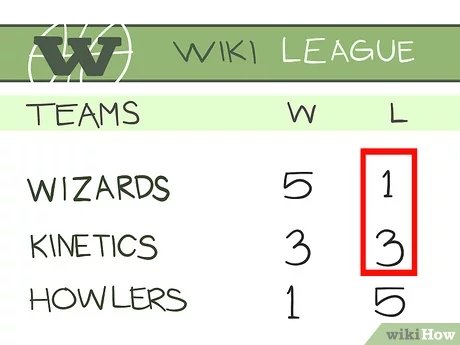
Before we dive into the calculation, we need to be sure we’re on the same page about the basics of baseball standings. Every team plays a bunch of games in a season. They either win, lose, or in very rare cases, tie. The standings show us each team’s record, which is just how many games they’ve won and how many they’ve lost. A team with more wins than losses has a winning record, and a team with more losses than wins has a losing record. A team’s record is important for determining games back.
For instance, if a team has won 60 games and lost 40 games, their record would be 60-40. Pretty easy, right? Now, let’s see how games back comes into play. This figure really shines when we want to compare teams within the same division or league. It paints a clearer picture of who is really leading the pack and how much work other teams have to do to catch up.
What Does ‘Games Back’ Really Mean?
When we say a team is “games back”, we’re not just talking about how many games they’ve lost in total. It’s a specific measurement of the difference in their record compared to the leading team. It’s like checking the gaps between runners in a race; we are measuring how far a team is behind the leader in terms of wins and losses combined. The number represents half the difference in total games won minus games lost between the leader and the team behind.
For example, if Team A has 70 wins and 30 losses, and Team B has 65 wins and 35 losses, Team B isn’t just “5 wins behind”. Team B is 5 games behind in the loss column and they are 5 wins behind too. So, it’s actually more than just a 5-win gap in reality. That’s where games back comes in. The “games back” calculation is meant to represent that complete gap.
The Magic Formula: Calculating Games Back
Here is the formula, and it is easier than you think. Grab a pencil and paper (or a calculator!), and we can work through it together:
Games Back = [(Leader’s Wins – Team’s Wins) + (Team’s Losses – Leader’s Losses)] / 2
Let’s break down this formula into smaller steps:
- Step 1: Leader’s Wins – Team’s Wins: Take the number of wins of the leading team and subtract the number of wins of the team you’re checking the games back for.
- Step 2: Team’s Losses – Leader’s Losses: Take the number of losses of the team you’re checking and subtract the losses of the leading team.
- Step 3: Add the Results: Add the result from Step 1 and the result from Step 2.
- Step 4: Divide by 2: Finally, divide that total by 2.
That’s it! The answer will tell you how many games back a team is.
Working Through a Real Example
Let’s say we have these teams:
| Team | Wins | Losses |
|---|---|---|
| Team A (Leader) | 75 | 45 |
| Team B | 70 | 50 |
| Team C | 65 | 55 |
Let’s calculate how many games back Team B is from Team A:
- Step 1: 75 (Team A Wins) – 70 (Team B Wins) = 5
- Step 2: 50 (Team B Losses) – 45 (Team A Losses) = 5
- Step 3: 5 + 5 = 10
- Step 4: 10 / 2 = 5
So, Team B is 5 games back from Team A.
Now, let’s figure out how many games back Team C is from Team A:
- Step 1: 75 (Team A Wins) – 65 (Team C Wins) = 10
- Step 2: 55 (Team C Losses) – 45 (Team A Losses) = 10
- Step 3: 10 + 10 = 20
- Step 4: 20 / 2 = 10
Team C is a full 10 games back from Team A. That’s a bigger gap!
What About Half Games?
Sometimes, you might see a team that’s “half a game back” or something like “1.5 games back.” How does that happen? Well, it all comes down to the fact that a team’s record is the result of a number of wins and losses, and because games are typically won by either team (no ties), the difference between two teams will almost always be in halves. When the number in step 3 is an odd number, you get an odd result when you divide by two, which creates the half-game number.
Let’s use another example:
| Team | Wins | Losses |
|---|---|---|
| Team X (Leader) | 68 | 40 |
| Team Y | 67 | 41 |
Let’s calculate how many games back Team Y is from Team X:
- Step 1: 68 (Team X Wins) – 67 (Team Y Wins) = 1
- Step 2: 41 (Team Y Losses) – 40 (Team X Losses) = 1
- Step 3: 1 + 1 = 2
- Step 4: 2 / 2 = 1
Team Y is 1 game back from Team X.
Now let’s try this one:
| Team | Wins | Losses |
|---|---|---|
| Team M (Leader) | 71 | 41 |
| Team N | 70 | 42 |
Let’s calculate how many games back Team N is from Team M:
- Step 1: 71 (Team M Wins) – 70 (Team N Wins) = 1
- Step 2: 42 (Team N Losses) – 41 (Team M Losses) = 1
- Step 3: 1 + 1 = 2
- Step 4: 2 / 2 = 1
Team N is 1 game back from Team M.
And finally, let’s calculate another case where we might get half game back:
| Team | Wins | Losses |
|---|---|---|
| Team P (Leader) | 72 | 40 |
| Team Q | 71 | 41 |
Let’s calculate how many games back Team Q is from Team P:
- Step 1: 72 (Team P Wins) – 71 (Team Q Wins) = 1
- Step 2: 41 (Team Q Losses) – 40 (Team P Losses) = 1
- Step 3: 1 + 1 = 2
- Step 4: 2 / 2 = 1
Team Q is 1 game back from Team P. Okay, let’s check one more, to make sure we got half games down
| Team | Wins | Losses |
|---|---|---|
| Team R (Leader) | 73 | 40 |
| Team S | 72 | 41 |
Let’s calculate how many games back Team S is from Team R:
- Step 1: 73 (Team R Wins) – 72 (Team S Wins) = 1
- Step 2: 41 (Team S Losses) – 40 (Team R Losses) = 1
- Step 3: 1+1 = 2
- Step 4: 2 / 2 = 1
Team S is 1 game back from Team R. Let’s see one more.
| Team | Wins | Losses |
|---|---|---|
| Team T (Leader) | 73 | 40 |
| Team U | 72 | 40 |
Let’s calculate how many games back Team U is from Team T:
- Step 1: 73 (Team T Wins) – 72 (Team U Wins) = 1
- Step 2: 40 (Team U Losses) – 40 (Team T Losses) = 0
- Step 3: 1 + 0 = 1
- Step 4: 1 / 2 = 0.5
Team U is 0.5 games back from Team T. See how the odd number in the total of step 3 is creating the half game?
Why is Games Back Important?
Understanding how to calculate games back helps you see more than just who has the most wins. It shows the real difference between teams and helps fans and analysts understand the road ahead. For fans, it makes watching the games much more exciting and engaging. Instead of just knowing a team is behind, you now know exactly how much of a hill they have to climb.
For the team, each game has a different meaning, if they are 5 games behind, then it’s critical to win and they are looking to cut that gap down. If you know how many games back a team is, you can also predict how likely it is they can make a comeback. If they are many games behind with not many games left, their odds are lower.
Games Back in Different Scenarios
Games back is most often used within a division. In baseball, teams are typically organized into divisions (like the AL East or NL West), and the winner of each division usually goes on to the playoffs. The games back number shows how close teams are to winning the division. The number can also be used to compare across leagues or between wild card teams. Wild card teams are the teams with the best records, but who did not win their division. Games back can be used to track their position relative to the wildcard spot.
A Little Note About Games Ahead
Sometimes, instead of “games back,” you’ll hear about “games ahead.” This is used when a team is in the lead and you’re describing how far ahead they are of the next team. The calculation is similar, but the result is a positive number and it means a team is above the leader. So, games ahead is games back for the leading team.
Let’s take a team with 60 wins and 40 losses, and another team with 58 wins and 42 losses. If we calculate “games back”, the second team is 2 games back, and this also means, the first team is 2 games ahead of the second team.
Games Back and the Playoffs
Games back is super important as the end of the regular season approaches because it determines who goes to the playoffs. If a team is far back, it needs to work very hard to make it to playoffs. You can now understand that it’s not just about winning games, it’s also about the other team losing games to reduce the “games back” and make it to the playoffs.
Wild card races get really interesting, too, where several teams might be fighting for a few spots, and games back tells us exactly who is in contention for playoff berths.
So, there you have it! You now know how to calculate games back in baseball. It’s a great way to understand team standings and add another layer of enjoyment to the game. Keep practicing with different team records, and before you know it, you’ll be a games back pro!
Understanding games back is very important for any baseball fan who wants to really understand standings, so use what you learned in this article to follow the games more closely and be an informed baseball enthusiast.
HOW TO CALCULATE GAMES BACK – Baseball Basics
Final Thoughts
To calculate games back, subtract the leading team’s winning percentage from the trailing team’s winning percentage. Divide this result by two. This gives you the games back difference.
The resulting number represents how many games the trailing team trails the leading team. You must perform this calculation to understand standings. This is how to calculate games back in baseball.

