
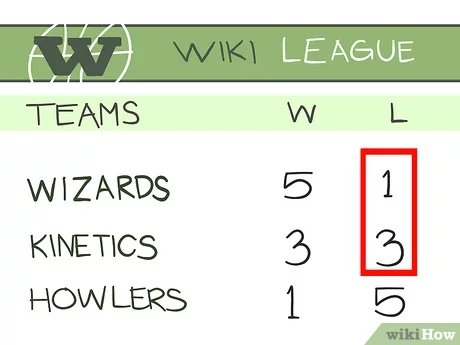
To calculate games back, you find the difference in the wins and losses between two teams, divide by two, and that’s the gap between them.
Ever wondered how sports standings truly work, specifically how teams are separated? Often, we hear terms like “games back” thrown around, but what does it really mean? This article clarifies how to calculate games back, a key metric for understanding team performance in a league context.
The games back number shows the distance between a team and the current division or league leader. We will walk you through the simple steps needed to determine this difference. By the end, you’ll easily know how to calculate games back.

How to Calculate Games Back: A Simple Guide
Ever wondered how teams are ranked in sports leagues? It’s not just about who has the most wins! A key concept is “games back,” which tells us how far a team is behind the leading team in their standings. It’s a handy way to understand the competitive landscape and see how much ground a team needs to cover to catch up. Calculating games back might seem tricky, but it’s actually quite straightforward once you understand the basic idea. Let’s explore how to do it!
Understanding the Basics: What Does “Games Back” Mean?
Before diving into the calculations, let’s make sure we understand what “games back” actually represents. In simple terms, games back (often abbreviated as “GB” in sports standings) represents the difference between a team’s record and the record of the current leading team. It’s not just about the number of games a team has lost; it also takes into account the number of games the leading team has lost. Games back provides a clear picture of the distance a team needs to make up to reach the top spot. It gives you an idea of how many more games they need to win compared to the leading team to tie the standings.
Imagine two teams, Team A and Team B. Team A is doing great, leading the league with an amazing record. Team B is good, but they are behind Team A. The “games back” tells you how many extra wins Team B needs compared to Team A for them to have the same number of wins.
The Core Formula: How to Calculate Games Back
The formula to calculate games back is based on the difference in wins and losses between the leading team and the team you are analyzing. Here is how you do it:
Formula: Games Back = [(Wins of Leading Team – Wins of Team X) + (Losses of Team X – Losses of Leading Team)] / 2
Let’s break this formula down piece by piece:
- Wins of Leading Team: This is the total number of games the team currently in first place has won.
- Wins of Team X: This is the total number of games the team you are calculating games back for has won.
- Losses of Leading Team: This is the total number of games the team currently in first place has lost.
- Losses of Team X: This is the total number of games the team you are calculating games back for has lost.
Now, let’s see how to use this formula step by step:
- Find the Leading Team’s Record: First, identify the team with the most wins in the league or division. Note their number of wins and losses.
- Find the Team’s Record You’re Analyzing: Next, find the team you want to know the games back for. Note their number of wins and losses.
- Subtract Wins: Subtract the wins of the team you are analyzing from the wins of the leading team.
- Subtract Losses: Subtract the losses of the leading team from the losses of the team you are analyzing.
- Add the Differences: Add the results from step 3 and step 4 together.
- Divide by Two: Finally, divide the total from step 5 by 2. The result is the games back.
Let’s put this into action with some examples:
Example 1: A Simple Scenario
Let’s say we have two teams:
Team A (Leading): 10 Wins, 2 Losses
Team B: 7 Wins, 5 Losses
Let’s calculate how many games Team B is behind Team A:
- Wins Difference: 10 wins (Team A) – 7 wins (Team B) = 3
- Losses Difference: 5 losses (Team B) – 2 losses (Team A) = 3
- Add Differences: 3 + 3 = 6
- Divide by Two: 6 / 2 = 3
Therefore, Team B is 3 games back from Team A.
Example 2: A Closer Race
Now, consider two more teams with similar records:
Team X (Leading): 12 Wins, 4 Losses
Team Y: 11 Wins, 5 Losses
Calculating games back for Team Y:
- Wins Difference: 12 wins (Team X) – 11 wins (Team Y) = 1
- Losses Difference: 5 losses (Team Y) – 4 losses (Team X) = 1
- Add Differences: 1 + 1 = 2
- Divide by Two: 2 / 2 = 1
Team Y is 1 game back from Team X. Even though they have almost the same number of wins, the difference in losses affects the calculation.
Example 3: What if Teams have same number of Losses?
Lets explore one more case where two teams have similar number of losses:
Team C (Leading): 15 Wins, 7 Losses
Team D: 12 Wins, 7 Losses
Now lets calculate the games back for the Team D
- Wins Difference: 15 wins (Team C) – 12 wins (Team D) = 3
- Losses Difference: 7 losses (Team D) – 7 losses (Team C) = 0
- Add Differences: 3 + 0 = 3
- Divide by Two: 3 / 2 = 1.5
Team D is 1.5 games back from Team C.
Why is Calculating Games Back Important?
You might be thinking, “Why bother calculating games back?” Well, it’s a very useful metric in sports, as it:
- Provides a Clear Picture of the Standings: Unlike just looking at wins and losses, games back provides a more accurate view of how far a team is from the top spot. It accounts for how the leading team is performing as well.
- Helps to Understand Competition: It shows how close or far apart teams are. For example, a team might have only a couple more wins than another, but could be multiple games back if the leading team is on a winning streak.
- Used in Playoff Scenarios: In many leagues, the games back number directly affects playoff seeding and elimination calculations. It determines which teams have the best shot at making it to the playoffs.
- Tracking Team Progress: For coaches and fans, tracking games back provides a way to see how the team is doing over the course of the season.
Special Cases and Things to Keep in Mind
While the basic calculation is simple, here are a couple of extra points to remember:
Games Back in a League with Multiple Divisions
If a league has multiple divisions, you’ll calculate games back within each division. This means you’ll compare a team’s record to the leading team within its own division, not across the entire league. A team may be doing better than a team from another division in the total standings, but it doesn’t matter when comparing games back.
Dealing with Ties in the Standings
If two or more teams are tied for the lead, they’re all considered to be 0 games back from each other. In this situation, you calculate the games back for all other teams using this tie for first as the basis. The number of games back will still be zero when comparing two teams who are tied for the lead.
Half Games Back:
As you saw in Example 3, the games back can result in a number that includes “.5”. It’s common in sports to see a team “one and a half games back”. This comes directly from the math, where a team has won fewer and lost more than the leading team, resulting in an odd number after adding the wins and losses difference together. Because we divide by two, the result can result in half games back. This is perfectly normal in this calculation.
When to update games back calculations:
Teams play games regularly, so the games back calculations are constantly changing throughout the season. The important thing to know is that whenever a game is played, it affects the wins and losses of the teams involved. As teams’ records change, you need to recalculate their games back. You will need to recheck this calculation regularly if you are following a specific team or just general standings for the league.
Visualizing Games Back
Often, a table or standings chart will show a team’s record with its games back. These charts make it easy to quickly see the standings and identify how close the race is. Here is an example how games back are often displayed.
| Rank | Team | Wins | Losses | Games Back |
|---|---|---|---|---|
| 1 | Team Alpha | 20 | 5 | – |
| 2 | Team Beta | 18 | 7 | 2 |
| 3 | Team Gamma | 15 | 10 | 5 |
| 4 | Team Delta | 10 | 15 | 10 |
In this table, Team Alpha is in first place, and therefore their games back is indicated by a dash, as their games back compared to themselves would be zero. You can see that team Beta is two games back, team gamma is 5 games back, and team delta is 10 games back.
Games back is a powerful metric that provides context to the standings that just looking at win-loss records cannot provide. It is key for understanding how teams are competing and their chances of making it to the playoffs. Now that you know how to calculate it, you’ll find it easy to follow along with your favorite team all season long. With each game, you will be able to assess how much closer or further they are from the top spot.
HOW TO CALCULATE GAMES BACK – Baseball Basics
Final Thoughts
To calculate games back, you subtract the winning percentage of the trailing team from the leading team. Then you divide the result by two. This gives you the number of games behind.
Remember, games back reflect the difference in standings, not actual wins. This is the standard method for figuring out ‘how to calculate games back’. Understanding this calculation helps you grasp a team’s position relative to others.

