
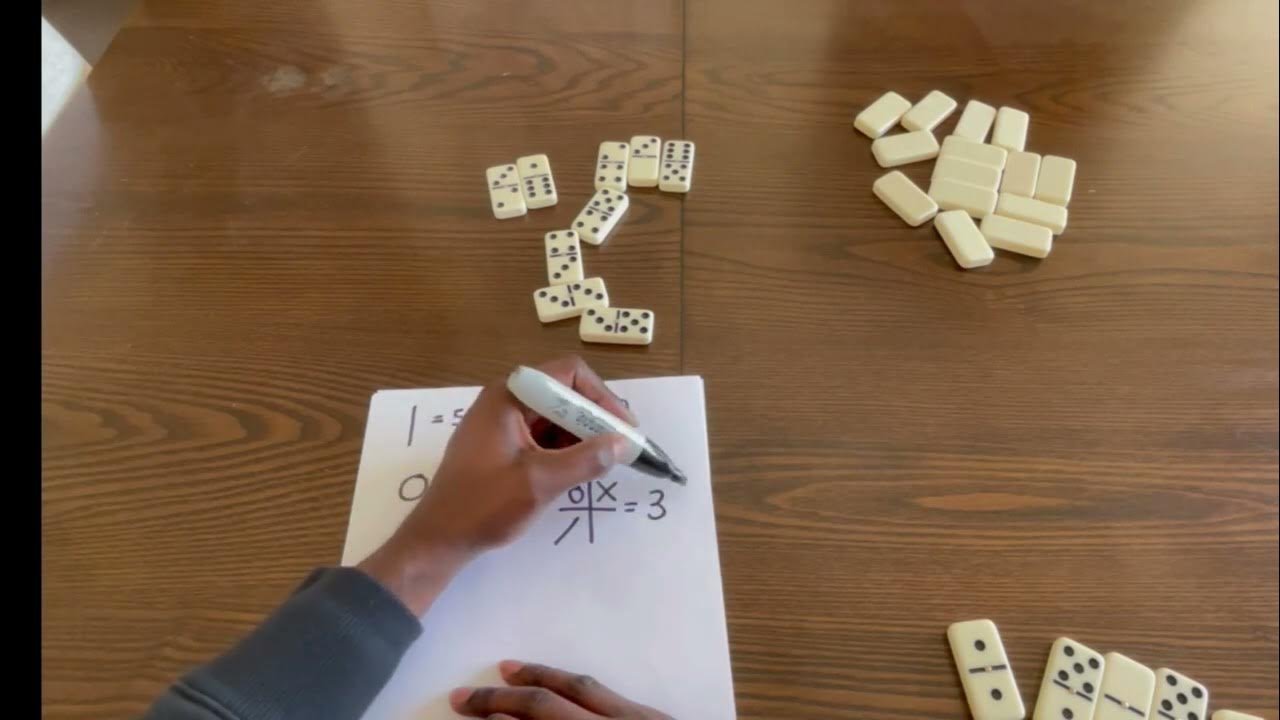
Counting dominoes in a game typically involves adding the numerical value of the pips on each end of the domino.
Ever found yourself puzzled during a dominoes match? Knowing precisely how to count dominoes game is key to keeping score correctly. It’s simpler than you might think.
Basically, you’re just adding up the dots on each side of the tile. This quick guide will ensure you never miscalculate again. Lets get this going, and make sure you win the game!.

How to Count Dominoes Game
Dominoes, those little rectangular tiles with dots, are not just fun to play with, they’re also full of numbers! Knowing how to count dominoes is super important whether you’re playing a classic game, a variation, or just want to understand how the pieces work. It might seem simple at first glance, but there are a few key tricks to keep in mind. Let’s explore how we can easily count those dots and become domino pros!
Understanding Domino Basics
Before we jump into counting, let’s talk about what a domino actually is. A standard domino is a tile with a line down the middle, creating two squares. Each square has a certain number of dots (also called pips), ranging from zero (a blank square) up to a specific number, typically six in a standard double-six set. The numbers of dots on each side are what we will be counting. In addition, let’s discuss different types of domino sets to understand them better:
Types of Domino Sets
Domino sets come in different sizes, and the size determines the highest number on a domino and the total number of tiles in the set. Here are some common examples:
- Double-Six Set: This is the most common type of domino set. It has 28 tiles and the highest number on a tile is six. So, you have tiles that go from 0-0 (double blank) to 6-6 (double six).
- Double-Nine Set: This set has 55 tiles, with the highest number being nine. You will see tiles ranging from 0-0 to 9-9.
- Double-Twelve Set: This set has 91 tiles, going from 0-0 to 12-12. It’s used for games with more players or when you need a larger set.
- Double-Fifteen Set: A larger set with 136 tiles ranging from 0-0 to 15-15.
- Double-Eighteen Set: This even larger set contains 190 tiles, ranging from 0-0 to 18-18.
Knowing the type of set you have is the first step towards counting the numbers correctly. Each domino has two numbers, and these numbers are vital for gameplay.
Counting the Dots on a Single Domino
Alright, let’s begin with the basics: counting the dots on just one domino. This seems easy, right? It is, but let’s make sure we’ve got it down perfectly. Look at one side of the domino and simply count all the dots. Now, look at the other side and count those dots too. Each domino will have two sets of dots, so you’ll need to count each side separately.
Using Subitizing
Sometimes, when you see a small group of dots, you don’t even need to count them one by one! That’s called “subitizing,” and it means knowing how many things are in a group just by looking at them. For example, you instantly know that three dots are three, and five dots are five without counting. This ability will make counting dominoes even faster!
Common Domino Combinations
Getting familiar with typical dot combinations can speed up the counting. Here are a few to practice:
- No Dots (Blank): This means zero.
- One Dot: It looks like the number one.
- Two Dots: They are usually placed one above the other.
- Three Dots: Often in a diagonal or a line.
- Four Dots: Make a square shape.
- Five Dots: Usually four on the corners and one in the center.
- Six Dots: Two rows of three.
By recognizing these patterns, you can quickly count the dots on a domino without having to count every single one.
Calculating the Total Value of a Domino
Now that we can easily count the dots on each side of a domino, let’s learn to find the total value of a single domino tile. Simply add the dots on one side to the dots on the other side.
Example Scenarios
Let’s walk through a couple of quick examples:
- Domino with 2 dots and 3 dots: Add 2 + 3 = 5. The total value is 5.
- Domino with 0 dots and 4 dots: Add 0 + 4 = 4. The total value is 4.
- Domino with 6 dots and 6 dots: Add 6 + 6 = 12. The total value is 12.
It is that easy! The total value is important in some variations of domino games.
Counting Dominoes in Your Hand
Sometimes in a game you need to count up the dominoes in your own hand. This might be for keeping score, or to decide on a strategy. Instead of counting all of your dominoes individually, we can use simple addition and counting techniques to find out the total value of all of our dominoes.
Counting Tips for Multiple Dominoes
Here are a couple of strategies for counting the dots on multiple dominoes together, you may find one or both of these methods helpful:
- Counting and Adding: Go through each domino and find the total of its two sides. Then add these totals together. For example, if you have a domino with 1 and 2 (total is 3), and another with 3 and 4 (total is 7) and the last one with 2 and 2 (total is 4), then simply add those totals: 3 + 7 + 4 = 14.
- Side-by-Side Addition: You can find the total values of the sides of the dominoes separately and then add the totals together. First add up all of the dots on the left sides of all of your dominoes. Then add up all of the dots on the right sides. Then add your two totals together to find the grand total. So for example, if you have three dominoes that read 1-2, 3-4, and 2-2, you would do 1 + 3 + 2 = 6 (the sum of all left side dots), and 2 + 4 + 2 = 8 (the sum of all right side dots). Then add 6 + 8 = 14.
Choose the method that is easiest for you, and that helps you count most efficiently. With practice, it will get faster and faster!
Counting Dominoes on the Table
In many domino games, you need to count the total of the dominoes laid on the table. This can be a little trickier because there are often more dominoes to calculate. Here’s how to approach it:
Strategies for Counting Multiple Dominoes on the Table
- The Sequential Method: Just like when counting the dominoes in your hand, go through each domino one by one, add both sides together, and add the totals. Take your time and be sure you count each domino only one time.
- Counting by Sections: If there are multiple lines or sections of dominoes, you can count each section separately and then add those totals. This will be faster and simpler than trying to calculate all at once.
- Looking for Quick Totals: Sometimes you can easily spot dominoes that will make quick sums, like 5 and 5 makes ten. Look for easy sums that you recognize and group them together to make the process faster.
- Using a Checker: Once you think you have completed the process, it can be helpful to run through the steps one more time to make sure you didn’t make any mistakes and have the correct total.
Remember to be careful and try not to miss any dominoes. Practice makes perfect, and with time, counting the dominoes on the table will become second nature!
Common Mistakes to Avoid
When counting dominoes, it’s easy to make small mistakes. Here are some common ones to watch out for:
- Double Counting: Counting the same domino twice. Take your time and make sure each domino is only counted one time.
- Missing Dominoes: Accidentally skipping over a domino. Always double check the entire area to make sure that no dominoes are being missed.
- Miscounting Dots: Counting the dots incorrectly. Double check common patterns so that you can accurately count the number of dots without miscounting.
- Forgetting to Add: Not adding the two sides of the domino together correctly. Practice adding the two sides together accurately, so that you are getting the correct totals every time.
These might seem like little mistakes, but in a game, they can make a big difference. So remember to take your time and practice to avoid them!
Practice Makes Perfect
Counting dominoes may seem simple, but like any skill, it gets better with practice. Here are some suggestions on how to practice your counting skills:
Ways to Practice
- Play Domino Games: The most fun way to practice is by playing different domino games. This will give you a chance to use your counting skills in a fun environment.
- Use Dominoes for Math Practice: Dominoes can be great tools for learning simple addition. Take a handful of dominoes and find the total of each one, then add them all up. This will help you practice and get faster!
- Make it a Game: Challenge yourself or a friend to see who can find the total value of a set of dominoes the quickest. This will help you develop skills to count accurately and quickly!
By practicing regularly, you’ll become a domino counting expert in no time!
Now you’re equipped with all the tools you need to count dominoes accurately. Whether you’re playing a game or just exploring their mathematical side, these skills will come in handy. Keep practicing, and you’ll be counting like a pro before you know it! Happy counting, and have fun!
How to Count Dominoes | Counting The Board in Dominoes | Count the Board Fast Dominoes
Final Thoughts
Counting dominoes involves summing the pips on each tile a player holds at the end of a round or game. Typically, players count the spots on the exposed ends of a layout too. Add up all these numbers to determine the score.
Different domino games may have varying rules for scoring. Be mindful of these game-specific methods when tallying points. This makes how to count dominoes game a little complex.
So, total your pips to determine the winner. Simple addition skills are key for accurate counting. How to count dominoes game, then, becomes straightforward with a bit of practice.

