
Creating an escape room game requires planning a theme, designing puzzles, hiding clues, and establishing a narrative for players to follow to “escape.”
Have you ever dreamed of making your own thrilling adventure? Now you can! This guide will explain how to create an escape room game right in your own home. We’ll walk you through the essential steps.
First, you need a story and a central theme. Next, crafting puzzles is key, and making them work with the theme adds fun. Think about hiding places. Then, it is about connecting the clues with the narrative. These all lead to a final escape.

How to Create an Escape Room Game
Have you ever been totally captivated by an escape room, that feeling of racing against the clock, piecing together clues, and finally experiencing the thrill of solving the puzzle? If you’re thinking, “I want to make one of those!” you’re in the right place. Creating an escape room game, whether for friends, family, or even a classroom, can be an incredibly fun and rewarding project. It might seem like a big task, but with a little planning and creativity, you can design an experience people will talk about for ages. Let’s jump into the steps to create your own amazing escape room!
Deciding on a Theme and Story
Before you even think about puzzles and locks, you need a strong theme and story. This provides the foundation for your whole escape room and keeps everyone engaged. Think of your theme as the world you’re inviting your players into. A great theme isn’t just a pretty backdrop; it provides the “why” behind every puzzle. It’s the reason they’re working together. Let’s dive deeper into how to pick the perfect theme:
Brainstorming Ideas
Start by brainstorming. What are you and your potential players interested in? Some popular themes are:
- Mystery/Detective: A classic choice! Players solve a crime or uncover a hidden secret. Think Sherlock Holmes or Agatha Christie.
- Fantasy: Magic, dragons, mythical creatures – the sky’s the limit. Perfect for getting very imaginative.
- Science Fiction: Space travel, robots, futuristic technology. This one allows you to play with technology-based puzzles.
- Historical: Ancient Egypt, the Wild West, World War II, this could be combined with mystery for a captivating time travel feel.
- Horror: If your group enjoys a good scare, a haunted house or zombie outbreak could be a thrill. Remember to keep the horror level appropriate for your group!
- Adventure: Indiana Jones style treasure hunts, jungle explorations, or navigating treacherous terrain.
Don’t be afraid to get unique. Think about the stories you and your friends enjoy. Maybe a quirky story about a lost recipe, or saving a town from a silly curse. The important thing is that you are invested in your chosen theme!
Developing Your Story
Once you have a theme, build a short story around it. What happened? Why are the players here? What’s at stake? The story is what provides the context for every puzzle. Ask yourself these questions:
- What is the goal? Do they need to steal something, find someone, or escape a location?
- What happened before they arrived? What series of events led to their needing to solve puzzles?
- Why is it urgent? Why do they need to act fast? (This creates a sense of urgency!)
A clear story makes the experience much more immersive. Write a brief introduction to share with your players before they start. This helps set the stage and gets them excited. Imagine you are writing a mini-movie script, that’s how your story should feel!
Designing Engaging Puzzles
Now for the fun part – the puzzles! Good puzzles are challenging but solvable. They should also fit your theme. Here’s how to make them work:
Types of Puzzles
Variety is key! Here’s a look at different puzzle types to incorporate:
- Logic Puzzles: These require players to think critically, using patterns, and deductions. Sudoku, sequence puzzles, or simple riddles fit here.
- Word Puzzles: Anagrams, ciphers (substitution, Caesar), crossword puzzles are great for players who like wordplay.
- Math Puzzles: Nothing too difficult, just requiring basic calculations or counting skills.
- Observation Puzzles: Hiding things in plain sight is a great way to engage their attention to detail. Things like hidden words in pictures, slight differences in objects or images.
- Physical Puzzles: These might involve assembling objects, moving things to specific spots, or other hands-on activities, using tangram or block puzzles.
- Combination Puzzles: Setting combination locks or using a key to unlock a box.
- Pattern Puzzles: Looking for repeating patterns or sequences and applying them to solve for a specific answer.
Combine different puzzle types for a well-rounded escape room experience. It avoids players with one particular skill set dominating the fun.
Crafting Your Puzzles
Each puzzle should move players closer to the final goal. It’s like building a story with your puzzles! Here are some tips:
- Start Simple: Start your room with an easier puzzle to get players comfortable, and increase the difficulty as you go. This prevents frustration in the beginning.
- Think Steps, not Just Answers: Don’t have one single giant puzzle, break it into smaller steps to keep players progressing and feeling a sense of accomplishment.
- Use Clues Wisely: You will need to prepare clues but think of how to make clues an integral part of the puzzle. For example, maybe a clue is hidden inside a book that must be found using a different puzzle.
- Test, Test, Test: Make sure to test your puzzles with friends or family. This will help you see if they’re too easy or too difficult and how long it might take.
- Integrate Your Theme: Each puzzle should feel like it belongs to the world you created. For example, if your room has a space theme, use constellation maps or binary code.
Creating a Puzzle Flow
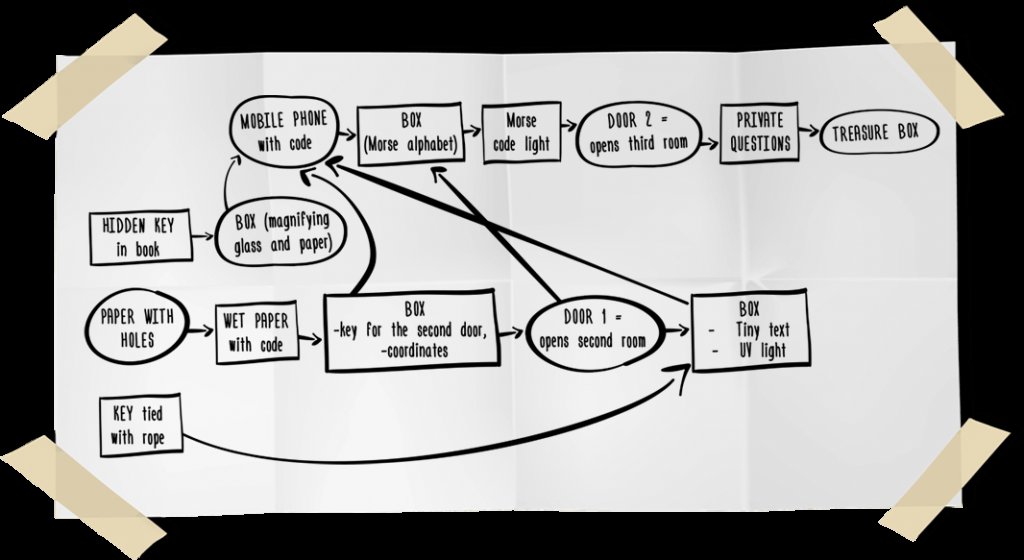
Think about how players move from one puzzle to the next. The puzzles should logically flow from one to another and build on each other. Here are a few approaches:
- Linear Flow: Each puzzle leads directly to the next, in a straight line. This is good for beginners.
- Branching Flow: Players solve multiple puzzles at the same time, each leads to different clues and puzzles.
- Cyclical Flow: Players must revisit previous clues or puzzles to gain new information and keep the game moving forward.
A combination of these methods would make the game more interesting. Don’t make it too complex but use it to keep the game engaging.
Setting the Stage
The environment plays a crucial role in creating an immersive escape room experience. The setting should match your theme and help bring the game to life. Here is how to do it:
Choosing Your Location
You don’t need a huge space to set up an amazing escape room. A living room, bedroom, or even a small office can work well. Just make sure it is a space where you have the right setting. Consider these things:
- Space: How much space do you need for all the puzzles and players to move around comfortably?
- Accessibility: Can players easily access everything they need?
- Safety: Are there any safety hazards that should be addressed?
Decorations and Props
Using decorations and props can really boost your theme. Here’s how to effectively use props:
- Theme-Specific Items: Use items that directly relate to your theme. For a detective theme, use magnifying glasses, old books, and note pads. For a space theme, you can find glow sticks, tin foil, or anything with a futuristic look.
- Create Atmosphere: You can use lighting, sound effects, and even scents to set the mood. Dim lighting can add to a suspenseful scene, while upbeat music can add to the fun.
- Re-purpose what you already have: You may already have items at home that can fit your needs without costing much.
Don’t feel like you need to buy expensive things. You can be very creative with materials you already have. The key is how you place things and make them part of the puzzle.
Hiding Clues
Hiding clues around the room is a big part of what makes an escape room fun. These are some different hiding spots to consider:
- In Plain Sight: Sometimes the best hiding spots are right in front of our eyes. You can place clues in picture frames or on top of books.
- Behind Objects: Use furniture or other items to hide clues. Tape clues to the bottom of a table or behind a picture on the wall.
- Inside Containers: You can use boxes, envelopes, or jars to hide small clues or puzzle elements.
- Use Technology: If you want to use technology, QR codes and websites with hidden messages can add to the surprise.
You can also add false clues to make it more challenging and make players think a little harder. This is where the “hide and seek” part of an escape room truly shines!
Planning the Game Flow
Now it’s time to map out the whole escape room from start to finish, and to make sure it runs smoothly. The game flow is all about how players move through the experience, the timeline of puzzles, and how it all comes together in the end. Here’s how to design a perfect game flow:
Creating the Game Timeline
A timeline helps you stay organized and ensures everything flows as expected. Here’s how to create it:
- Start: What is the first puzzle they will encounter? Make it something easy to get them started.
- Progression: How many puzzles are there, and what is their order? Each puzzle should move players closer to their goal.
- Climax: What is the final puzzle or goal they must complete? The final puzzle should feel like the last step to achieve their goal.
- Finish: How will they know they have completed the game? Think about something unique for that final moment.
Create a written document, and test it out to see how long it will take your players to complete.
Time Management
Decide how long you want the escape room to last. This helps you in planning each puzzle’s level of difficulty. Here’s how to manage time:
- Set a time limit: Set an appropriate limit based on the complexity of the puzzles and the player’s skill level, maybe 60 minutes as a good starting point.
- Provide Clues: Have a system to provide additional hints if the group gets stuck. It can be a pre-written list, or you can be present to provide verbal guidance.
- Keep it Fair: The puzzles should be challenging, not impossible. No one enjoys frustration for too long.
Always remember that fun is the most important goal!
Setting the Rules
Clearly define the rules before players begin. This prevents confusion and allows for a smooth experience. Here are some things to consider:
- No Force: Players shouldn’t need to force anything open or try to move anything that seems permanently fixed.
- Teamwork: Emphasize that escape rooms are a collaborative effort.
- Clue System: Explain how players can receive additional hints if they are stuck.
- Specific Areas: If there are any areas off limits, explain them clearly at the start of the game.
Clarifying these points makes it easier for everyone involved, and allows them to focus on the fun of solving puzzles.
Testing and Refining
Before you let your official group of players jump into your escape room, you absolutely need to test it. This stage is critical for catching any flaws in your design. Here’s why testing is essential and how to do it:
Playtesting
It’s important to have other players try your game to find out what works and what does not. Here’s what to look for:
- Puzzle Difficulty: Are the puzzles too hard or too easy? Do the puzzles flow naturally?
- Clarity of Instructions: Are the rules easy to understand? Are the clues clear?
- Time: How long does it take to complete the entire escape room? Do adjustments need to be made?
- Engagement: Are players enjoying the puzzles? Do they remain engaged and interested?
Invite friends, family, or even co-workers to playtest your escape room. This lets you view the game from a fresh perspective.
Refining Your Design
Based on the feedback you get from playtesting, make the necessary changes to improve your escape room. Consider the following things:
- Adjust Difficulty: If players find puzzles too easy, make them more complex. If they are too difficult, simplify them slightly.
- Clarify Clues: If players are confused, rewrite your clues to be clearer and more direct.
- Streamline Flow: If a section of the room is causing confusion or a bottleneck, rethink how that section works.
- Add More Theme: Incorporate more elements of your theme. This can help to boost the immersive experience.
Be open to making changes. Sometimes your original idea might not be the best. The most important part is making sure it will be enjoyable for everyone.
Final Checks
Before you declare your escape room ready, do a final walkthrough and checklist. Here are a few things you should check:
- All parts of puzzles are present and in working order.
- Are all the clues in their places and clearly marked?
- Is the timer or other monitoring system ready?
- Make sure the room is well-lit and safe for people to move around in.
Once you’re confident with these final checks, you’re ready to invite your players for the main event!
Creating an escape room is a process, it takes time, patience, and creativity. It is very rewarding when you see your friends, family, or students enjoy the puzzles you have created. This complete guide should help you make that a reality.
DIY Escape Room || Step-By-Step Tutorial || Moderate Difficulty Travel Theme Room for Adults & Teens
Final Thoughts
Creating a fantastic game requires planning the theme, crafting puzzles, and designing a narrative flow. Begin with a simple concept; expand on it gradually. Testing is a must for a great experience.
Assemble necessary materials and write out clear instructions for players. Hide objects strategically within the play space. Remember to adjust difficulty levels to the target audience’s skill.
Finally, iterate based on feedback to polish your design. This process teaches you how to create an escape room game, making it fun and engaging. Consider these aspects for an impressive design.

