
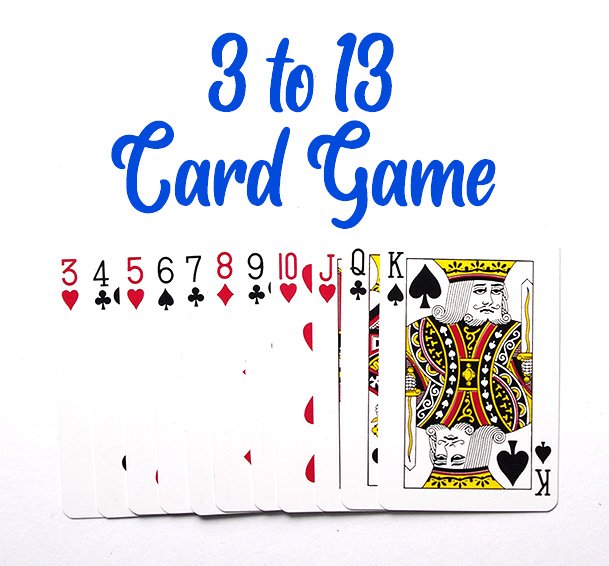
Playing 3 13 involves forming sequences and sets with your 13 cards, aiming to be the first player to go out by discarding all your cards.
Ever found yourself looking for a fresh card game to spice up game night? The simple yet strategic card game, 3 13, might just be what you need. This game tests your skills of observation and planning.
Learning how to play 3 13 card game is quite straightforward. Each player gets 13 cards, and the goal is to be the first to use them all.
You create sets of same rank cards or runs of consecutive cards, discarding them once formed.

How to Play 3 13 Card Game
Okay, so you’re curious about the 3 13 card game? It’s a super fun game that involves strategy, a bit of luck, and lots of card combinations. Think of it like a rummy-style game, but with its own unique rules. This article will break down everything you need to know to start playing and even becoming quite good at it! Let’s get started.
What You Need to Play
Before you start shuffling, let’s make sure you have everything you need:
- Standard Deck of Cards: You’ll need one regular 52-card deck. Make sure all the cards are there!
- Players: This game is best with 2-4 players. More than that, and things can get a little chaotic.
- A Flat Surface: A table or any surface will work for playing.
Objective of the Game
The main goal in 3 13 is to be the first player to get rid of all your cards by forming sets and runs. Sets are groups of cards with the same value but different suits (like three 7s), and runs are sequences of cards of the same suit (like 5, 6, 7 of hearts). Sounds easy? Let’s see how it works!
Getting Started: Dealing the Cards
The first thing to do is to pick someone to be the dealer. This person will shuffle the deck and deal the cards. Here’s how the deal works:
- The dealer will shuffle the deck of 52 cards.
- Each player gets 13 cards. The player next to the dealer will receive the first card, and the process will move around clockwise, and continue until everyone gets 13 cards.
- The remaining cards are placed face down in the center to create the stock pile.
- The top card from the stockpile is turned face up next to it, to begin the discard pile.
Understanding Sets and Runs
Before you start playing, you need to know how to make valid combinations. Here’s a closer look at sets and runs:
Sets
A set is a group of three or four cards with the same numerical value but different suits.
- Example of a valid set: Three 8s – 8 of hearts, 8 of diamonds, and 8 of clubs.
- Example of an invalid set: Three 8s of hearts.
Runs
A run is a sequence of three or more cards of the same suit. Cards have to be consecutive in numerical order.
- Example of a valid run: 5, 6, 7 of spades.
- Example of an invalid run: 3, 5, 6 of diamonds (missing a 4).
- Example of an invalid run: 7 of spades, 8 of hearts, 9 of spades (not of the same suit).
- Important: In 3 13, Aces can be played high or low in a run, but not both in the same run. For instance, A, 2, 3 of diamonds is a valid run, as is Q, K, A of hearts. But 10, J, Q, K, A is a valid run too. But you can’t have K, A, 2 as a single run.
Gameplay: Taking Turns and Discarding
Once you’ve got your cards, the game begins! Here’s a turn-by-turn breakdown:
- Drawing a Card: On your turn, you have to draw a card, either from the face-down stock pile or from the face-up discard pile.
- Making Combinations (Melding): If you have a valid set or run of three or more cards, you can “meld” or place them face up on the table in front of you. It’s optional to meld on your turn, but you want to get rid of the cards as quickly as you can.
- Laying off (Adding to Existing Melds): If another player has already melded a set or run and you have the cards to add to it, you can “lay off.” This means you are adding a card to a set or a run already on the table. For example, if another player has melded a run of 6,7,8 of hearts, and you have a 9 of hearts, you can put it next to the 8, and now the run will be 6,7,8,9 of hearts. You also have the option of laying off the same value of a set, if you have a card in your hand to add to the current set. For instance, if there is a set of three ‘4’s in front of you, and you have one more ‘4’ in your hand, you can lay off this 4 in the set to make the set of four ‘4’s.
- Discarding a Card: After drawing and laying off cards, you have to discard one card from your hand onto the discard pile. You can discard any card that you don’t want.
- Ending Your Turn: When you have discarded, it’s the next player’s turn. Play moves clockwise around the table.
Going Out and Winning the Round
The first player to get rid of all of their cards by melding and laying off is the winner of that round. This player is said to have “gone out.” There is a scoring system involved, which we will discuss below.
The Role of Jokers (If Playing with Them)
Some versions of 3 13 include Jokers. If you decide to play with Jokers, here’s how they work:
- Wild Card: Jokers can substitute for any other card in a set or run.
- Limitations: You can’t have more than one Joker in a set. However, you can have more than one joker in a run.
Example: If you have 5 of clubs, 7 of clubs, and one joker, you can use the joker as a 6 of clubs to make a run of 5, 6, 7 of clubs.
Keeping Score
Scoring in 3 13 can vary, but a common method involves counting the values of the cards remaining in each player’s hand at the end of a round. Here’s a typical point system:
| Card | Point Value |
|---|---|
| Number cards (2-10) | Face Value (e.g., a 7 is worth 7 points) |
| Face Cards (Jack, Queen, King) | 10 points each |
| Ace | 15 points each |
| Joker (If used) | 20 points each |
How to Score: At the end of each round, each player that has not ‘gone out’ adds up the values of their remaining cards. Those points are added to their total score. If you ‘go out’, you receive 0 points in that round.
Winning the Game
The game continues for a set number of rounds, agreed to by the players at the beginning of the game, or until a player reaches a certain score. The player with the lowest total score at the end wins. For example, players might decide to play until a player reaches 100 points, and whoever has the lowest total score when someone hits that mark is the winner.
Tips and Strategies for Winning
Now that you understand how to play, here are some tips to improve your game:
- Plan Ahead: When you pick a card, try to pick cards that help you make sets or runs quickly. Don’t discard cards that could be useful in the future.
- Watch Your Opponents: Pay attention to what cards other players are picking and discarding. If you see someone is gathering a particular number, you may want to hold onto cards of that number, or if they need a card to finish a run, try not to give them that card from the discard pile.
- Be Flexible: Sometimes, the cards you need just won’t come. Be willing to change your strategy as the game progresses. You have to adapt to the cards that you draw.
- Don’t Be Afraid to Discard High Cards: If you have cards that don’t fit into a set or run, it’s better to get rid of them sooner rather than later to prevent getting extra points. Be careful to not discard a card that could be useful later, or could help another player.
- Manage Jokers Wisely (if applicable): Jokers are very helpful, but don’t hold onto them for too long. Use them to make melds as quickly as possible so that you can ‘go out’ faster.
Variations of the Game
Like many card games, 3 13 has variations. Some common ones include:
- Different Numbers of Cards: Some versions give players 11 or 14 cards instead of 13. This will change the difficulty of the game, as getting more cards makes it more complex to ‘go out’.
- Different Scoring Systems: The scoring system can change and some people prefer to make it more or less punishing. You can try different options to see which one you like most.
- Adding House Rules: Feel free to add your own personal rule! Some people add extra rules to change the game and make it more interesting. Just make sure that everyone is clear about the rules before playing.
Common Mistakes to Avoid
When you’re learning, it’s easy to make mistakes. Here are some common ones:
- Forgetting to Discard: Don’t forget to discard after drawing and laying off cards. That is an important part of the gameplay process.
- Not Paying Attention to Opponents: You need to be aware of what your opponents are doing. You don’t want to give them exactly what they need. You should try to remember what they picked or discarded.
- Holding onto Useless Cards: Don’t be afraid to get rid of high cards that you can’t use. The sooner you throw away those useless cards, the better.
- Misunderstanding Sets and Runs: It is important to learn what are valid sets and runs. If you misinterpret the rules you can lose easily.
Practice Makes Perfect
Like any game, it takes practice to get good at 3 13. Don’t get discouraged if you don’t win right away. Just keep playing and learning from each round. Soon, you’ll become a 3 13 expert!
So, there you have it – a detailed breakdown of how to play 3 13 card game. With these rules and tips, you’re ready to gather your friends, shuffle those cards, and enjoy some fun. The goal of the game is simple, but learning new strategies can be complex. Don’t get discouraged if it takes time to learn all the nuances of the game. Keep on playing and practicing and you’ll be an expert in no time.
How to play 13
Final Thoughts
To play, deal 13 cards to each player. The goal is to make sets and sequences. A set includes three or four of a kind. A sequence means three or more consecutive cards in the same suit. You must meld all your cards to win the game.
The first player to lay down all their cards legally wins the round. Understanding these key rules is essential for successful gameplay. Therefore, knowing how to play 3 13 card game will improve your experience greatly.

