
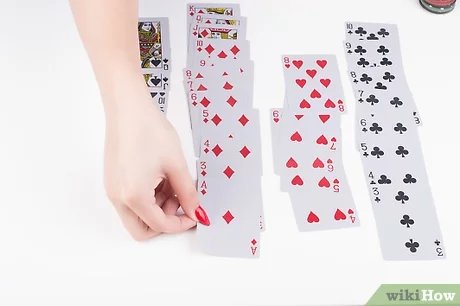
To play 7s card game, the first player lays a 7 of any suit. Players then build sequences up or down from the 7s, following suit, or play another 7 when available. The first player to empty their hand wins.
Ever felt the urge for a quick, engaging card game? You should know how to play 7s card game. It is a simple but captivating game that’s perfect for a few friends or family.
This game is quite easy to pick up, but holds a bit of strategy as well. The aim is to be the first one to get rid of all of your cards, it’s a race to the finish line of sorts. Let’s delve into the straightforward rules and get you playing in no time!

How to Play 7s Card Game
Have you ever wanted a card game that’s easy to learn but still super fun? Then you should try 7s, also known as Fan Tan or Parliament. This classic card game is perfect for family game night, hanging out with friends, or even playing solo. It’s simple to grasp but offers enough strategy to keep everyone entertained. Let’s explore exactly how you can get started and become a 7s pro!
Understanding the Basics of 7s
Before we dive into the nitty-gritty, let’s make sure we understand the basic concepts of the game. 7s is all about building sequences of cards in each suit, much like building a ladder. Here’s what you need to know:
The Deck
You’ll need a standard 52-card deck. No jokers allowed here! Each of the four suits — hearts, diamonds, clubs, and spades — has its own ladder to climb. Remember the order: Ace (low), 2, 3, 4, 5, 6, 7, 8, 9, 10, Jack, Queen, and King (high). The goal is to get rid of all the cards in your hand by playing them onto the table.
Objective of the Game
The aim of 7s is to be the first player to empty your hand of cards. You do this by placing cards in ascending or descending order by suit, starting with the sevens. Imagine building four different paths, all beginning with the number 7 and stretching in two directions (towards the Ace and towards the King).
Number of Players
7s works well with 2 to 8 players. The game is just as fun with 2 people as it is with 6 or 7, but the game might end quicker when there are only 2 players playing. While the game can handle up to 8 players, it might get a little chaotic with very large groups. The gameplay, however, remains same regardless of the number of players.
Setting up the Game
Ready to get things rolling? Setting up a game of 7s is quick and easy.
Shuffling and Dealing
First, make sure the deck is well shuffled. Now, deal out all the cards evenly to every player. It doesn’t matter if some players have one extra card, it’s alright. The most important is that all the cards should be distributed among players. For example, with four players, each person will start with 13 cards. With three players, some may have 17 and others 18.
Card Placement
Players need to keep their cards in hand and keep them secret from others. Players should arrange their hand in way that suits them best. It will help the player to easily identify the cards that they can lay out on table.
Gameplay: Taking Your Turns
Now for the most exciting part, playing the game! Here’s a breakdown of how a typical turn goes:
Starting the Game
The player who holds the 7 of hearts has the first go. They place the 7 of hearts in the middle of the table. After that, the game will proceed clockwise.
Playing Cards
On your turn, look at your hand to see if you can play a card. Here’s how you can play them:
- Playing a 7: If you have a 7 of a different suit (diamonds, clubs, or spades), you can play it on your turn.
- Building Sequences: If you have a card that’s next in sequence either above or below a card already on the table (of the same suit), you can play it. For example, if there is a 7 of hearts, you can play an 8 of hearts or a 6 of hearts (if someone has not played it already). Similarly, if you have a 5 of diamonds and the 6 of diamonds is on the table, you can play your 5 of diamonds.
Remember, you can’t play any cards out of order. You can’t play a 9 when you have not yet placed the 8.
Passing your Turn
If you can’t play any cards on your turn, you must pass, and the turn will move on to the next player. When a player passes, it is not counted as an action or any point loss.
Strategies to win the game
Here are some strategies to help you win in 7s card game:
- Play your 7s early: As soon as you get the turn and if you have 7s, play them at once. This would open possibilities for the other players.
- Keep track of which suit cards are played: Try to remember which suit cards have been laid on the table. If a player has passed the turn, then it means they don’t have the next cards of that suit. This will help you to strategically play your cards in later turns.
- Block your opponents: If you see that the next card for another player is available but you have that card in your hand, it would be best to keep it until late, because that will stop that player from playing any card on their next turn.
End of Game
The game ends when one player is able to lay all their cards onto the table. That player wins the round.
Scoring in 7s
In the traditional version of 7s, there isn’t a scoring system. The main goal is to be the first person to go out (i.e., get rid of all your cards). However, some variations include scoring to add more challenge. Here are some common scoring methods if you want to play a series of games:
Simple Points
Each player adds the point value of the cards they have left in their hand. Number cards are worth their face value, face cards are worth 10 points, and aces are usually worth 1 or 11 points, depending on the agreed rules. The player with the lowest score is the winner. This version gives a different aspect to the game.
Negative Points
Some players use a scoring method with negative points. The player who goes out gets 0 point. Other players receive negative points based on the remaining cards in their hand. The player with the highest negative score at the end of some rounds is considered the winner. You can set a point target (like -100) to define an overall winner.
Variations of 7s
Just like many games, 7s has variations to keep things interesting. Here are a few to try out.
Passing a Card
In this variation, if you can’t play a card on your turn, you might have to pick a card from the deck. This can slow down the game. Some rules state that when you pick up a card, you will have to pass your turn, but other rules might give you an extra turn to play, based on the newly picked card.
Playing multiple Cards
Some players play that when you can lay multiple cards in a single turn, then you can play them all at once. For instance, if you have the 5, 6, and 8 of hearts and the 7 of hearts are already on the table, then you can play the 5, 6, and 8 of hearts in single go.
No Passing
If you don’t have a card to play, you must keep picking a card until you do. This version speeds up the game.
Tips and Tricks for 7s
Here are some handy tips to help you improve your gameplay:
- Keep a Balanced Hand: Try to hold onto a variety of different suits in your hand. It’s better if you have 2 cards from each suit instead of many from one suit. This will keep your options open for laying the cards.
- Watch Other Players: Pay attention to what cards other people play. This will help you figure out what cards they may be holding in hand. This will help you plan your strategy.
- Plan Your Moves: Think about the best way to get rid of your cards. Don’t immediately place a card down without thinking about what that card can open up to the next player.
- Don’t Get Stuck: If you get stuck with a lot of cards from a single suit, you can play your card as soon as that opens up to you. Sometimes, holding out for too long will cause you to get stuck.
Playing the 7s card game is an entertaining and straightforward way to have some fun. The game’s simplicity makes it suitable for people of all ages, from young kids to adults. It’s a great way to improve your strategic thinking and observation abilities. The game is best played when you want something simple, fun and engaging. Don’t hesitate to add your own rule variations to it to make it more fun. Grab a deck of cards and give this classic card game a try and see how fun it can be!
How to Play Sevens (Card Game)
Final Thoughts
The aim of 7s is simple: be the first to discard all your cards. Start with the sevens, then build sequences up or down by suit. Players take turns placing a card if possible; if not, they must pass.
Playing continues this way until someone goes out. A player can only place a card if it is a number directly above or below the card on the board or is a 7 in another suit. So that is how to play 7s card game.

