
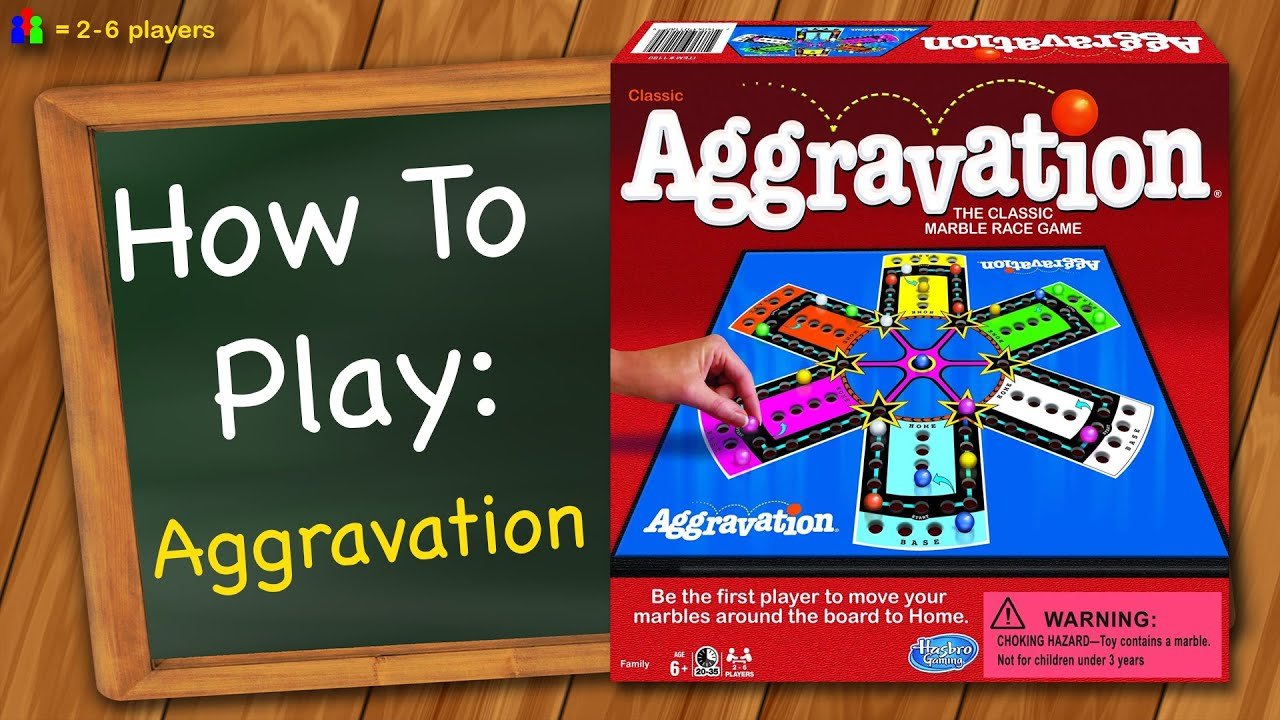
Playing aggravation game involves moving your four marbles around the game board, following the dice roll, and trying to get all of them into your home base before your opponents. You can also send opponents back to their start with a well-timed landing on their marble.
Ever feel like a board game could use just a bit more… drama? Then let’s talk about how to play aggravation game. This game, with its dice rolls and marble movements, creates moments of pure joy when you get ahead and pure frustration when you’re sent back. It’s perfect for a game night with family or friends.
Aggravation tests patience and strategy equally. You have to roll well, but you also need to think ahead. Understanding the board and when to risk moving your marbles will make all the difference.
Learning how to play aggravation game is very simple. once you get familiar with this strategy and fun, the family will be entertained for a long time.

How to Play Aggravation Game: A Step-by-Step Guide
Ready for some exciting board game fun? Aggravation is a classic game that’s been bringing families and friends together for generations. It’s a game of strategy, luck, and just a little bit of…well, aggravation! Don’t worry, it’s the good kind of aggravation. Let’s get started and learn how to play this fantastic game.
Setting Up the Game
Before the real fun begins, we need to set up our Aggravation game. It’s not too tricky, and soon you’ll be ready to roll those dice!
What You’ll Need
- An Aggravation game board: This is usually circular with spaces for your marbles and pathways around the board.
- Marbles: Each player gets a set of four marbles of the same color. Common colors are red, blue, yellow, and green.
- Dice: Usually, you’ll need one or two dice. The number of dice can sometimes vary depending on the version of the game, but mostly a single die is common.
Preparing the Game Board
Place the game board in the center of the playing area. Each player chooses a color of marbles and places all four of their marbles in their starting area. These starting areas are usually the colored “holes” in the base of the board which matches the player’s chosen color. Ensure each player is positioned in their place around the board.
Now that everything is set up, we can begin to delve into how to actually play the game.
Starting the Game
The object of the game is to move all your marbles around the board and into your “home” spots before any of your opponents do. The first player to do that wins.
Determining Who Goes First
There are a couple ways to decide who goes first. Typically, players will roll the die, and whoever rolls the highest number goes first. You can also decide who goes first by picking a random starting player. It’s up to you and your group to decide how you want to start the game.
The First Roll
Once you’ve determined who goes first, that player rolls the die. You need to roll a specific number to move a marble from your starting area onto the board. In most versions of the game, you need to roll a one (1) or a six (6) to get a marble out of your starting spot and onto the first space on the game path. If you roll a number other than a 1 or a 6, your turn ends, and the next player takes their turn. If you roll the correct number, you will be able to bring a marble onto the path.
Moving Your Marbles
Now that the game has started and you know how to move your marbles from the starting position onto the board, we can talk about moving your marbles around the path. Once your marble has entered the path, you move it forward based on your die roll, following the path direction.
Basic Movement
After you have moved one or more marbles out on the board path, moving around the board is straightforward. On your turn you roll the die, and then move the desired marble along the path spaces by the value of the number you rolled. If the number you roll is a ‘4’, then you move any marble forward by four spaces. Simple, right? There are also a few other special rule scenarios you will need to learn.
Landing on Another Player’s Marble
One of the best parts of the game is trying to cause some “aggravation” by knocking other players’ marbles off the path. If you land on a space occupied by another player’s marble, you “bump” it back to its starting area. This is especially great if they were about to go home, and they have to start their journey from the very beginning. But be warned, this can happen to you as well. This is part of the strategic fun of the game!
The “Home” Spaces
As you move around the board, you’ll see spaces that match each player’s color. These are the “home” spaces. To get your marbles into these home spaces, you must move around the board and enter the home path. Once a marble enters the home path, it is safe from being bumped back to the starting area. The home spaces are usually in a line or section and the exact number you need to land on it will depend on how far it is away from the last main path space. If you roll a number greater than what is required to land on your home space, you will then be required to move other marbles to use up the full value of your dice roll.
Special Rules and Scenarios
Aggravation has some fun special rules that keep things interesting. Here are some to remember:
Rolling a Six (6)
In many versions of Aggravation, when you roll a six (6), you get to roll again. You can use the second roll to move the same marble or a different one. This extra turn can be very helpful to either get an additional marble out of your starting area or to make significant progress around the board. If you roll a six again on the second roll, you may get to go again. You would keep going until you do not roll a six on a turn, and will only be able to move on each roll. It should be noted that some rule variations allow for a six to be used to immediately move one of your marbles into your home section. If you are in the home section and roll a six it can also be used to move one of your marbles forward by six spaces, which could get you home sooner, especially when other players are close behind.
“Shortcuts” or “Star Spaces”
Some Aggravation game boards have special shortcut spots, often indicated by a star or a unique design. These spots let you jump ahead of the usual path. If you land on one of these spaces, follow the arrow to see where to move your marble next. These can be very beneficial to use and can help you advance quicker on the board. In some games, if you roll a ‘1’ and land on the star space, you are then required to move to the next star space and count that as an additional space that your marble has travelled, depending on the specific game variations you are playing. This is one of the things that makes each version of Aggravation slightly different. If you are unsure of any rules, look over the instruction sheet that comes with the game, before starting to play.
The “Aggravation” Factor
The best part of Aggravation is the “aggravation”! Getting bumped back to the start can be frustrating, but it’s all part of the game. Don’t take it too seriously and just enjoy the ups and downs. As you get more practiced at the game, you will begin to develop strategies that help to prevent getting sent back to the start. It is worth noting that the bumping of your marbles is a good tactic to use to help advance yourself, by strategically blocking other players, in some cases.
Winning the Game
The first player to get all four of their marbles into their home spaces wins the game. Once you achieve this goal, you are the champion of Aggravation! Be sure to cheer and celebrate your win and the good time that was had by all. It’s also good to take a picture with the family to remember the time you played the game together. Even if you don’t win, remember that it’s the fun of playing that counts. You can always play again!
Strategies and Tips
While Aggravation involves luck, there are also some strategies that can help you play better.
Getting Out Early
Try to get at least one marble out onto the board as early as possible. This will help you move around the board and get you closer to your home spaces. Don’t get too aggressive though, as sometimes it’s beneficial to have your marbles tucked safely in the starting area.
Blocking Opponents
Use your marbles to strategically block your opponents. If you can position your marble so that an opponent has to land on it, that could put them back to the starting zone. Make sure they don’t do this to you, as well! It’s important to be strategic about your own moves.
Home Path Strategy
When you’re close to your home path, try to have a marble or two in a position to get in easily. Don’t get too many marbles too close together, though, or you could risk another player landing on one and bumping them all back to the start. It’s good to have a good balance of marbles in play and marbles moving along the main path of the game board.
Be Adaptable
Sometimes, your plans just won’t work. Be ready to change your strategy based on what is happening during the game. This is especially true if you have to keep going back to the start because another player keeps bumping your marbles. It’s all about adapting to what happens on the game board.
There you have it. That is how to play Aggravation! Remember, the most important thing is to have fun with family and friends. Gather some people together, learn the basics, and begin to play. Once you get used to it, you can modify the rules and play using your own family specific adaptations.
How to play Aggravation
Final Thoughts
To play Aggravation, roll the die and move your marbles around the board. You must move a marble out of your starting area on a 1 or 6. Then, move your marble spaces according to the dice roll.
Landing on another player’s marble sends it back to their start. You must get all your marbles into your home spaces. How to play aggravation game is simple, but strategy and luck are important. The first player to do so wins. The game promotes interaction and can be quite challenging.

