
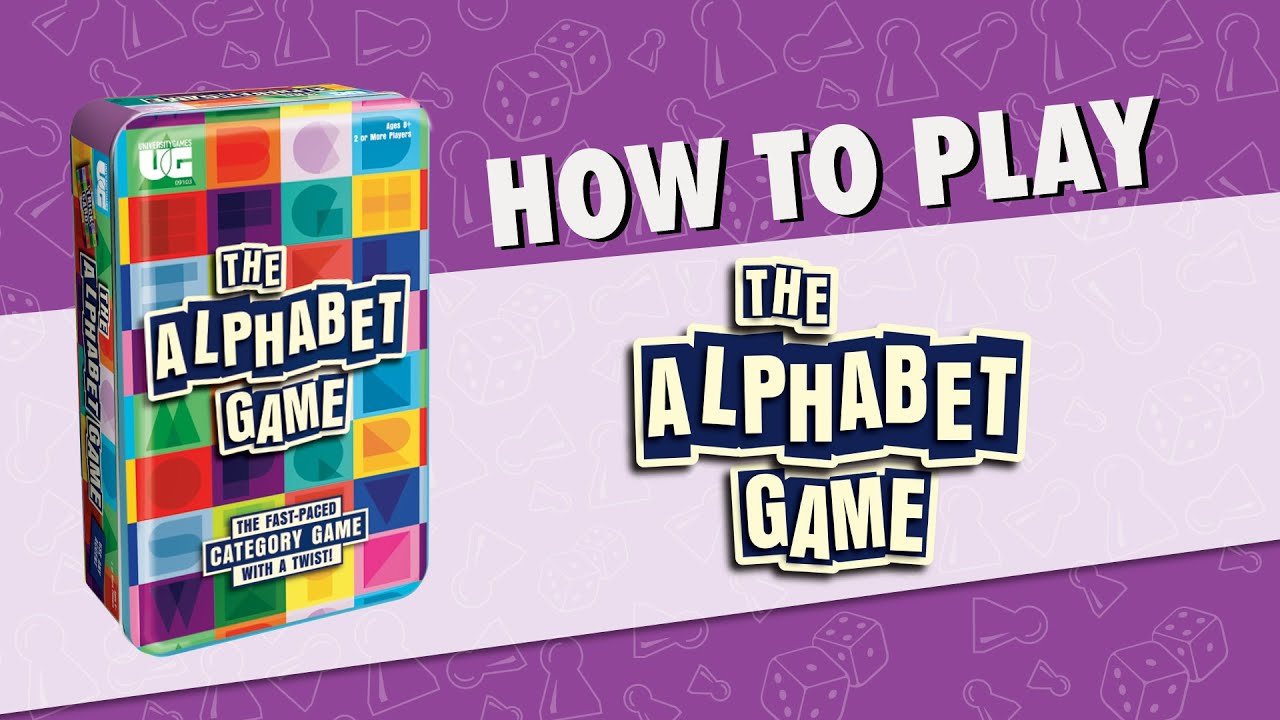
How to play alphabet game: Players take turns naming words, each beginning with the next letter of the alphabet sequentially, usually within a specified category or theme.
Ever find yourself needing a quick, engaging activity that’s both fun and mentally stimulating? The alphabet game could be your perfect solution! It’s simple to learn and adaptable for various ages and settings.
This classic pastime requires no special materials, making it an ideal go-to for car rides, waiting rooms, or even just a casual get-together. Let’s explore how to play alphabet game and have some fun.

How to Play Alphabet Game: A Complete Guide
The alphabet game is a simple yet fantastic way to boost vocabulary, improve quick thinking, and have a ton of fun, whether you’re at home, in the car, or at a party. It’s a flexible game that can be adapted for different ages and group sizes. Let’s dive into the nitty-gritty of how to play, explore different variations, and give you tips to become an alphabet game pro!
Understanding the Basic Rules
At its core, the alphabet game revolves around going through the letters of the alphabet (A, B, C, and so on) and finding words that match a chosen category. The basic version is straightforward:
- Choose a Category: Start by picking a category. This could be anything – animals, foods, countries, names, or even something silly like “things you find in a school.”
- Go Through the Alphabet: Begin with the letter “A” and have someone name a word within the chosen category that starts with “A.” For example, if the category is “Animals,” the first player might say “Ant.”
- Continue with Subsequent Letters: The next player needs to come up with a word that fits the category, but this time, it must begin with the letter “B.” So for “Animals”, they could say “Bear.”
- Keep Going: You’ll continue, going through each letter in order. Players take turns, saying words beginning with each consecutive letter.
- Dealing with Difficult Letters: Sometimes you reach a letter like “X” or “Z,” where finding words in a given category is tricky. You might need to allow some flexibility, but we’ll talk more about that later.
- Winning the Game: There usually isn’t a traditional “winner” in the alphabet game. The goal is to play together, learn new words, and have fun. However, you can decide on a points system or a way to “win,” if you’d like. We’ll go into that later too.
Variations to Keep Things Interesting
The standard version of the alphabet game is fantastic, but there are plenty of ways to spice things up. Here are some cool variations that will help keep the game engaging:
Themed Alphabet Game
Instead of a general category like “animals” or “food,” consider more niche or themed categories. Here are some ideas:
- Superhero Names: Characters from comics, movies, or books.
- Musical Instruments: Perfect for little music enthusiasts.
- Board Games: A fun one for game night lovers.
- Cartoon Characters: Great for kids, but adults love it too.
- Historical Figures: A good way to sneak in some learning.
- Book Titles or Authors: Ideal for bookworms.
These variations can add a new layer of challenge and engagement to the game.
Timed Alphabet Game
Adding a timer introduces a friendly sense of urgency and tests quick thinking.
- Set a Timer: Use a phone or timer to set a specific time limit for each player’s turn, maybe 15-30 seconds.
- Speed and Pressure: The timed version requires quick thinking, which increases the fun. If a player doesn’t name a word in time, they might be out for the round, or perhaps lose a point.
Storytelling Alphabet Game
This variation turns the game into a collaborative storytelling adventure.
- Build a Story: Instead of single words, each player creates a short sentence starting with the next letter of the alphabet that continues an ongoing story. For example, “A – An old lady lived in a shoe.” Then the next player might say, “B- But she was very happy.” And so on…
- Creative Collaboration: This version encourages creativity and collaborative thinking, turning into an impromptu storytelling session.
Points-Based Alphabet Game
To add a competitive element, you can implement a points system.
- Awarding Points: Give points for good, relevant words. For example, give 1 point for a standard word, 2 for a word not often used, or 3 points for a word that’s very creative or particularly hard to think of.
- Keeping Score: Keep track of scores to declare a “winner” at the end.
Reverse Alphabet Game
Instead of going A-Z, try working backwards, from Z-A. This can add a whole new twist and challenge.
Themed Location Alphabet Game
Use this to explore a specific location or environment. For instance:
- “Things in the Kitchen”: Starts with “A” for “Apron,” then “B” for “Bowl,” etc.
- “Things in a Park”: Starts with “A” for “Acorn,” then “B” for “Bench,” etc.
- “Things in a Classroom”: Starts with “A” for “Art,” then “B” for “Books,” etc.
Dealing with Tricky Letters: X, Y, and Z
Some letters are much harder than others. Here are some strategies to tackle the “tricky letters”:
Relax the Rules
For letters like X, Y, and Z, you could allow words with the tricky letters in the word but not at the beginning. For example, for “X” in a “foods” category, “Trix” (a cereal) or “Pizza” (with the “z”) could be allowed.
Use “For” or “From”
In the case of tricky letters you can allow the players to say “A word for X” and give a word that uses the letter X in the word, like “A word for X is Taxi” or they can say “A word from X” and give a word that uses the letter X, like “A word from X is Box”.
The Pass Rule
When you come to a tricky letter like “X,” you might implement a “pass” rule. A player can choose to pass their turn on tricky letter, but they could only get a limited number of passes for the entire game or the round.
The Team Approach
If you’re playing in teams, you can allow teams to collaborate to come up with a word that has the letter, rather than a single player.
Pre-Defined List
You could have a pre-defined list of words that are allowed for those difficult letters, to keep the game flowing smoothly.
Tips for Success in the Alphabet Game
Here are some tips to make your alphabet game experience even better:
Expand Your Vocabulary
The alphabet game is a great tool to learn and practice new words. Before you play, try reading different books, or articles to discover new vocabulary. You can learn together by playing the game and learning new words from others.
Use Mnemonics and Associations
Try using mental associations to remember words for specific categories. If the category is “Animals”, and you come across the letter “C,” you could think about a “Cat” immediately.
Be Quick and Think Fast
The alphabet game requires quick thinking. Try practicing timed sessions to improve how fast you think. You could play single player, just going through the alphabet and finding words for each letter and see how quickly you can get through the entire alphabet.
Flexibility is Key
Remember, the main point of the game is to have fun and learn. Be flexible with the rules and adapt them to your group’s needs and age range.
Practice Makes Perfect
The more you play, the better you’ll become at quick thinking and expanding your vocabulary, meaning you become an alphabet game pro over time!
Make it a Regular Activity
Incorporate this game into your family or social gathering regularly. It could be a fun tradition for road trips, parties, or just casual game nights.
Educational Benefits of the Alphabet Game
This simple game has a surprisingly wide range of educational benefits.
Vocabulary Enhancement
The most apparent advantage is the massive vocabulary boost. As you search for words in various categories, you naturally learn new terms or review ones you haven’t used in a while.
Spelling Practice
The game subtly reinforces spelling skills, as players often picture the word in their head, making it a kind of memory tool, or recalling from their memory how to spell the word.
Cognitive Skills Development
Quick thinking, fast recall, and problem solving are all cognitive skills that are developed. As you have to quickly remember words and react within a time limit.
Social Interaction
Playing with others improves communication skills, social bonding, and the ability to take turns.
Listening Skills
The game requires you to listen attentively to what other players are saying to make sure you use the next letter and to make sure you do not repeat a word.
Adapting the Game for Different Age Groups
The alphabet game is highly adaptable to various age groups and skill levels:
For Younger Children (Preschool – 1st Grade)
- Focus on Simple Categories: Use broad categories that are easier, like “colors,” “toys,” or “foods.”
- Use Visual Aids: Flashcards with images related to the categories can make it more accessible.
- Slow Pace: Don’t pressure for fast answers, and allow more time to think.
- Verbal Cues: Use verbal hints and clues to help the child come up with words.
For Older Children (2nd – 5th Grade)
- Introduce More Complex Categories: Start using categories like “countries,” “historical figures,” or even “science terms.”
- Timed Sessions: Add a timer to encourage quick thinking.
- Points System: Implement points for more complex, creative words.
- Team Play: Allow for teams to increase collaboration.
For Teenagers and Adults
- Themed and Niche Categories: Use more specific categories to make it more difficult.
- Complex Rules and Variations: Add more complex variations like “reverse” or “storytelling” versions.
- Competitive Element: Implement a more involved point system to add more competition.
The alphabet game is an incredibly versatile game that’s easy to learn, but engaging enough to keep you entertained for a long time. Remember to be flexible with the rules, adapt the game to your group’s needs, and most importantly, have fun with it! Enjoy playing with your friends and family, and improve your vocabulary skills!
Alphabet Game | Preschool ABC Learning Videos | Kids Cartoons | Sheriff Labrador
Final Thoughts
To play the alphabet game, simply pick a category. Then, go through the alphabet. Each player names something from the category that starts with each letter.
Players continue this until they finish the alphabet. The game is enjoyable and can be modified to suit different ages. This is how to play alphabet game for simple fun.

