
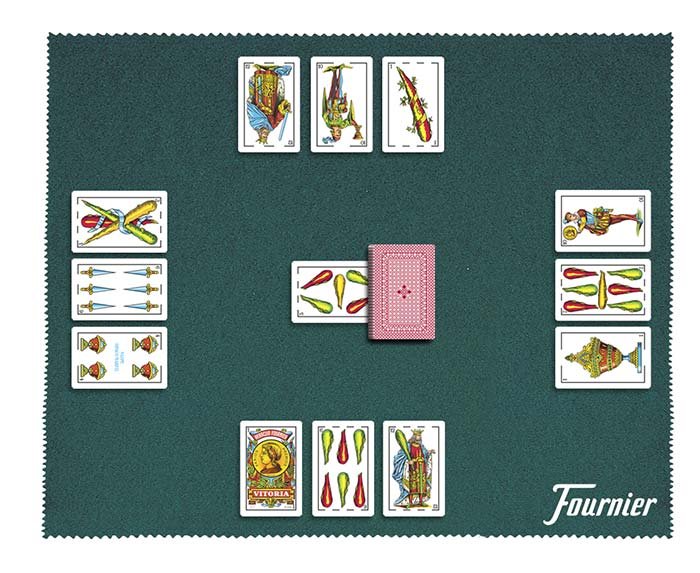
Playing Baraja involves a deck of 40 or 48 cards, typically with suits and numbered cards. The game objective and specific rules vary widely based on the version being played, but generally, players aim to win tricks or collect specific card combinations.
Ever wondered about those colorful cards with intriguing symbols? Many different games use a deck called Baraja, and figuring out how to play baraja card game can be an exciting journey. This card deck has many variations, each with its own unique gameplay. Learning the basics lets you dive into a world of fun and strategic thinking with friends.

How to Play Baraja Card Game
Let’s jump into the exciting world of Baraja, a card game enjoyed in many Spanish-speaking countries! If you’ve ever seen a deck of cards with different pictures than the usual hearts, diamonds, clubs, and spades, you’ve probably seen a Baraja deck. It’s a lot of fun, and while it may look a bit different, it’s not hard to learn. This article will walk you through everything you need to know to start playing. We’ll start with the basics and then get into some popular games you can play with a Baraja deck.
Understanding the Baraja Deck
First things first, let’s get to know the deck. Unlike a standard 52-card deck, the Spanish Baraja deck typically has 40 or 48 cards. The most common version is the 40-card deck. Here’s what makes it special:
The Suits
Instead of hearts, diamonds, clubs, and spades, a Baraja deck has these four suits:
- Oros (Coins or Golds): Often represented by golden coins or circles. Think of these as similar to the diamond suit in a standard deck.
- Copas (Cups or Goblets): These are depicted by elegant cups. They are sort of like the heart suit in a standard deck.
- Espadas (Swords): These are shown with swords and are like the spade suit in a standard deck.
- Bastos (Clubs or Batons): Represented by wooden clubs, similar to the club suit in a standard deck.
Each suit represents something different in Spanish culture and history.
The Card Values
Each suit has ten or twelve cards, depending on the deck. A 40-card deck will only have 1-7 and then 10, 11, and 12.
- Number Cards (1-7): These cards are numbered from one to seven, just like regular playing cards. The ‘1’ card is often called the ‘Ace’, and sometimes has a special picture on it.
- Sota (Jack or Knave): This is the number 10 card. It is usually represented by a picture of a person, often a young man.
- Caballo (Horse or Knight): This is the number 11 card and is shown with someone riding a horse.
- Rey (King): The number 12 card. This card shows a king, usually an older gentleman with a crown.
In a 48 card deck, there are also two additional cards, the 8 and 9 in each suit. The value of these cards will be different depending on the games that are being played.
The Differences from a Standard Deck
The main differences to keep in mind are:
- No Eights and Nines: In a 40-card deck, there are no 8s and 9s.
- Different Pictures: The court cards (10, 11, and 12) are called the Sota, Caballo, and Rey and are displayed differently.
- Different Suits: The suits are Oros, Copas, Espadas, and Bastos instead of hearts, diamonds, clubs, and spades.
Basic Gameplay Concepts
Before we dive into specific games, let’s cover some general rules that often apply in many Baraja card games. This will help you get up to speed quickly.
Card Dealing
Typically, games start by dealing cards to all players. The number of cards each player receives varies by the specific game, but common numbers are between 3-6.
The first player to deal the cards is usually randomly picked to start with, and in later rounds it is often passed clockwise to the next person.
Trick Taking
Many Baraja games involve taking ‘tricks’. A trick consists of each player playing a card face up in order, and whoever played the highest card (often of the same suit) wins the trick. The winner of the trick then starts the next round of playing a card.
Following Suit
In trick-taking games, players often must play a card of the same suit as the first card played in the trick, if they have it. If they don’t have that suit, they can play any other card. This rule can vary depending on the game being played.
Scoring
The way to get points varies by each game. In some games, points are earned by winning tricks with high-value cards. In others, points are awarded by getting particular combinations of cards. Scoring systems can range from simple to more involved.
Popular Baraja Games to Play
Now that you know the basics, let’s check out some fun games you can play with your Baraja deck! We will go through the rules for each game step by step, making it easier for you to follow along.
Briskas (Brisca)
Briscas is one of the most beloved Baraja games. It is usually played with 2 players, though it can be played with up to 4. It’s a trick-taking game with a focus on points. Let’s learn how to play.
Players and Cards
- Players: Usually 2, but can be played with 3 or 4. For 3 players, the 2s are removed.
- Cards: The 40-card deck is used.
- Dealing: Deal three cards to each player. The next card is then placed face up to indicate the ‘trump’ suit (also known as “baza”). This is a suit that will have special powers. The rest of the cards are placed face down in the middle to create a draw pile.
Gameplay
- The first player leads with any card. The other players must play a card, if they have one, of the same suit.
- If they do not have the same suit, then they can play any card.
- The player with the highest card of the leading suit wins the trick, unless a trump card is played. A trump suit card will win any suit.
- If multiple trump cards are played, then the highest trump card wins the trick.
- After the trick is finished, all the players will then draw a card from the pile. The winner of the previous trick goes first. This is played until there are no cards left in the draw pile.
- Players continue playing until they run out of cards.
Card Values
Here are the point values for the cards in Briscas:
| Card | Point Value |
|---|---|
| Ace (1) | 11 points |
| Three (3) | 10 points |
| King (Rey/12) | 4 points |
| Horse (Caballo/11) | 3 points |
| Jack (Sota/10) | 2 points |
| All Other Cards (2,4,5,6,7) | 0 points |
Winning
The player who has the most points at the end of the game wins. The total number of points available are 120.
Escoba
Escoba is a popular game that’s all about collecting cards in combinations. It is played with 2 to 4 players. Here’s how you play:
Players and Cards
- Players: 2-4 players
- Cards: The 40-card deck is used
- Dealing: Deal three cards face down to each player and four cards face up in the center of the table.
Gameplay
- Players take turns attempting to make combinations of cards that add up to 15. For example, you can combine a 7 and a 8 to make 15.
- You can use one card from your hand and either one or more cards from the center.
- If a player makes a combination of 15, they take the cards used to make the 15 as well as the card from their hand and place it in their score pile face down.
- If no cards are able to be combined to make a 15, then the player must play a card face up into the center of the table.
- After the player completes their turn, they will draw a new card to fill their hand until they have three cards.
- This process continues until no cards remain.
Special Moves
- Escoba: If you make a combination using all the face up cards, it is called an Escoba. This earns an extra point.
Scoring
- Escoba: When an escoba is made, this is worth 1 extra point.
- 7’s: Each seven is worth 1 point.
- Oros (coins or golds): If you have the majority of the Oros, that is worth one point.
- Cards: If you have the most cards that is worth 1 point.
Winning
The player with the most points at the end of the game wins. The game is played to a score of 21.
Mus
Mus is a popular game that is very fast paced. It is a game that focuses on hand combinations, and the bluffing that comes with it. It is best played with 4 people, playing on 2 teams. Here’s how you play.
Players and Cards
- Players: Best with 4 players (2 teams of 2)
- Cards: The 40-card deck is used
- Dealing: Each player receives 4 cards.
Gameplay
- Players are given the opportunity to discard cards. Starting with the player to the dealer’s left, they can indicate that they want to ‘discard’ by saying “Mus” or keep their hand, saying “No Mus”.
- If all players decide to discard, then all players discard the number of cards that they want and replace it with cards from the deck.
- Players continue this process of discarding (or not) until someone says ‘No Mus’.
- When players do not discard their hand, then betting begins.
- Starting with the player to the left of the dealer, they can bet a point, two points, or ‘all in’ by saying “Envido”.
- The next player can match, raise, or pass.
- There are four different categories you play for, and they are played in order. Each category has different winning combinations.
- Grande (High Card): Players reveal the highest individual card in their hand. A King is the highest, with a two being the lowest. The highest card wins. If there is a tie, the player with the best cards in the next category wins.
- Pares (Pairs): If a player has two cards of the same value, it is a pair. Three of a kind wins over a pair. Four of a kind wins over three of a kind. The player with the best combination wins. If there is a tie, the player with the best cards in the next category wins.
- Juego (Game): Players add the number values of the cards in their hand. King, Horse, and Jack all count as 10. The player with the highest value, that is at least 31 or more, wins this category. If there is a tie, the player with the best cards in the next category wins.
- Punto (Point): This category is for the player with the highest total card value, this time with no minimum value requirement. King, Horse, and Jack all count as 10. The highest card value wins.
Scoring
- Each category played is worth 1 point.
- A player can raise the stakes by saying “Envido”, which is worth 2 points.
- If a player is really confident, they can say “Real”, which means if they win the next hand, they will win all the points of the round.
Winning
The team who reaches 30 or 40 points wins, depending on the local rules being played. This game is a game of betting, and knowing when to bluff, so it is a fast paced and exciting game.
Tips for Playing
Here are some quick tips that can help you become better at Baraja card games:
- Learn the card values: Get a feel for how valuable each card is in different games. The Ace and the 3 are often high-value cards in trick-taking games.
- Observe your opponents: Watch what cards other players are playing. This will help you make better decisions.
- Practice: The more you play, the better you’ll get at understanding the rules, strategies, and rhythms of the games.
- Don’t be afraid to ask: If you’re not sure about something, ask someone who knows the game well.
- Have Fun: The most important thing is to enjoy yourself. The best way to learn is to be engaged in the fun.
Baraja card games offer a fantastic way to connect with friends and family, experience different cultures, and have a great time. With a little practice, you’ll be playing like a pro in no time!
Baraja card games are more than just a way to pass the time; they are a vibrant part of Spanish culture. They offer a glimpse into history, tradition, and community. Whether you’re aiming for the strategic play of Briscas, the tactical card collection of Escoba, or the bluffing fun of Mus, the world of Baraja has something to offer everyone. So, grab a deck, gather some friends, and jump into the fun! You’ll soon be enjoying all the friendly competition and laughter that comes with these great games.
How to play Brisca
Final Thoughts
To play Baraja, understand the suits and their values. The objective varies by game, usually involving collecting points or winning tricks. Remember, card combinations and matching are essential. How to play baraja card game centers on understanding the rules of your chosen variant.
Practice frequently to develop strategy. Learn card rankings and suit hierarchies, they are important. The more you practice, the more comfortable you become with the play. Strategy is a key part to success.

