
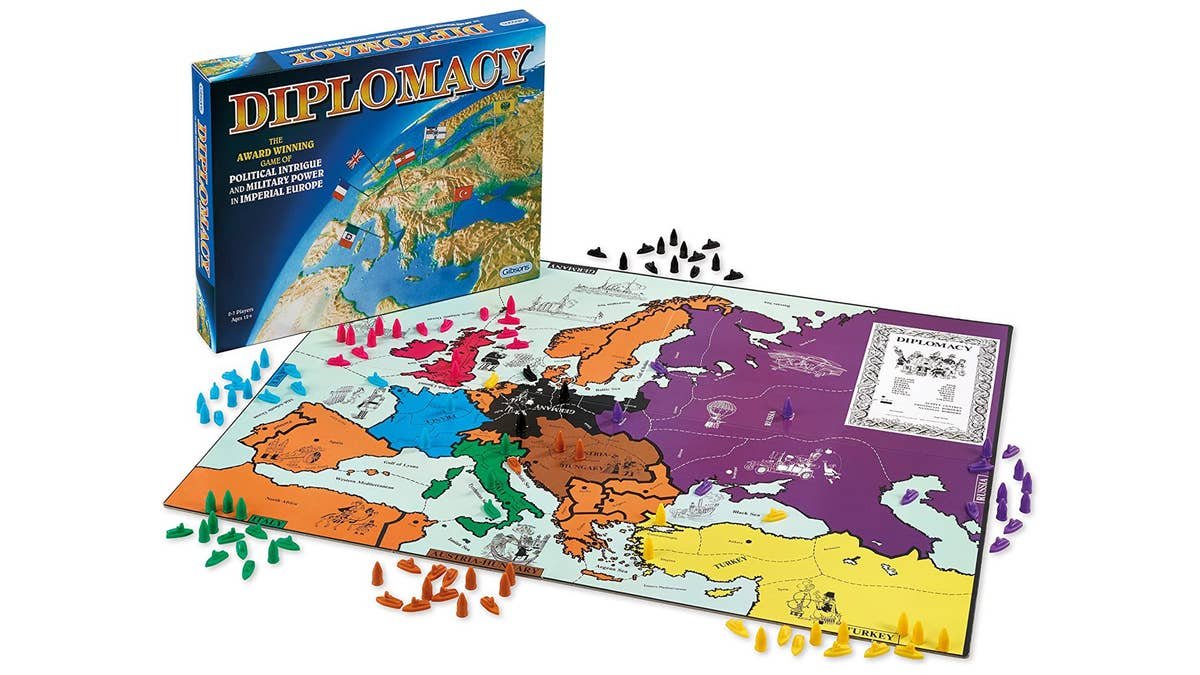
To play Diplomacy, you negotiate with other players each turn to decide which of your armies and fleets will move to which territories, then all moves are simultaneously executed.
Have you ever wondered about grand strategy, negotiation and complex geopolitical maneuvering? Learning how to play diplomacy board game opens a world of tense alliances and backstabbing betrayals. This isn’t a game of dice rolls, but one of pure cunning and carefully constructed agreements.
Each player controls a major European power, attempting to control the continent. The core mechanic involves writing down orders for your units each turn, before revealing the choices, and hoping your calculated risks pay off. Can you successfully navigate the complexities of diplomacy?

How to Play Diplomacy Board Game
Okay, you’re ready to dive into the world of Diplomacy, a game unlike any other you’ve played before. Forget about rolling dice and moving pieces around a board based on luck. Diplomacy is all about talking, making deals, and sometimes, yes, betraying your friends (don’t worry, it’s all in good fun!). It’s a game of strategy, negotiation, and a little bit of daring. It can feel a little tricky at first, but once you get the hang of it, you’ll be hooked. So, let’s break down how to play this fascinating board game.
Understanding the Board and the Pieces
The first thing you’ll see is the map. The Diplomacy board shows Europe at the beginning of the 20th century, divided into different territories. Each player controls one of the seven Great Powers: Austria-Hungary, England, France, Germany, Italy, Russia, and Turkey. Each country starts with some units.
Types of Units
There are two types of units in Diplomacy: armies and fleets.
- Armies: Think of these as your land forces. They move between adjacent land territories. They can’t move through water.
- Fleets: These are your navy. Fleets can move between sea areas and coastal territories. They can’t move into inland territories.
Starting Positions
Each power starts with a different number of units and has its units positioned in specific locations across the map. This initial setup is key to each nation’s strategy. For example, England starts with a fleet in the English Channel, while Russia has armies in Moscow and Warsaw.
To quickly know what are the starting position for each of the great powers, you can take look below, as shown in the below table:
| Power | Starting Units | Starting Location |
|---|---|---|
| Austria-Hungary | 2 armies, 1 fleet | Vienna, Budapest, Trieste |
| England | 2 fleets, 1 army | London, Liverpool, Edinburgh |
| France | 2 armies, 1 fleet | Paris, Brest, Marseilles |
| Germany | 2 armies, 1 fleet | Berlin, Munich, Kiel |
| Italy | 2 armies, 1 fleet | Venice, Rome, Naples |
| Russia | 2 armies, 2 fleets | Moscow, St. Petersburg (South), Warsaw, Sevastopol |
| Turkey | 2 armies, 1 fleet | Ankara, Smyrna, Constantinople |
The Game’s Core Mechanics
Diplomacy revolves around a few key steps that are repeated each game year. It’s all about issuing orders to your units and then seeing how they play out.
The Negotiation Phase
This is where the heart of Diplomacy truly beats. Before you move your units, you need to talk to the other players. You can discuss anything – alliances, coordinated attacks, defensive pacts, or even just throw out false information to confuse others! This part of the game requires clever communication. You make your case and attempt to persuade others to align with your plans. You might tell them you’ll help them in one area if they help you in another. However, you have to be careful, as people might not always be honest and might change their mind quickly. The best plan is to be realistic and keep your word. This is key to building trust.
The Order Writing Phase
Once the negotiation is done, you must write down your orders secretly. This prevents anyone from changing their orders after seeing what others are doing. Orders are simple, and there are only a few types you need to know:
- Move (M): Move a unit from one territory to an adjacent territory. Example: “Army (Paris) Move to (Burgundy).”
- Support (S): Support another unit’s move into a specific territory. Example: “Army (Ruhr) Support Army (Munich) Move to (Bavaria).” This means that the Army in Ruhr will help the Army in Munich attack Bavaria.
- Hold (H): Keep a unit in its current location. Example: “Fleet (Liverpool) Hold.”
- Convoy (C): A fleet can help transport an army across a sea area to a coastal territory. Example: “Fleet (North Sea) Convoy Army (London) Move to (Belgium).”
When you write your orders, you have to be very clear. Specify exactly which unit is doing what, and where it is moving to. Keep the orders simple and use standard abbreviations to make it clear. If your order is not clear, the game master may not be able to understand and your move will not be executed.
The Resolution Phase
After everyone has written down their orders, all orders are revealed at the same time. The game master then goes through and determines what happens. This involves checking for conflicts between moves and calculating which orders succeed.
Movement Rules
Moving a unit to an area with only one unit moving in usually has no problem. However, there are rules to handle situations when multiple units try to move to the same territory.
- Head-to-Head Conflict: If two units try to move into the same territory and no support is provided for either one, then the units stay where they were. Neither unit moves.
- Support: If a unit moves into a territory and has more support than the unit trying to defend, then the attacker wins, and the defender goes back to its starting location. The supported unit moves in. If the units have equal support (for example, a single unit supported by a single unit versus a single unit supported by a single unit) neither can move and it stays where it is.
- Cut Support: A support can be ‘cut’ if a unit moves into the location of a supporting unit. For instance, if “Army (Ruhr) Supports Army (Munich) Move to (Bavaria)”, and “Army (Belgium) Moves to (Ruhr)” then “Army (Ruhr)” can’t provide support.
Supply Centers
Supply centers are special areas marked on the map that represent cities, ports, or key locations. Control of supply centers is key to your power. At the end of each game year, you get to build new units if you control more supply centers than the number of units that you currently control. If you control fewer supply centers than you have units, you must remove units. The goal of the game is to control a certain number of supply centers. Usually, this is 18.
Strategic Tips and Tricks
Playing Diplomacy well involves more than just knowing the rules. It’s about planning, being adaptable, and knowing when to trust and when to be cautious. Here are some strategic tips:
- Don’t Trust Anyone Completely: In Diplomacy, alliances are usually temporary. Be ready to change your plans and don’t be surprised if someone betrays you.
- Plan Ahead: Think about how your moves will affect your position and the positions of other players. Do not make your decisions only for the turn ahead. Look at the board and think a few moves forward.
- Communicate Clearly: When negotiating, make your plans clear. Miscommunication can lead to misunderstandings and missed opportunities. Always speak to your neighbors every single move, even if you don’t want to make an alliance with them. You will be able to find out what they are planning on doing.
- Protect Your Supply Centers: Don’t leave key supply centers undefended. These are your source of strength. Don’t expand too quickly, as this could leave you vulnerable.
- Watch for Opportunities: Be aware of when other players are vulnerable. A small opening could lead to you getting ahead.
Key Concepts for Beginners
If this is your first time playing Diplomacy, here are some vital concepts to keep in mind:
The Importance of Alliances
Alliances can be the key to winning the game. You can’t win it alone. You need allies. However, it’s critical to choose allies wisely. Alliances can be very useful to you, but they can be risky as well, as players may betray you at some point. Don’t trust anyone blindly. Always have backup plans in case your ally turns against you. It’s okay to be polite, but you still need to be careful.
Learning to Read People
A big part of Diplomacy is about reading people. Pay attention to what they say and how they act. Sometimes, you can find clues about what their real plans are through their body language and facial expressions. Are they nervous about a particular move? Is a player getting overly confident in a deal? Try to work out their intentions, which may be different from what they say.
Understanding the Game’s Flow
The game naturally has ebbs and flows of tension. There will be times when all players are aggressively attacking each other. There will be times where players are all getting along. Adapt to these phases by changing your strategies. Sometimes, it’s good to play aggressively. Other times, it’s better to play defensively. Know the right time to do each.
Common Mistakes to Avoid
New players often make some common mistakes. Here are a few to avoid:
- Trusting Too Easily: As mentioned before, don’t give your trust too easily. Assume every deal you make may fall apart.
- Ignoring Diplomacy: This game is about diplomacy as much as it is about strategy on the board. If you refuse to talk to the other players, you won’t know what they are planning, and you will be easy to take down.
- Overextending: Expanding too quickly can leave you vulnerable. Focus on your core areas first before attacking all over the place.
- Being Predictable: Try to be unpredictable. If you keep making the same moves, your opponents will easily be able to guess what you will be doing next.
A Sample Turn
Let’s go through a very simple example turn to see how this might work:
The year is 1901. Let’s focus on Germany:
- Negotiation: The German player talks to France and Russia. They propose a deal with Russia to take over Sweden and to put pressure on France in the next turn, so Russia does not attack them. France, who is being squeezed by the other two powers, agrees to not attack Germany on their borders this turn, in order to focus on other countries.
- Order Writing: Germany decides to issue the following orders (among others):
- Army (Munich) Move to (Bavaria).
- Army (Berlin) Move to (Prussia).
- Fleet (Kiel) Move to (Denmark).
- Resolution: All the orders are revealed and resolved. There are no conflicts. So the German armies move successfully to Bavaria and Prussia. The German fleet moves to Denmark. Germany’s turn is successfully completed.
Remember that this was a simplified example. In a real game, you will have many more units and complex situations to solve. This is just an idea to get you started.
Playing Diplomacy is truly a rewarding experience. You will be making connections with your friends, building alliances and experiencing many twists and turns. You will be experiencing some joy when your plans work, but you also might experience a little bit of pain when someone betrays you. But this is all part of the fun of the game.
This game is a complex game, but with a bit of patience and strategy, you will become very good at it. Don’t be afraid to try new things and keep learning. You will be able to discover new strategies, tricks, and ways of playing this fun board game.
Learn to Play: Diplomacy
Final Thoughts
To win at Diplomacy, players must negotiate with others. They issue orders for their units each turn. All orders are executed at the same time. This simultaneous execution makes tactical planning crucial for success.
Forming alliances is paramount. Players must betray or support each other strategically. Understanding other players’ intentions is essential in how to play diplomacy board game. Ultimately, calculating risks and managing resources is key to victory.

