
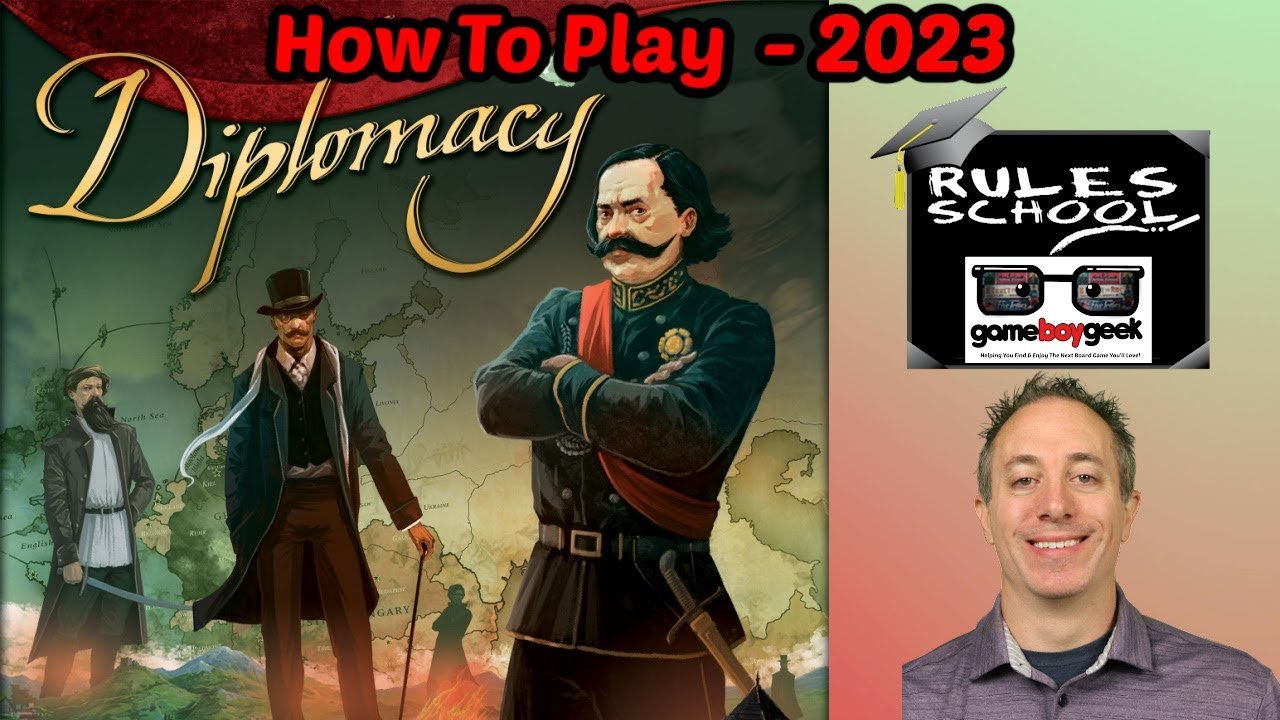
To play Diplomacy, you command one of seven great European powers, issue orders for your units (armies and fleets), and negotiate with other players to gain control of supply centers.
Ever felt the itch for a strategic game where your words are as powerful as your armies? Then, you’re in the right spot, because we’re talking about how to play diplomacy game. This board game is famous for its intense negotiations, shifting alliances, and the potential for utter betrayal.
Forget complex rules and dice rolls; this game is all about strategy and the art of the deal. The game unfolds on a map of Europe, and you use your units to achieve dominance, this journey starts with you learning how to play diplomacy game.

How to Play Diplomacy Game
Welcome, future diplomats! So, you’re curious about the game of Diplomacy? It’s not your average board game. There are no dice, no cards, and no luck involved. It’s all about talking, planning, and, well, maybe a little bit of backstabbing! This game tests your skills in negotiation, strategy, and reading people. Think you’re up for the challenge? Let’s dive in and learn how to play Diplomacy.
Understanding the Basics
Before we get into the nitty-gritty, let’s cover the foundational elements of the Diplomacy board game. Understanding these elements is very important to be successful in the game.
The Game Map and Pieces
The game board is a map of Europe, divided into countries and regions. Each player controls a major European power from around the year 1900. These powers are:
- Austria-Hungary
- England
- France
- Germany
- Italy
- Russia
- Turkey
Each power starts with a certain number of “units,” which are either armies or fleets. Armies move on land, and fleets move on the sea and along coastlines. The board shows the connected spaces where these units can move.
Game Objective: Controlling Supply Centers
The main goal in Diplomacy is to control the majority of supply centers. Supply centers are specific cities or regions on the map. At the beginning of the game, each power controls some supply centers. The game ends when a player controls 18 or more of the 34 supply centers. When a power has fewer supply centers than units, that power must destroy units at the beginning of each year. When a power has more supply centers than units, that power may build units at the beginning of each year. This building and destroying mechanic makes securing supply centers incredibly important.
The Turn Structure: A Deep Dive
A game of Diplomacy happens over a series of turns. Each turn is called a “game year” and is broken into phases.
The Negotiation Phase
This is where the real magic (and treachery) happens! Before you move any units, you have time to talk to the other players. You can make alliances, promise help, ask for support, and maybe even plan a surprise attack. This phase is crucial because you can not win the game alone. Diplomacy is not a game of simple combat, but it’s a game of great deal making, and strategic alliances are necessary to win. The negotiation phase happens away from the board; you are not required to publicly announce whom you are communicating with. You may talk in person, via chat, or whatever communication method your group agrees on.
Here are some tips for successful negotiation:
- Be Clear: State your intentions clearly. Don’t be vague; be specific about what you want and what you’re willing to offer.
- Listen: Pay close attention to what other players are saying, not just your plans. Often, a seemingly minor detail can reveal their true goals.
- Build Trust: As much as you may like treachery, sometimes building a trustworthy reputation is more important. If you want long term alliances, you need to establish trust. Make alliances and honor your word.
- Be Flexible: Be prepared to change your plans if needed. A good negotiator can adapt to new information and changing situations.
The Order Writing Phase
After the negotiation phase, you need to write down your orders for each of your units. Orders must be written clearly and without ambiguity. There are a limited amount of orders. The orders a unit can make are:
- Move: The unit moves from one location to a directly adjacent location. For example, an army in Berlin can move to Kiel, Silesia, or Munich. A fleet can move to a directly adjacent location which is a coast, or an ocean area that shares a coast with that area.
- Support: A unit supports another player’s unit in moving to an adjacent area, assisting that player in their endeavor.
- Hold: The unit does not move and maintains its position.
- Convoy: Only a fleet can convoy an army, allowing an army to move across a sea or other body of water.
All orders are written in secret, so no one can know your intent until all orders are revealed at once.
The Resolution Phase
After everyone has written their orders, all orders are revealed at the same time. Then, orders are resolved based on the rules of the game. When units are ordered to the same location, or when there are orders that may conflict, each order is resolved based on what forces are present. For example, if two units are ordered to the same location, the unit with more support will take that location. If multiple units are ordered to a space with no defense, then the attacker with the most support will take the space.
Key rules to understand:
- Support: A unit can only support a move into an adjacent space. The supporting unit cannot be moved to this location.
- Convoy: A fleet can only convoy an army into an adjacent coastal space. A convoying fleet can be dislodged.
- Dislodging: If a unit attempts to move to a location occupied by an enemy, and the enemy is not also attempting to move to that location, and the attacking unit has more support than the defending unit, then the defending unit is dislodged and must be moved to an adjacent, free location of the dislodged unit’s choice.
The Retreat Phase
When a unit is dislodged, that unit must retreat to a free, adjacent space. This is not a “move” and does not count as taking the space. If the unit has nowhere to retreat to, it is destroyed.
The Build Phase
After the orders are resolved, and after retreat moves are resolved, the game turns to the build phase. If a player controls more supply centers than units, that player may build units in their controlled supply centers. If a player controls fewer supply centers than units, that player must destroy a unit.
The New Game Year
After the build phase, a new game year starts. This cycle is repeated until one player controls 18 or more supply centers, or until the players agree to end the game.
Strategic Approaches: How to Think Like a Diplomat
Playing Diplomacy is not just about knowing the rules; it’s about developing the right mindset. Here are a few strategic approaches to consider:
Early Game Strategies
The beginning of the game sets the tone for your entire strategy. Here are some key considerations:
- Identifying Threats and Opportunities: Who are your immediate neighbors? Are any of them in a position to quickly move to your lands? Are there any territories that you can easily acquire with minimal risk?
- Forming Early Alliances: Who would be a natural ally for you? A country on the opposite side of the map from you is usually a good choice.
- Focusing on Key Areas: Prioritize locations that have both strategic and economic value, such as supply centers that are easily accessible to your starting positions.
Mid-Game Strategies
The middle of the game is when the board begins to shift and true intentions are revealed. Consider these mid game strategies.
- Adapting to Changing Dynamics: Alliances change, and sometimes, betrayals are inevitable. Be prepared to adjust your strategy based on the actions of other players.
- Consolidating Your Position: Now is the time to solidify your holdings and work towards controlling a sizable portion of supply centers.
- Planning for the Endgame: Think about how you will get the last few supply centers to reach the goal of controlling 18.
End-Game Strategies
In the end game, the race to control 18 supply centers is often the most challenging part of the game.
- Securing Final Supply Centers: A strategic final grab for supply centers may be necessary.
- Betraying the Untrustworthy: As you approach victory, you may need to make hard decisions. Sometimes the only way to victory is betraying alliances. Be warned though, this could cause other players to focus their efforts to take you down.
- Playing the Long Game: Sometimes a long-term alliance can help you get close enough to victory that you can take the win. Sometimes, the slow and steady wins the race.
Advanced Tactics and Tips
Once you’ve grasped the basics, here are some advanced tactics and tips to help you gain an edge:
The Art of Deception
A little deception can go a long way in Diplomacy. Here are some ways you can use this tactic:
- Feigned Intentions: Sometimes it’s advantageous to make others think you’re doing something completely different from what you’re planning.
- False Promises: While building trust is vital, sometimes a strategic lie can shift the game in your favor. Just be prepared for the consequences if you are found out!
- Creating Distractions: A move to a remote or seemingly useless area can take the attention of other players and allow you to take an easier route to achieve your goal.
Reading Opponents
Understanding your opponents is just as important as moving your units strategically.
- Analyzing Communication: The way a player communicates can tell you a lot about their true intentions. A player that communicates a lot may be overcompensating to hide their plans. A player that is quiet may be plotting something big.
- Spotting Patterns: Pay attention to how players react to different situations. Did a player quickly back down when you challenged them? This may show you how to approach this player in the future.
- Predicting Moves: The more you pay attention to your opponents, the better you can predict their next move. This can be beneficial in planning your own moves.
The Power of Alliances
Alliances are essential for success in Diplomacy. Here’s how to use them effectively:
- Choosing the Right Allies: Look for alliances with players who have common goals or shared enemies. Sometimes, the enemy of my enemy, is my friend.
- Maintaining Relationships: Honoring your word is the fastest way to make an alliance that will last. If you break your word constantly, no one will trust you.
- Knowing When to Break an Alliance: Alliances aren’t always forever. Knowing when to abandon a failing alliance is just as important as knowing when to make an alliance.
Common Mistakes to Avoid
Even the most experienced Diplomacy players make mistakes. Here are some pitfalls to avoid:
- Being Too Trusting: Always verify what you are told. No matter how kind a player seems, they may have ulterior motives.
- Being Too Aggressive: Attacking all your neighbors at once can leave you vulnerable to counterattacks. Try to make friends to avoid being targeted.
- Neglecting Diplomacy: Focusing only on strategy, and not spending enough time making connections is a path to ruin. Diplomacy is the name of the game, and without diplomatic skills you will struggle.
- Ignoring the Bigger Picture: Don’t focus on one area so much that you are unable to see how other moves will effect your units.
Variations and Online Play
While the classic Diplomacy game is played with seven players around a physical board, there are some other ways to play:
Different Player Counts
Some Diplomacy game variants may change the number of players.
- Six Players: This usually involves removing one of the major powers from the map, often Turkey.
- Five Players: This usually involves removing two powers, and often uses a variant map of the same area.
- Four Players: Usually some players will be forced to play multiple powers.
Online Platforms
Many websites and apps allow you to play Diplomacy online. These platforms can be a great way to find games with other players across the world. These platforms also can provide help for new players in the way of move resolution, and turn timers.
- WebDip: A popular website for playing classic Diplomacy.
- PlayDip: Another well known site with a user friendly interface.
- Discord Servers: Many Discord servers exist dedicated to Diplomacy, allowing you to find new players and games.
Playing Diplomacy is a rewarding experience that will teach you valuable skills in negotiation, strategy, and critical thinking. Whether you are playing with friends, family, or online, each game will provide a new experience, and test your abilities. So, grab a board, gather some friends, and get ready to play the game of treachery and strategy!
How To Play DIPLOMACY in 12 MINUTES on Backstabbr /YOU Can Learn the Board Game Diplomacy
Final Thoughts
To play Diplomacy, you must understand the board, representing Europe. Each player controls a major power, issuing orders for their units. Units can move, support attacks, or convoy across sea.
Negotiation is crucial; you form alliances, break them, and betray opponents. Success depends on careful planning and skillful interactions with other players. Knowing how to play diplomacy game means thriving in this environment of shifting loyalties. Remember that trust is very valuable but extremely fragile.

