
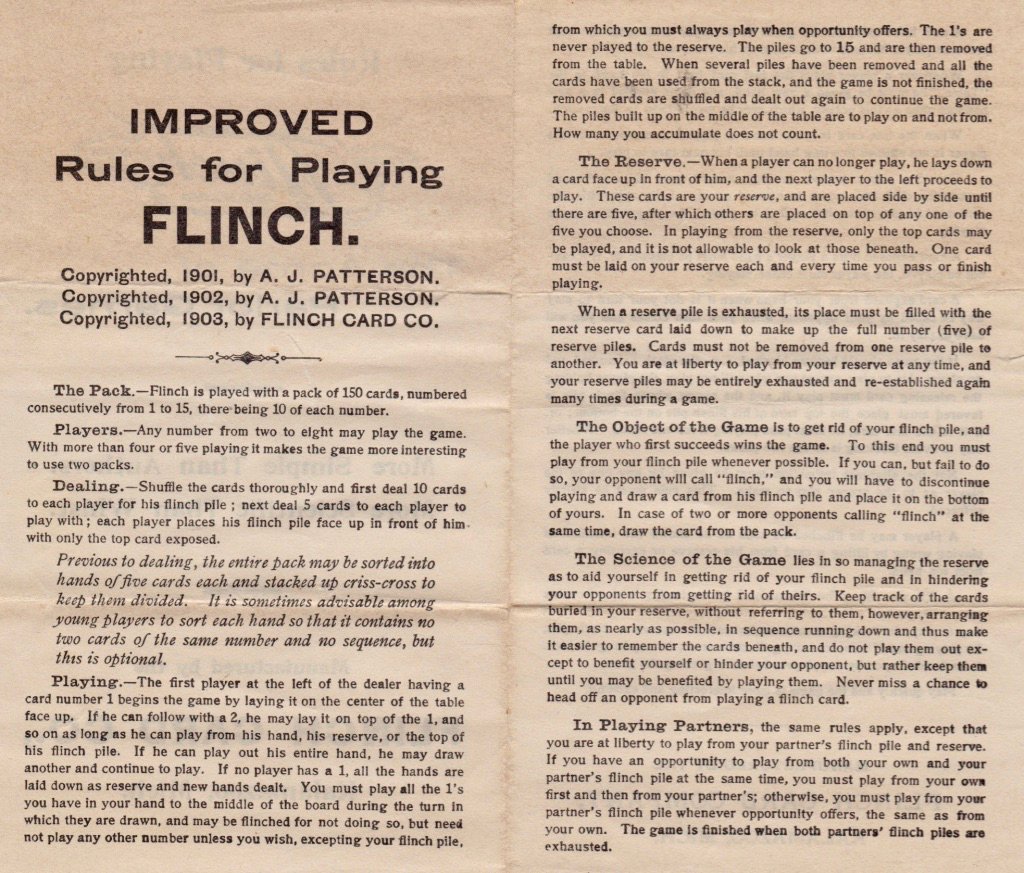
Playing Flinch involves dealing cards into stacks, discarding to a personal pile, then racing to empty your stack by playing sequentially onto a central pile.
Ever wondered about a fast-paced card game that tests your speed and strategy? If you’re curious about how to play Flinch the card game, you’ve come to the right place! It’s a simple concept but requires quick thinking.
The game centers around depleting your stack of cards faster than your opponents. We’ll quickly break down the core rules and steps so you can jump right into playing.

How to Play Flinch the Card Game
Alright, let’s dive into the super fun world of Flinch! It’s a card game that’s a little bit like a race and a little bit like strategy, all rolled into one. The main goal is to get rid of all your cards before anyone else does. Think you’re up for the challenge? Let’s learn how!
Getting Ready to Play Flinch
Before we start flipping cards, we need to get everything organized. Here’s what you need:
The Deck of Cards
Flinch uses a special deck of 150 cards. These aren’t your regular playing cards. Instead, the cards are numbered from 1 to 15. Each number appears multiple times in the deck. It might feel a bit much at first, but don’t worry, you’ll get the hang of it!
The Players
You can play Flinch with 2, 3, or 4 players. The more the merrier, right? If you have more than four players, you can always split into teams. This makes the game even more interesting. Remember, if playing with teams you will be working together, trying to get rid of all of your combined cards first.
Dealing the Cards
The way you deal cards in Flinch is very important, since this is where you create your piles. Each player gets a specific number of cards based on the number of players. Here’s how it works:
- Two Players: Each player gets 20 cards.
- Three Players: Each player gets 15 cards.
- Four Players: Each player gets 10 cards.
These dealt cards are your Stock Pile and you won’t see them until they are revealed during gameplay. Keep them facedown as you begin.
Forming the Piles
Once you have your cards, make sure that they are in a single facedown stack in front of you. Now, flip the top card of your Stock Pile faceup. This is the start of your Play Pile. The rest of your Stock Pile stays facedown. You’ll also create what’s called Reserve Piles. Reserve Piles are optional in the beginning but many players choose to form them. There are a few ways to do it:
- The Three-Pile Method: A very common method is to create 3 reserve piles, that consists of 5 cards each face up. You can only play from the top of each of your reserve piles. The remaining cards are your Stock Pile and the top card of the Stock Pile is placed on top to create the Play Pile.
- The Five-Pile Method: Each player has five face-up Reserve Piles, using 5 cards from the top of the stack. The remaining cards become the Stock Pile and the top of the stack, becomes the Play Pile.
- The No-Pile Method: You may opt to not use any Reserve Piles at all, and simply keep a Stock Pile and a single Play Pile. This method can make the game slightly more challenging.
How to Play Flinch: The Gameplay
Now for the fun part—actually playing the game! Remember, your goal is to get rid of all your cards before anyone else.
Starting the Game
The youngest player usually goes first. Then, play moves clockwise around the table. Now let’s learn what you can do on your turn.
Taking Your Turn
On your turn, you have these options to play:
- Playing to the Center Piles: This is the main focus of the game! You build up central piles, starting with the number 1. If there is a center pile with the number 1, and you have a number 2 card, you may place the card on the center pile. You continue building the central piles up in numerical order: 1, 2, 3, 4, 5… all the way up to 15. Any number 1 card starts a new pile.
- Playing from Your Hand: If you are playing with Reserve Piles, you may play cards from the top of each of your Reserve Piles to the central piles, following numerical order. You can also play the top card of your Play Pile.
- Moving Your Top Card to Reserve Piles: If you decide to play with Reserve Piles, you are allowed to move the top card of your Play Pile into any of your open spots (either if it is an existing Reserve Pile with a card already on it, or a new Reserve Pile) .
- Passing: If you cannot play anything you may pass, and then it becomes the next player’s turn.
Building the Center Piles
The goal is to work together to build up the center piles. When a center pile reaches number 15, it is completed and gets moved out of the way, leaving room for new number 1 card to start a new center pile. The more 15’s you get built up in the center, the less cards you will have remaining in the game.
When Your Stock Pile Runs Out
Once your stock pile is finished, the first card from your play pile can be flipped over if it is not already flipped. You then start using the cards in your play pile to create the center piles or if you have them, your reserve piles. Once your Play Pile is gone, if you have Reserve Piles, they must all be empty before you are able to win.
Winning the Game
The first player to get rid of all of their cards from their Stock Pile, Play Pile, and Reserve Piles (if they are using them) wins the game. When a player has finished all of their piles, they must say “Flinch”.
Key Strategies for Playing Flinch
Now that you know the basic rules, let’s talk about some strategies that can help you win:
Look Ahead
Instead of just playing whatever card is available, try to think ahead. Consider what cards you have in your play pile and reserve piles and where they may fit in the center piles. Try to think a few steps ahead, like you would in a game of chess.
Keeping Track of Your Cards
Knowing what numbers are in your Stock Pile is impossible, but once your Play Pile is revealed, and once your Reserve Piles are revealed, you can keep track of what numbers you have and which ones are in your way.
Don’t Forget About the Center Piles
While you are trying to get rid of your cards, don’t forget about the center piles. Keep an eye on what numbers are already in the center, and build them up whenever possible.
Be Quick
Flinch isn’t a game where you can think for a long time between moves. If someone is getting close to completing their piles, you’ll need to act quickly! Playing with speed is part of the game.
Variations and Fun Twists
Want to add some extra excitement to your Flinch games? Try these variations:
Team Play
If you have a large group, split into teams. Teammates work together to get rid of all their combined cards. This adds a cooperative element to the game.
Speed Rounds
For a faster and more frantic game, set a timer. Each player has a limited time to make their move, which forces quick thinking.
Reverse Build
Instead of building up from 1 to 15, try building down from 15 to 1. This changes the way you strategize about your cards, and can add more challenge.
Card Limits
Create a rule that sets a maximum number of cards that each player can have in their Play Piles and Reserve Piles. If you are playing with reserve piles, you may only have a maximum of 3, 4 or 5 reserve piles, and each can only hold a specific number of cards in them. These rules may make the game more difficult, depending on the number of cards.
Final Thoughts on Flinch
Flinch is a great game because it’s simple to learn, but it can also be very challenging. You have to think strategically, be quick, and also work together to build the central piles. It’s a game that you can play with all ages and enjoy many times over. Whether you are playing with 2 players, or a group of 6 split into teams, there are many ways to experience the game of Flinch.
Ep 19: Flinch Card Game Review (Vintage Card Game 1898) + How To Play
Final Thoughts
To play Flinch, each player starts with a stack of ten cards face down. Players flip the top card of their stack, trying to discard them sequentially from one upwards. A central discard pile is built by anyone with an appropriate card. First player to deplete their stack wins. The game requires strategy and speed.
Playing out cards in the correct numerical order is a must. This summarizes how to play flinch the card game. Speed and planning your moves effectively are crucial to winning.

