
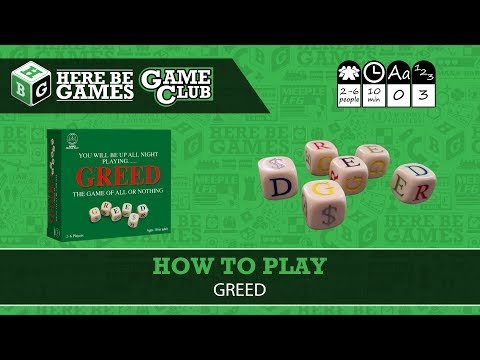
To play Greed dice game, roll six dice and set aside scoring combinations like ones, fives, or three-of-a-kinds. Continue rolling remaining dice or bank your points, risking losing them if no scoring dice appear on a subsequent roll.
Ever wondered how to play greed dice game? It’s a fast-paced, point-scoring game that’s easy to learn but hard to master. You’ll quickly pick up the rules and be strategizing how to maximize your score. The thrill comes from deciding when to push your luck or bank your points, adding a fun element of risk.

How to Play Greed Dice Game
Alright, let’s dive into the fun world of Greed, also known as Farkle, Zilch, or 10000! It’s a super popular dice game that’s easy to learn but can keep you entertained for hours. The basic idea is simple: you roll dice, score points, and try not to be too greedy! But don’t worry, we’ll go through each step carefully so you’ll be a pro in no time.
The Basics: What You Need to Play
Before we get rolling, let’s make sure you have everything you need. Thankfully, it’s not much:
- Six Dice: These are standard six-sided dice, the kind you’d find in most board games.
- A Way to Keep Score: A pen and paper work perfectly. You can also use a whiteboard or a scorekeeping app.
- At Least Two Players: Greed is more fun with friends or family, but you can also play by yourself to practice.
That’s it! Now that we have the equipment, let’s get into how the game actually works.
Starting the Game: The First Roll
The goal of Greed is to be the first player to reach a pre-determined score, usually 5,000 or 10,000 points. To begin, players take turns rolling all six dice. This first roll is crucial, because you need to score at least a minimum number of points to “get on the board”. This is often 300 or 500 points, but this number may vary based on the house rules you agree upon before starting.
The Concept of “Getting on the Board”
Let’s say the minimum points to “get on the board” is set at 300. Your very first roll of all six dice must score 300 points or more for you to start adding points to your overall score. If your first roll does not reach the 300 minimum requirement, you will gain no points, and the turn passes to the next player. You will need to roll again on your next turn and try to get on the board. You must get “on the board” before you can start banking your points and work towards winning the game.
Scoring Points: What Counts
Alright, this is the heart of Greed. You score points based on the numbers you roll. Here’s a breakdown of the scoring combinations, these are the most commonly accepted rule sets:
- Ones: Each 1 is worth 100 points.
- Fives: Each 5 is worth 50 points.
- Three of a Kind: Three of any number (except 1) are worth 100 times that number (e.g., three 2s = 200 points, three 3s = 300 points).
- Three 1s are special and worth 1000 points!
- Four, Five and Six of a Kind: These are worth double the value of a three of a kind.
- Four 2’s are worth 400 points, Five 2’s are worth 800 points, and six 2’s are worth 1600 points.
- Four 3’s are worth 600 points, Five 3’s are worth 1200 points, and six 3’s are worth 2400 points.
- Four 4’s are worth 800 points, Five 4’s are worth 1600 points, and six 4’s are worth 3200 points.
- Four 5’s are worth 1000 points, Five 5’s are worth 2000 points, and six 5’s are worth 4000 points.
- Four 6’s are worth 1200 points, Five 6’s are worth 2400 points, and six 6’s are worth 4800 points.
- Straight: A straight (1, 2, 3, 4, 5, 6) is worth 1500 points.
- Three Pairs: Three pairs of the same number is worth 1500 points. (e.g., two 2’s, two 4’s, and two 6’s)
Example Scenarios
Let’s see these scoring rules in action:
- You roll: 1, 2, 3, 4, 5, 6. This is a straight, scoring you 1500 points!
- You roll: 1, 1, 3, 5, 2, 6. You have two 1s (200 points) and one 5 (50 points) for a total of 250 points.
- You roll: 2, 2, 2, 3, 4, 6. This is three 2’s and scores you 200 points.
- You roll: 4, 4, 4, 4, 6, 6. This is four 4’s scoring you 800 points.
- You roll: 1, 1, 1, 5, 5, 5. This is three 1s (1000 points) and three 5’s (500 points), a total of 1500 points.
Continuing Your Turn: To Roll or Bank?
After your first roll, if you scored, you have two options: roll again or bank your points. This is where the “greed” part of the game comes in. Let’s break down each option.
Rolling Again
If you have scoring dice, you can choose to roll the remaining non-scoring dice. The idea here is to potentially increase your score for that turn. But beware! If your roll does not contain any scoring combinations, you will lose all the points you accumulated during that turn. This is called “farkling” or “zilching”. If you roll and score again, you are still allowed to chose to bank or continue to roll again.
Let’s see some examples to better clarify this:
- Example 1: You roll 1, 2, 3, 5, 6, and 6. You have a 1 (100 points) and a 5 (50 points), totaling 150 points. You choose to roll the remaining non-scoring dice (2, 3 and two 6’s). You roll 4, 4, and 5. Since you rolled a 5 (50 points), you score an additional 50 points on that roll. Your total is 200 points this turn, and you have the option to roll the other dice or bank those 200 points.
- Example 2: You roll 1, 1, 3, 4, 6, and 6. You have two 1s, so you have 200 points. You choose to roll the remaining four dice. You get 2, 3, 4, 5. You scored 50 points on this roll. You currently have 250 points for the turn and the option to continue rolling or to bank the points.
- Example 3: You roll 1, 1, 1, 2, 4, and 6. You have three 1’s so you have 1000 points. You choose to roll the remaining three dice. You get 2, 3 and 4. Since you did not roll a scoring combination, you Farkle (Zilch) and lose the 1000 points you acquired in the turn. It is now the next player’s turn.
Banking Your Points
If you’re happy with your score for a turn or don’t want to risk farkling, you can choose to bank your points. This means you add the points you earned in that turn to your overall total, and the turn passes to the next player. After banking your points, you are done rolling in your turn, even if all six of your dice had a scoring combination.
“Farkling” or “Zilching”: The Dreaded Zero
As we talked about a bit above, if you roll and none of your dice show a scoring combination, it’s called a “Farkle” or “Zilch”. This means you get zero points for that turn. Also, you will lose any points you accumulated on that turn, and the turn goes to the next player. This risk is what makes the game so exciting. Do you press your luck, or play it safe? That’s a big part of the fun.
Winning the Game: Reaching the Goal
The game continues with players rolling, scoring, and banking points, until someone reaches or exceeds the set winning score (5,000 or 10,000). Once a player reaches the goal, that player wins the game!
However, there is one additional rule that can make the end of the game exciting.
The Final Turn
Once a player reaches the winning total, the other players get one final opportunity to “catch up”. After the winning player has finished their turn, each remaining player has one final turn to attempt to reach the winning total or score higher than the current leader. If no one surpasses the current leading player after the final turns, that leading player wins the game. If any players surpass the current leader in their final turns, the player who is the highest scorer is then the winner.
Strategy and Tips for Playing Greed
Greed isn’t just about luck; it involves some strategy too. Here are a few tips that can help you play more effectively:
- Know When to Bank: If you’ve accumulated a good score for a turn, don’t get too greedy. Banking those points might be the smarter move.
- Roll Carefully: Try to focus on which dice you are rolling. This may help you to roll the numbers you are hoping for.
- Watch Your Opponents: Pay attention to what they’re doing and how they are rolling.
- Don’t Always Go For the Big Points: Rolling small scoring combinations like 1’s or 5’s can be more beneficial in the long run, since they can be kept or continue to score points with each successive roll.
Variations of the Game
Like most popular games, Greed has many variations. Some common variations include:
- Minimum Score to Start: Some people will play where you need a higher minimum score on your first roll to get on the board (such as 500 or even 1000).
- Different Scoring: Some variations use slightly different point values for certain combinations. You may encounter variations that do not use the “straight” or “three pairs” as a scoring option. You may encounter variations that use different scoring values for three, four, five and six of a kinds.
- House Rules: Many people create their own “house rules.” Always clarify the specific rules before playing.
So there you have it—a detailed guide on how to play the Greed dice game. Remember, the most important thing is to have fun and enjoy the game! It’s a game of both luck and strategy, and once you get the hang of it, it can provide hours of entertainment.
How to play Greed – The Rules
Final Thoughts
To play Greed, a player rolls six dice. They select scoring dice, setting them aside. The player can then roll remaining dice to try to gain more points. A player must score to continue rolling.
If a roll has no scoring dice, the player loses all their points for that turn. They pass the dice. The first player to reach 5000 points wins. This describes clearly how to play greed dice game.

