
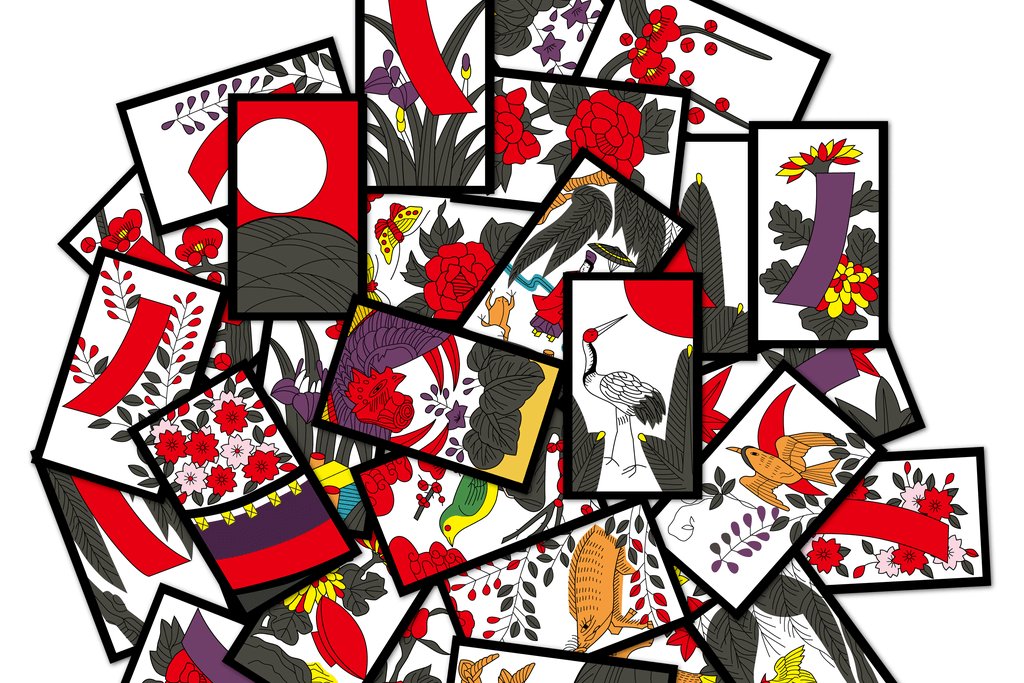
Playing Hanafuda involves matching cards by month and then creating scoring combinations; different point values apply to specific card groups.
Have you ever been curious about the vibrant artwork and unique gameplay of Hanafuda? This captivating card game, originating from Japan, might seem daunting at first, but it’s actually quite accessible once you grasp the basics. Learning how to play Hanafuda card game opens the door to a world of strategic matching and delightful cultural immersion.
The deck depicts flowers, animals, and other natural elements associated with each month of the year. The beauty is in the simple yet engaging rules. Get ready to learn and explore this traditional Japanese pastime.

How to Play Hanafuda Card Game
Alright, let’s dive into the wonderful world of Hanafuda! It’s not just another card game; it’s a beautiful and strategic pastime with a rich history. Think of it like a mix of matching and memory, all wrapped up in lovely artwork. If you’re curious about how to play Hanafuda, you’ve come to the right place. We’ll go step-by-step, making it easy and fun to learn. Get ready to explore the fascinating details of this unique card game!
Understanding the Hanafuda Deck
Before we start playing, let’s get to know the cards. Unlike a regular deck with suits and numbers, Hanafuda cards are all about beautiful images representing the twelve months of the year. Each month has a plant associated with it, and each plant is depicted in four different ways across the four cards. It can seem confusing at first, but trust me, you’ll quickly get the hang of it!
The Twelve Months and Their Flowers
Each month in the Hanafuda deck is associated with a particular plant and design. Here’s a breakdown to help you visualize them:
- January: Pine
- February: Plum Blossom
- March: Cherry Blossom
- April: Wisteria
- May: Iris
- June: Peony
- July: Bush Clover
- August: Susuki Grass (or Pampas Grass)
- September: Chrysanthemum
- October: Maple
- November: Willow
- December: Paulownia
The Four Card Types
Within each month, there are four different types of cards:
- Lights (Hikari): These are the most valuable cards, often featuring special elements. For example, the Rain Man and the Phoenix are among these.
- Animals (Tane): These cards typically show an animal on them. You might see a boar, a cuckoo, or a butterfly among others.
- Ribbons (Tanzaku): These cards have a long ribbon design, coming in various colors.
- Plain (Kasu): These are the remaining cards which are often quite simple and have a basic background design, typically without a specific feature.
Counting Cards
Although Hanafuda has a rich visual aspect, you will also need to learn how many of each type of card are in each month. This is important when you begin to understand how to form scoring combinations.
Each of the twelve months has four cards associated with it. Usually:
- one light card
- one animal card
- one ribbon card
- one plain card
However, this pattern is not followed for all of the months. Here are the exceptions:
- July: This month has a plain card, a ribbon card, and two animal cards (boar and a red-breasted bird), and no light card.
- November: This month has a plain card, an animal card (the swallow), and two ribbon cards and no light card.
- December: This month has 3 plain cards and one light card, no animal or ribbon cards.
So, in total, the full Hanafuda deck contains 48 cards.
Getting Ready to Play Koi-Koi
While there are many games you can play with Hanafuda cards, Koi-Koi is one of the most common and popular. So we’re going to focus on how to play that. Koi-Koi is a game for two players that uses a combination of matching and scoring to win points.
Setting Up the Game
To prepare for a game of Koi-Koi, do these steps:
- Shuffle: Mix the 48 cards thoroughly.
- Deal: Each player gets eight cards face down. This is each player’s hand.
- Field: Lay eight cards face up in the middle. This area is called the ‘field’ or the ‘table’.
- Draw Pile: The remaining cards form the draw pile.
Playing Koi-Koi: The Basics
The goal in Koi-Koi is to form combinations of matching cards (called ‘Yaku’) to earn points. It’s a bit like making sets in other card games. Here’s how a round unfolds:
Taking Your Turn
- Match: On your turn, you look at your hand and see if you have a card that matches a month shown on a card in the field. A match is defined by having two cards of the same month. If you do, you take both matching cards (one from your hand and one from the field) and set them aside.
- No Match?: If you don’t have a match you must discard any card from your hand face up to the field.
- Draw: After playing a card, whether matching or discarding, you draw a card from the draw pile and place it face up in the field.
- Capture a Match with the Drawn Card: If the drawn card matches one from the field, you take both matching cards (the drawn card and the matching field card) and place them aside.
Making Yaku (Point-Scoring Combinations)
This is where it gets exciting! After you set aside cards, you can try to form scoring combinations called ‘Yaku’. Some common Yaku include:
- Three Lights (Sanko): Having three Light cards.
- Four Lights (Shiko): Having four Light cards.
- Five Lights (Goko): Having all five Light cards.
- Boar-Deer-Butterfly (Ino-Shika-Cho): Having the animal cards from the months of July, October, and June.
- Blue Ribbons (Aotan): Having all three blue ribbon cards.
- Red Ribbons (Akatan): Having all three red ribbon cards without including the ribbon from the month of November.
- Plain Ribbons (Tanzaku): Collecting 5 ribbon cards, from any month
- Five Plains (Kasu): Having 5 Plain cards from any month.
- Ten Plains (Kasu): Having 10 Plain cards from any month.
There are more combinations you can make. Each combination has a specific score.
Calling Koi-Koi
After you form a Yaku, you get to make a crucial decision.
- Koi-Koi: If you want to try to keep getting more Yaku, you call “Koi-Koi”. This means you keep playing. It’s a gamble – if you don’t make more combinations, you don’t get the points for your initial Yaku.
- Stop: If you’re happy with the Yaku you have, you can stop playing and score your points for your existing combinations. You do not get to continue playing in that round and your turn ends.
Ending a Round
A round ends if a player calls stop, or when all cards from the draw pile are gone. When this happens, scoring is calculated, and a new round begins. The player who first reached the number of required points (usually 50 or 100) wins the game.
Strategic Tips for Hanafuda
Now that you know the basic steps, here are some tips to play more strategically and improve your Hanafuda game:
Card Counting and Observation
Keeping track of cards in the field and those already taken can be beneficial. For example, if all the cards for a particular month are shown in the field, it is unlikely they will come into play in the round. This can help you decide whether to play ‘Koi Koi’ or stop playing.
Plan Ahead
Think about the combinations you want to make. If you are missing only one card of a valuable combination, try to keep your attention focused on those cards as the cards are played in the round. Be mindful of opportunities to get that card and complete the set. This can help you be more thoughtful and strategic.
Take Calculated Risks
Calling ‘Koi-Koi’ can earn you more points but it’s risky. Consider your hand, and the field, and the draw pile before making the call. Consider when it makes sense to be more aggressive, or more cautious.
Learn From Your Opponent
Watch what cards your opponent picks up. This can give you hints about their game strategy and what types of combinations they are trying to make.
Variations in Hanafuda
It is good to know there are many different versions of Hanafuda games and ways to play them. Koi-Koi is just one of the popular methods. Variations can include slightly different Yaku, or differences in how many points each combination earns, or even if specific combinations are allowed. If you are playing with new people it is always good to clarify what the house rules are.
Popular Games
- Hachi-Hachi: A more complex game that involves multiple rounds and a lot of strategy.
- Mushi: A simple and fast-paced game, typically for two or three players.
While Koi-Koi is a great place to start, it can also be fun to explore the many variations of Hanafuda that exist.
Enjoying the Game
Hanafuda is a game that can be enjoyed by players of all ages. It’s easy to learn but can offer a good challenge. As you play more, you’ll find new strategies and appreciate the intricate beauty of the cards. The best way to get better at playing Hanafuda is to practice with others and learn from those experiences. So find someone to play with, and have a great time!
Now you have all the knowledge you need to start playing Hanafuda. This game is all about visual patterns, strategy, and a bit of luck. So, gather your deck, find a friend, and begin playing! Remember, practice makes perfect, so keep playing and exploring the different strategies. Have fun and enjoy the unique experience that Hanafuda offers. Each game is a new chance to learn and grow as a player!
How to Play Koi-Koi (Hanafuda) | Roll For Crit
Final Thoughts
In short, learning how to play hanafuda card game involves matching cards based on month and suit. Players collect scoring combinations to earn points. The specific rules vary by game like Koi-Koi or Hachi-Hachi.
Understanding the card values and point systems for different combinations is important. Practice will improve your strategic decisions and card matching skills. Remember, how to play hanafuda card game is all about practice.

