
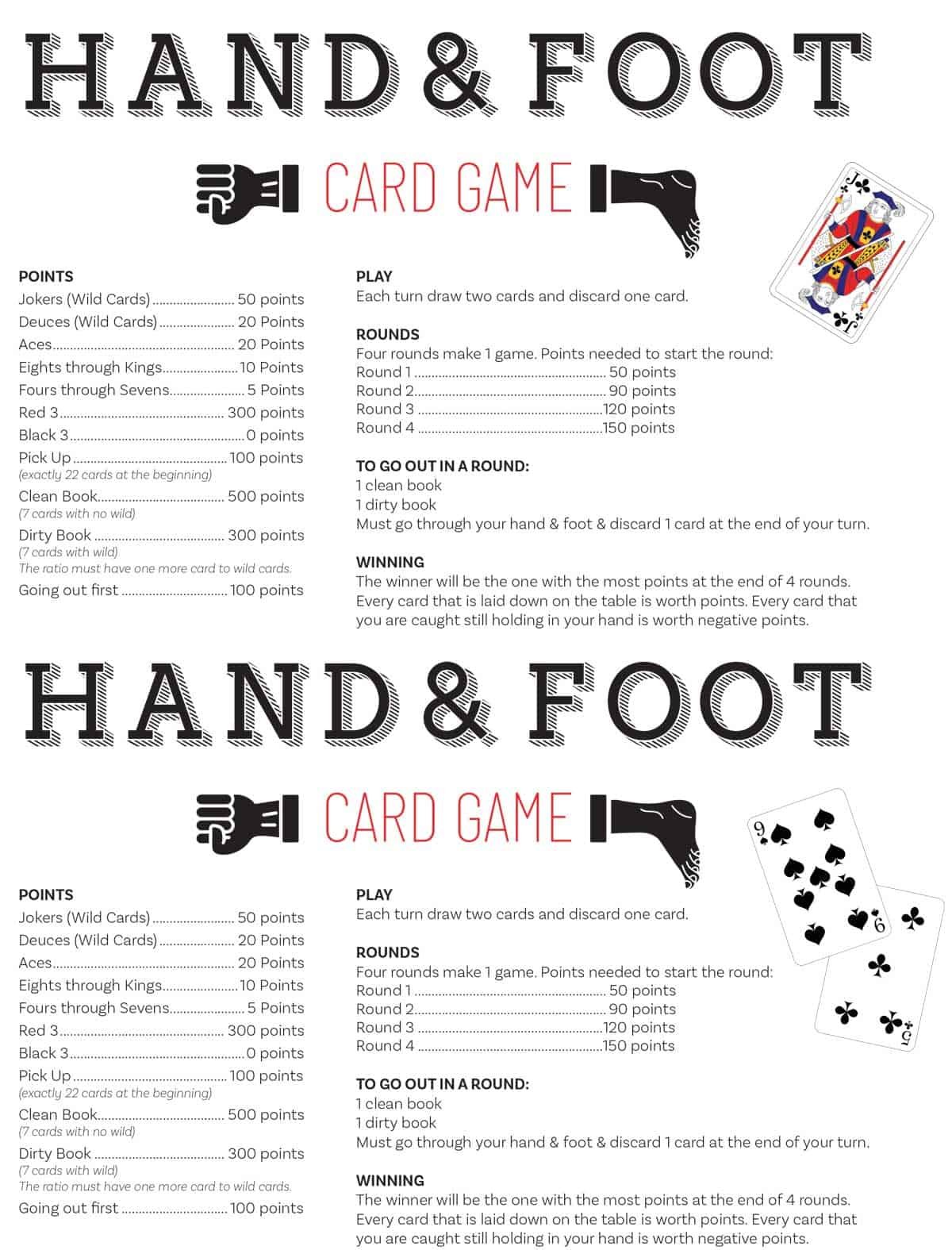
Playing Hand and Foot involves forming melds of three or more cards of the same rank, going out with a clean discard, and accumulating points from melds, canastas, and going out.
Ever wondered how to play hand and foot card game? It’s a popular rummy-style game that uses multiple decks. This exciting game requires strategy and a bit of luck. Players work to create melds of matching cards.
The goal is to be the first to go out, but it’s not that easy! Points come from formed melds called canastas and that perfect final discard. You’ll find it engaging and fun for a group.

How to Play Hand and Foot Card Game
Okay, let’s dive into the super fun card game, Hand and Foot! It’s a game that families and friends love to play because it combines a bit of strategy with a lot of luck. If you’ve ever seen people playing with tons of decks of cards, chances are, they were playing Hand and Foot. Don’t worry, it might seem complicated at first, but once you learn the basic steps, you’ll be shuffling and dealing like a pro! This guide will explain everything in simple terms, so grab your decks and let’s get started.
What You Need to Play
Before you jump into a game of Hand and Foot, you’ll need to gather a few things. Don’t worry, it’s not too much!
The Cards
- Multiple Decks: This game needs more than one standard 52-card deck. Usually, you’ll use four to six decks, depending on how many people are playing. This is essential because you need many cards to make your melds (we’ll get to that!).
- Jokers: Keep all the jokers in the decks! They’re special and help a lot.
The Players
Hand and Foot works best with four players, playing as partners. You can also play with two or three individuals, but the game is more enjoyable with partners. It’s a team effort, and working together is part of the fun.
A Table and Some Space
You will need a table big enough to hold all those cards and space for everyone to play comfortably. Clear away any clutter, so you have plenty of room.
Optional: A Score Sheet or Paper
While not strictly required, keeping track of scores can be easier with a pen and paper. This helps determine the overall winner at the end.
Setting Up the Game
Now that you have all your supplies, let’s get the game ready to begin! Getting set up correctly is very important for a smooth game. The first steps before playing hand and foot are listed below:
Choosing Partners and Seating
If you have four players, divide into two teams of two. Sit across from your partner. If playing with less than four people, everyone plays alone. If you’re playing with more than four, consider adding another team or dividing into groups of three. The important thing is to ensure the teams can play effectively.
Shuffling and Dealing
This part is important! First, designate someone to be the dealer. It’s helpful to rotate the dealer each round. Then, all the cards need to be shuffled very well. This mixes them up and makes the game fair. Once the cards are shuffled, it’s time to deal:
- Dealing the Hands: Every player gets two sets of cards. The first set is called the “hand”, and the second set is called the “foot”. For a standard four-person game, you give 11 cards for the hand, and 11 cards for the foot to every player. You keep the cards from the hand and deal the foot, face down, in front of you. Don’t look at the foot yet. In the game play, you can pick the foot when the hand cards are finished.
- Making a Discard Pile: After dealing each player the “hand” and “foot,” place the rest of the cards face down in the center to form the stock pile. Turn over the top card and place it next to the stock pile to start a discard pile.
Understanding the Gameplay: Melds and Point Values
So you have your hand and foot, now it’s time to play. The core of Hand and Foot involves creating melds. Melds are sets of cards of the same rank (number or face value). You also need to understand the card values.
Creating Melds
A meld is a group of three or more cards of the same rank. For example, three 7s, four Queens, or five 2s are all melds. There are some exceptions when using wild cards (Jokers, 2s), which we’ll explain next!
- Clean Melds: A clean meld does not use any wild cards (jokers or 2s). For example, if you have 7 of hearts, 7 of clubs, and 7 of diamonds, then it is a clean meld.
- Dirty Melds: A dirty meld includes one or more wild cards (jokers or 2s). Example, 8 of hearts, 8 of diamonds, and 2 of clubs is a dirty meld because of the 2. Another example, Queen of diamonds, Queen of clubs, and one Joker. The 2 and Joker card act like wild cards and can be used to stand in for any card.
Point Values of Cards
Each card has a different point value which is important for scoring at the end of a round. Here’s a quick guide:
| Card | Point Value |
|---|---|
| Joker | 50 points |
| 2 | 20 points |
| Ace | 20 points |
| King, Queen, Jack, 10 | 10 points |
| 9, 8, 7, 6, 5, 4, 3 | 5 points |
| Red Threes | 100 Points (Penalties are discussed later) |
| Black Threes | 0 points, can’t be made in melds |
Going Out
The goal of Hand and Foot is to “go out” first, which means to get rid of all of your cards in hand (and foot), through making melds. There are specific rules for doing so.
- Requirements to go out: You have to lay down at least one clean meld in order to go out. Once all your hand cards are used up, then you can use the foot. All the players of the same team need to lay down at least one meld to go out.
- Pick a Foot: You can pick a foot when you finished all of your hand cards or in other words, you are not holding any hand cards. Don’t forget you have two sets of cards; one hand and one foot.
- Final Discard: To finish the round and go out, you need to meld all your cards and discard one card on the discard pile.
The Flow of a Turn
Now let’s look at how each turn works. The gameplay follows a set order of steps. Getting familiar with this order will help you play more smoothly.
Drawing Cards
The first step of every turn is to draw two cards from the face-down stock pile, adding them to your hand. This gives you more options to create melds.
Making Melds
If you can make melds, you can start laying them down face-up on the table. Put them in front of your team. Remember, melds need to be three or more cards of the same rank.
Drawing a Card From the Discard Pile
Instead of drawing two cards from the stock pile, you have a choice. If the top card of the discard pile is something you need, you can pick that card. However, if you do this, you also need to pick all the cards below it, including the top card, and add them to your hand.
- Discard: Whether you drew two from the stock or picked from the discard pile, you have to end your turn by discarding one card from your hand onto the discard pile.
Special Rules and Situations
Hand and Foot has some extra rules that you will need to know to play correctly. They can make the game more interesting, or they can cost you points if you don’t follow them!
The Role of Red Threes
Red threes (3s of hearts and diamonds) are worth 100 points each when they are included in your hand at the end of the round. However, if you end up with red threes in your hand when someone goes out, you get a penalty. This means you will lose 100 points for each red three. This adds another layer of strategy.
The Role of Black Threes
Black threes (3s of clubs and spades) are different. They have no point value and can’t be part of a meld. If you draw a black three, you need to immediately lay it face-up on the table. Then, you must draw a new card to replace it. You can use this for the advantage in stopping the opponent by not giving them cards from discard pile.
Going Out and Using The Foot
Remember, you can’t pick your foot until you finish all the cards in your hand. Your team also needs to meld at least one clean meld before going out. Make sure you discard one card in your turn, and your teammate should have at least one meld down on the table.
Communication Between Partners
Communication between partners during play is usually not allowed. You can’t talk to each other about the cards you hold or strategize. Your play needs to be your own. This helps everyone to play fair.
Scoring the Game
After someone goes out, it’s time to score the hand. This happens at the end of each round. The score will decide who will win the game in the end.
Adding Up Points
- Card Points: Count up the points based on the point values in the table above. Remember, Jokers are 50 points, and red threes are 100 if melded, but a penalty of -100 if left in the hand.
- Going Out Bonus: The team that goes out first gets 100 bonus points for going out.
- Adding Melds: The points from your team’s melds also get added into your score.
Penalties
- Red Threes Penalty: Remember, if you have red threes left in your hand at the end of the round, you subtract 100 points for each red three.
Total Score
Add up all your points, including the meld points, going out bonus, and subtract all penalties, such as penalties for having red threes in hand, to get your total score for that round. Record it and start the next round. The overall winner is the first team to reach a specific score, usually 5000 points.
And that’s how you play Hand and Foot! It’s a game that gets better the more you play it. Keep practicing, and you’ll become a master in no time.
Hand and Foot is more than just a card game; it’s a way to have fun, socialize, and enjoy some friendly competition. Now you’re equipped to gather your friends, deal the cards, and start playing. Don’t be afraid to refer back to this guide whenever you need a reminder. Happy playing!
How To Play Hand and Foot
Final Thoughts
Hand and Foot is a team-based game using multiple decks of cards. You aim to score points by making melds of three or more cards of the same rank. A must component is completing your initial hand and your ‘foot’ which has to be picked up later.
To play, you draw cards and discard each turn and continue building sets. Once a team fulfills its canasta requirements, it can go out. Remember strategic card discards.
Ultimately, learning how to play hand and foot card game comes down to practice with team work. Focus on building canastas to score higher points.

