
Playing Michigan Rummy involves dealing cards, forming melds like sets and runs, and aiming to get rid of all cards while collecting chips from the pot based on specific card combinations or when a player goes out.
Ever felt the urge to try a card game that’s both strategic and exciting? Then, learning how to play Michigan Rummy card game might just be perfect for you. It’s a captivating game that blends luck with skill, and the chip pot adds a nice competitive edge. You will be hooked from the first round.
This game is not as complicated as it might seem. After a few rounds, you’ll grasp the basic flow. Each player gets a hand, and the goal is to be the first to empty your hand. The excitement grows with the prospect of earning chips from others and the pot.

How to Play Michigan Rummy Card Game
Ready for a fun card game that mixes luck and a little bit of strategy? Michigan Rummy, also sometimes called “Michigan” or “Chicago,” is a popular game that’s easy to learn and fun for the whole family. It’s a rummy-style game with a twist – you’re playing for chips or coins and racing to be the first to get rid of all your cards! Let’s break down how to play this exciting game step-by-step.
Understanding the Basics
Before we dive into the gameplay, let’s get familiar with the core elements of Michigan Rummy. It’s a game that uses a standard 52-card deck, and can be played by 2 to 8 players, or even more if you have multiple decks.
The Goal of the Game
The main objective in Michigan Rummy is to be the first player to get rid of all the cards in your hand. You do this by forming sequences of cards or sets of the same value. The first person to go out wins the round and collects the chips or coins.
The Setup
You will need:
- A standard 52-card deck of playing cards.
- Playing chips or coins. These are used for betting and winning.
- A playing surface, like a table, and a place to keep the chips or coins (the “pot”).
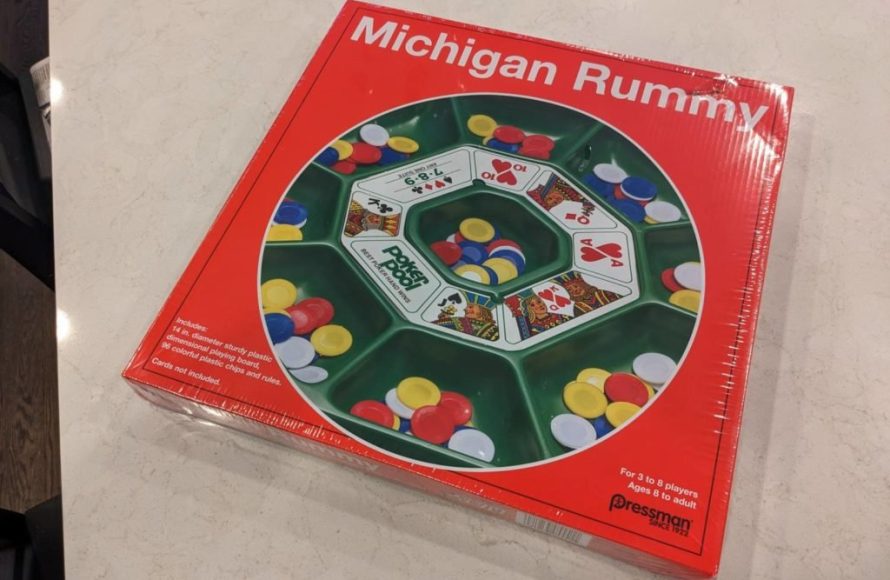
- A Michigan Rummy game board or layout (optional, but helpful).
The game board usually has designated spots for each combination you’ll be trying to achieve during the game. These spots often have different values associated with them. We’ll discuss these combos in detail shortly.
Before starting, decide on the value of each chip or coin. Small change like pennies or nickels works well, or you could even use buttons or tokens.
Dealing the Cards
Decide who will deal. You can take turns dealing in each round, and it is best to go in a clockwise direction around the table.
Once a dealer is chosen, they shuffle the deck well and then deal all the cards as evenly as possible to each player. Some players may end up with one card more than others, which is okay.
The Michigan Rummy Game Board (Optional)
While not essential, a game board can really enhance your Michigan Rummy experience. It helps keep track of the special card combinations and the chips associated with them. Here’s a breakdown of the elements you’ll typically find on a board:
- The Pot: This is the central area where players place chips when they can’t lay down a card.
- Special Combination Spots: Each spot corresponds to a specific winning card combination. These can include:
- The Nine Spot: Usually the 9 of any suit.
- The Jack Spot: Usually the Jack of any suit.
- The Queen Spot: Usually the Queen of any suit.
- The King Spot: Usually the King of any suit.
- The Ace Spot: Usually the Ace of any suit.
- The Sequence Spots: Combinations, like a run of cards in the same suit, such as, a run of seven cards of any suit, an example would be 5,6,7,8,9,10,J of hearts.
- The Round the Corner Sequence: A series of cards in the same suit that wrap around the end of the sequence such as Q,K,A,2,3,4,5 of spades.
When a player plays one of the cards that match the spot on the board they collect chips or coins as specified in the rules.
How to Play a Round of Michigan Rummy
Now that you know the basic setup, let’s get into how the actual game play goes.
The First Lead
The player to the left of the dealer starts the game by laying down any card they wish. They place the card face-up on the table forming a discard pile. This begins the play for this round.
Following Suit
The next player in turn, and then each player in a clockwise direction after them, must now play a card in a following suit and with a value either higher or lower than the card played before them. For example, if someone lays down a 7 of clubs, the next player could place a 6 or 8 of clubs. If the following suit card is not in a player’s hand, they must place a chip into the pot and discard any card.
Special Combination Cards
If a player can lay down a card that matches one of the special combination spots on the board they can play that card immediately and collect their prize as specified in the rules. The special combinations can be played at any time but when playing a special combination card in a turn, the player then has to play another legal card according to the regular game rules.
- Playing on a single spot: If a player lays down the 9 of hearts, and this is the designated card for the nine spot on the board. That player collects chips or coins from the pot according to the rules, they then have to follow the game rules and play a card in the same suit with a value higher or lower than the last card played.
- Playing on a sequence spot: If a player lays down the 5,6,7,8 of diamonds on the board, and this is the designated card sequence spot on the board for example the first sequence is the four card sequence, the player collects chips or coins according to the rules. They then have to follow the game rules and play a card in the same suit with a value higher or lower than the last card played.
Going Out
Play continues clockwise until one player manages to get rid of all their cards. This player is declared the winner of that round.
When someone goes out they collect all the chips from the pot.
Dealing With Multiple Decks
For larger groups of players it may be helpful to add one or more decks. This increases the number of cards in play, and makes it more likely that someone can play a card without needing to discard and add to the pot.
Strategies for Winning
While Michigan Rummy involves an element of luck, there are a few strategies that can boost your chances of winning. Here are a few points to remember during play:
- Keep an Eye on the Discard Pile: Remember which cards have been discarded, especially the ones that could potentially block you. It is also a good way to see what cards your opponents are likely to hold.
- Hold onto Useful Cards: Try to keep cards that can be used in special combinations. These cards can help you win bigger when you play them.
- Try to Manage your hand: If you have a lot of high or low cards, look for opportunities to lay them down first, so you don’t get stuck with them later.
- Observe other Players: Try to watch what cards your opponents are playing and discarding as this can help you to figure out what cards they may have in their hands. You might be able to play a card that they can’t follow.
- Don’t Hold Special Cards Too Long: If you have a special card that matches a spot on the board, play it strategically and take the reward immediately, but don’t hold on to a special card too long, waiting for the “perfect moment,” or your opponents may go out first and you miss your chance.
Remember, practice makes perfect! The more you play, the better you’ll become at spotting opportunities and making strategic plays.
Variations of Michigan Rummy
Like many classic card games, Michigan Rummy has several variations. Here are a couple of the common ones:
Variations of the Special Combinations
- Wild Cards: In some variations, the jokers can be used as wild cards. For example, a joker can be used in place of any card in a combination, or be part of a sequence or set.
- Different Spot Values: The monetary value associated with each special spot can be modified to add extra excitement to the game, or can be set as a base value which can then be multiplied according to player numbers to ensure every player has an even chance to win.
Variation of the Play Rules
- No Following Suit: This variation can make the game much more fast paced, and often more difficult. It requires you to make the difficult choice to add to the pot on a regular basis and means the pot can get bigger faster.
- Sequence Variations: You can change the number of cards required for the sequence spots, or add additional sequence spots for different combinations, such as 3 of a kind. You can also add other combinations such as matching suits.
Feel free to try these different versions and find the variations you and your group enjoy the most. Michigan Rummy is a great game that you can modify to fit the type of game that you all enjoy playing. Don’t be afraid to try different ways of playing. This game is all about having fun with friends and family.
So, gather your friends, grab a deck of cards, and get ready for a fun time with this classic card game! Michigan Rummy is a wonderful game for family game nights, or just for a fun evening with friends. Once you get the hang of the basic rules, you’ll be playing in no time, and you can start to make your own rules to suit the needs of your group. Remember, the most important thing is to have fun!
How to play Michigan Rummy
Final Thoughts
To play Michigan Rummy, you first need a standard deck and chips. Deal cards, placing one face-up. The goal is to discard all your cards. Players make sequences or sets of same rank, placing discards in a central pile.
When a player gets rid of all cards, they win the hand. You need to collect chips when you lay down specific card combinations or when you’re the first to discard all cards. Michigan Rummy is a fun game. This is how to play Michigan Rummy card game.

