
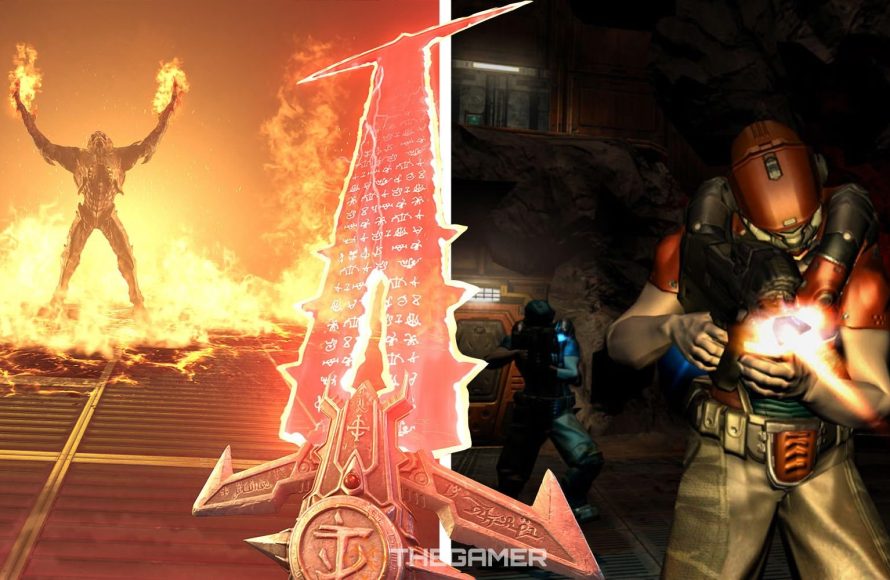
To play the Doom games chronologically, start with Doom (1993), followed by Doom II, then Doom 64, then Doom 3, then Doom (2016) and finally Doom Eternal.
Ever wondered about the best way to experience the brutal saga of the Doom Slayer? Many fans ask, how to play the doom games chronologically. It’s more than just firing up any old title, the series has a specific story order.
Playing them in release order might seem simple, but the story takes a few twists and turns. Understanding the narrative flow greatly enhances your experience. Therefore, we’ll guide you through the correct order.

How to Play the Doom Games Chronologically
So, you’re ready to rip and tear your way through the demonic hordes, huh? Excellent choice! But with so many Doom games, figuring out where to start can feel like facing a Cyberdemon without a BFG. Don’t worry, we’re here to guide you through the fiery depths of the Doom universe in the order that makes the most sense for the story. Playing the Doom games chronologically means following the narrative thread as it was intended, which can offer a richer understanding of the Doom Slayer’s journey.
The Classic Doom Era: The Beginning of the Slayer’s Saga
This is where it all began! The classic Doom games laid the foundation for everything that followed. They’re less about a complex story and more about pure, fast-paced, demon-slaying action. But they are essential for understanding the origins of Doom.
Doom (1993)
The game that started it all. In this game, you’re a space marine – later known as the Doom Slayer – stationed on Mars. After a demonic invasion turns your comrades into zombies and other monstrous creatures, you have to fight your way through the UAC facility on Mars, then through hell itself. It’s a simple story, but the gameplay is addictive. Think of it like a wild rollercoaster ride with demons instead of loops! This game is a must-play. Get ready for some pixelated carnage!
- Story: You’re a lone space marine battling demons on Mars and in Hell.
- Gameplay: Fast-paced, run-and-gun action.
- Why play first?: It’s the starting point of the entire Doom saga. You’ll experience the core gameplay loop that made Doom a legend.
Doom II: Hell on Earth (1994)
Directly following the events of the original Doom, Doom II takes the fight to Earth! You’ll find yourself battling through familiar environments, but now infested with demons. New demons and more challenging gameplay make this game an exciting continuation. It’s like a bigger, badder version of the first game, with the same simple story and addictive gameplay. If you enjoyed the first one, you will enjoy this one too!
- Story: Demons have invaded Earth, and the Doom Slayer is the last hope for humanity.
- Gameplay: Similar to Doom (1993) but with more demons and bigger levels.
- Why play second?: It’s the direct sequel and continues the story right after the first game.
Doom 3 (2004)
Doom 3 takes a different path compared to its predecessors. It’s a reboot of the original game, focusing more on horror and atmosphere. The story revolves around a UAC facility on Mars that falls victim to a demonic invasion. This game slows down the pace and focuses on more horror elements and a darker tone. It might be a change of pace if you just played the other games, but it’s still a fun time.
- Story: A more narrative-driven retelling of the original Doom premise. The focus is more on a horror atmosphere in a UAC base on Mars.
- Gameplay: Slower paced, with more focus on atmosphere and jump scares. There’s a heavy emphasis on using the flashlight to navigate dark areas.
- Why play third?: While not a direct sequel to Doom II, this game was the next one that released, and playing after the other two allows you to see the evolution of the gameplay and narrative.
The Modern Doom Era: Re-forging the Legend
The modern era of Doom games introduced a new level of speed and intensity, while expanding upon the lore and story of the Slayer. They also give a bit more detail to the story, helping you better understand why you’re killing demons.
Doom (2016)
This game is a reboot of the series, similar to Doom 3, but much more aligned with the classic games in terms of gameplay. You once again take the role of the Doom Slayer, awakened in a UAC facility on Mars overrun by demons. It brings the fast-paced combat back and introduces a few modern elements into it. This game is where the Slayer gets more defined as a character. This game marks a big turn for the franchise, and it makes a great fourth game in the series.
- Story: The Doom Slayer is awakened in a UAC facility on Mars during a demonic invasion. This time, the story is much more involved.
- Gameplay: Extremely fast-paced, with a focus on aggressive combat and “glory kills.”
- Why play fourth?: It introduces the modern Doom gameplay and sets the stage for the next chapter in the Doom Slayer’s saga. It’s a massive jump from previous entries in terms of graphics and speed.
Doom Eternal (2020)
Picking up after the events of Doom (2016), Doom Eternal continues the story of the Doom Slayer. This time, he goes on a quest to stop the demons from destroying all of Earth and the universe. The action is even more fast paced and the environments are much more diverse. Doom Eternal is a love letter to the series’ roots while pushing the envelope for what a first person shooter can be. This is probably the most story heavy of all the games. It’s a great game to play after getting the hang of Doom (2016)
- Story: The Doom Slayer must stop the demonic invasion of Earth. A very narrative heavy game with tons of lore.
- Gameplay: Builds upon Doom (2016) with more mobility options and even more brutal combat.
- Why play fifth?: It continues the story of the Doom Slayer and further refines the gameplay experience. It’s also the latest entry in the main series.
Spin-offs and Other Doom Games
While the above are the main series games, several spin-off and other Doom games offer alternative takes on the franchise. These games might not be as crucial to the main timeline, but they are still fun to check out once you are done with the main games.
Doom 64 (1997)
Originally released on the Nintendo 64, Doom 64 is a direct sequel to Doom II, but with its own story and a darker, more atmospheric look. This game gives a totally new feel to the original game’s core gameplay. It’s a nice change of pace after the second game in the main series. It’s a game that every doom fan should definitely experience.
- Story: Follows Doom II, with the Doom Slayer once again battling demons on Mars.
- Gameplay: Similar to the classic Doom games but with darker visuals and more challenging levels.
- Why play?: It is a direct sequel to Doom II but with a completely different tone.
Doom RPG (2005)
This is a very different kind of Doom game, made for mobile phones. You control the Doom Slayer in a turn-based role-playing game instead of a first person shooter. This game is more story-driven than the first two games. If you are curious about a different take on Doom, this might be for you.
- Story: A turn-based RPG that explores the lore in a new way.
- Gameplay: Turn-based battles.
- Why play?: It’s a very different take on the Doom franchise.
Doom VFR (2017)
Doom VFR is a virtual reality game set after the events of Doom (2016). You play a different character who needs to battle demons in a destroyed facility. While it is a very fun take on the gameplay of the newest games, it’s not as essential for the lore as other games. If you have a VR headset, this is definitely worth a try.
- Story: Set after Doom (2016), in a virtual reality world.
- Gameplay: First-person VR, with similar mechanics to Doom (2016).
- Why play?: A fun side game that uses VR, a cool new way to experience the newest Doom gameplay.
So, What’s the Ideal Chronological Play Order?
Based on the narrative and release dates, here’s the best way to experience the Doom games chronologically:
- Doom (1993)
- Doom II: Hell on Earth (1994)
- Doom 64 (1997)
- Doom 3 (2004)
- Doom (2016)
- Doom Eternal (2020)
- Doom VFR (2017)
- Doom RPG (2005)
This list allows you to follow the main narrative while also exploring other games that might interest you.
Tips For Playing Through The Doom Games
- Don’t be afraid to experiment: Doom games often have different weapons, power-ups and strategies. It’s important to learn which is which and how they interact with each other.
- Keep moving: The best way to beat the demons is to keep moving. The Doom games are never about hiding, it’s about facing your enemies head on.
- Enjoy the action: Doom games are about being over the top. If you enjoy the carnage, then you’re doing it right!
Playing the Doom games in chronological order offers a great look at the evolution of the series and the legend of the Doom Slayer. You’ll witness how the games have improved and adapted through the years, making it a rewarding experience for both old fans and new players alike. Now, go out there and get ready to fight. The demons won’t kill themselves!
The Complete Doom Timeline – From Doom to Doom Eternal
Final Thoughts
To play the Doom games chronologically, you must begin with Doom (1993), then move to Doom II. After that, play the expansions like The Ultimate Doom and No Rest for the Living.
Next, you should play Doom 64, which leads into Doom 3 and its expansion, Resurrection of Evil. The reboot, Doom (2016), and its sequel, Doom Eternal, complete the core storyline. Finally, include The Ancient Gods parts to get full story.
Therefore, this order is how to play the doom games chronologically. This ensures you experience the narrative flow correctly from start to finish.

