
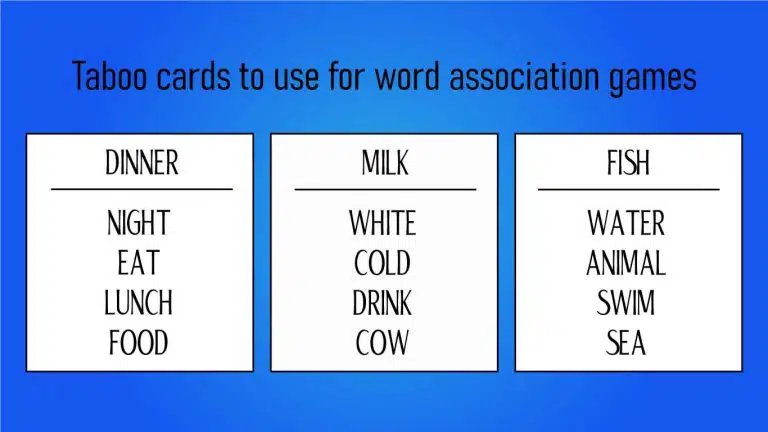
Playing the word association game requires one person to say a word, and the next person immediately responds with the first word that comes to mind. This continues around the group, with each response triggering a new association.
Ever find yourself looking for a simple yet engaging game? Well, look no further! You can easily have a fun time figuring out how to play the word association game. This game tests your quick thinking and verbal creativity in a very casual way.
It’s perfect for gatherings of any size, and the rules are super easy to understand. The spontaneity creates some really funny or unexpected connections. You’ll be surprised where a single word can lead you.

How to Play the Word Association Game
Word association is a super fun and easy game that anyone can play! It’s a great way to get your brain thinking quickly and can lead to some hilarious moments. The basic idea is that one person says a word, and the next person says the first word that pops into their head that’s related. That’s it! But there are some things that can make the game even better, and we’re going to go over all of those right now.
Understanding the Basic Rules
Let’s start with the most important part: the rules! This might seem simple, but it’s good to have a solid grasp on the basics.
Starting the Game
To get started, you’ll need at least two people. One person kicks things off by saying any word they like. It can be a noun (like “dog”), a verb (like “run”), an adjective (like “happy”), or even an adverb (like “quickly”). There are no limits, any word goes!
The Chain Reaction
Once the first person says their word, the next person must respond with the very first word that comes to their mind that they think relates to it. For example, if the first word was “cat”, a player might quickly say “mouse”. Then the next player would respond to “mouse,” and so on. You are basically forming a chain of words, where each word connects to the one before it. The key here is speed and spontaneity. Try not to overthink it! Just blurt out the first word that enters your thoughts.
Keeping it Going
The game continues with players taking turns responding to the most recent word given. There is no set end to a word association game, you can play until you all decide to stop. It’s a game that can be played almost anywhere at any time, whether you are taking a road trip, waiting in line, or just hanging out at home.
Variations to Spice Things Up
Once you’ve gotten the hang of the basic game, you can make it more interesting with some simple tweaks. Here are some different ways to play word association:
Theme it Up
Pick a specific category or theme before you start. For instance, you could decide on “animals,” “food,” “movies,” or even “colors.” This means every word should somehow relate back to your chosen topic.
- Example 1 (Theme: Animals): Dog → Bark → Tree → Squirrel
- Example 2 (Theme: Food): Pizza → Cheese → Milk → Cookie
Timed Rounds
If you want a little more of a challenge, try adding a timer! This adds a bit of pressure and can make the game even more fun and silly. A timer might be 5 or 10 seconds and if you can’t come up with a word in time, you are out of that round.
Storytelling Twist
Instead of just saying random related words, try stringing the words together to make a story! This variation requires a bit more imagination and is great for developing creative thinking. Each person’s word should help build a part of the story.
Opposites Only
Instead of related words, try going the opposite way. For this variation, your goal is to say the antonym of the word you’ve been given. If you get “hot,” you might say “cold,” or if you hear “happy,” respond with “sad.” This variation is a great way to work your vocabulary and quickly recall opposing ideas.
Single Word Restriction
Make it a rule that everyone can only respond with a single word, no phrases or sentences. This forces everyone to think very specifically and can prevent long, drawn-out turns.
Number of Associations
Another fun rule to try is having each word followed by a set number of associations. For example, you might decide that after every word, three players have to come up with associations in a row. This can make the game more intense and push people to think further about each word.
Strategies for Playing Well
While it might seem like a simple game, there are a few things you can do to make you a word association pro!
Think Quickly
The first word that pops into your mind is often the best. Don’t spend too long overthinking it, just blurt it out. The speed is part of the fun. The more relaxed you are, the easier you might find it to play and get in the flow.
Don’t Be Afraid to Be Silly
Word association is a game of connections, but sometimes connections can be funny! Don’t be worried about saying something that sounds a little strange or out of place. Sometimes those unexpected responses lead to the most hilarious chains.
Listen Carefully
Pay very close attention to the word that was just said. You need to ensure your association is related to the previous word. If you aren’t listening, you might be stuck to form a sensible response.
Don’t Try to Win
Word association is not a game with a winner and a loser. The main objective is to have fun and keep the chain going. So don’t worry about being “good” at it, just focus on having a great time.
Expand Your Vocabulary
The more words you know, the more connections you can create. Reading books and talking to different people can help with this. Every new word adds something to your toolkit of responses.
Practice Makes Perfect
Like anything, the more you play word association, the better you will get. You’ll start to see the ways words are connected and get quicker at thinking of associations. So grab some friends and start practicing today!
Why Play Word Association?
Apart from just being a fun activity, word association has plenty of benefits that can help you in other aspects of your life.
Boosts Creativity
When you play word association, you are making your brain come up with unexpected connections and ideas. This kind of thinking exercises the creative side of your mind and helps you develop more unique thoughts in daily life too.
Improves Memory
You will find that the more you practice word association, the better you are able to recall information. The act of coming up with related words quickly challenges your brain to remember things on the spot.
Enhances Vocabulary
Word association can also help expand the range of words you know. By thinking of words that relate to other words, you start to think of a wider variety of language. As you play, you may also hear words you don’t know, leading you to learn new things.
Encourages Quick Thinking
The main point of word association is that you respond quickly. This will exercise your mind to think faster, and you might find you become quicker at thinking in other situations.
Great Social Activity
Word association is very easy to play with friends, family, or even in big groups. It’s a great way to encourage interaction and bonding, plus it can really get people laughing. It is simple, which makes it inclusive for everyone.
It’s Just Plain Fun
Let’s be honest, word association is a fun game to play. It is enjoyable to hear the funny things people come up with and makes for some really great memories. Sometimes laughter and fun is the best reason to do something!
Word Association in Education and Beyond
Word association is not just a game for fun. It’s also used in different areas like education and psychology. It’s a great tool for teachers to help students make connections between ideas and build vocabulary skills. Therapists sometimes use word association games to understand how patients think or feel about certain things. It is a helpful way to learn more about a person, or help them understand themselves better.
Using It in the Classroom
Teachers might use word association to help kids learn new words or explore different themes. It’s a great way to help them learn to use their thinking skills and make new connections with things they are learning. For example, if the class is talking about the ocean, teachers might use this game to find out what words the students already know about that topic, or help them discover new words.
Applications in Psychology
In psychology, word association can help therapists understand more about the thoughts and emotions of their patients. For example, if someone quickly responds to the word “sad” with the word “lonely,” it might give the therapist some insight about that person’s mental state and allow them to understand that person better. It is just one tool that can help paint a picture of someone’s state of mind.
Word Association in Daily Life
You can use word association in daily life to be more creative. Sometimes trying to come up with unusual connections can help you view things differently and approach problems with a fresh perspective. For example, you might be trying to come up with ideas for a gift for someone, and word association can help you find new ideas. It can also be a tool for brainstorming for any project or task you might be working on.
Word Association and Language Learning
If you are trying to learn a new language, word association can be very helpful. It will help you to connect words in your new language, and you can come up with different links to words you already know in your native language. This can be useful in building vocabulary and remembering new words. You might associate the new word for “dog” in your new language with the word you already know in your first language.
In essence, the word association game, while simple at its core, is a versatile activity that offers numerous benefits beyond mere entertainment. It is not only a fun and engaging way to spend time with friends and family but also a tool that can aid in cognitive development, creative exploration, and even therapeutic practice. So next time you’re looking for a fun way to connect with people and get your brain moving, try word association. You might be surprised by how fun, and maybe even helpful, it can be!
How to play Word Association | ESL Games & Activities
Final Thoughts
To play, one person says a word. The next person responds with a word they associate with it. Players must think quickly and keep the game flowing. There are no wrong answers, just unexpected connections. This game is must for boosting quick-thinking.
The key is spontaneity; don’t overthink your response. Focus on the first word that comes to mind. This simple method is how to play the word association game. This encourages a fun and fast-paced experience.

