
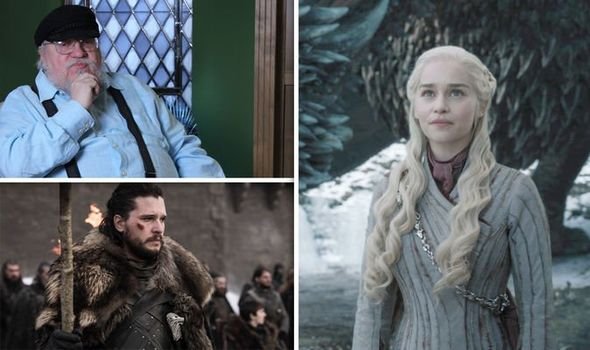
The showrunners intended Daenerys Targaryen to destroy King’s Landing, Jon Snow to kill her, and Bran Stark to become king; this is how Game of Thrones was supposed to end.
The final season of Game of Thrones sparked debate, and fans still question the choices made. Many wonder, specifically, how was game of thrones supposed to end differently. The show’s conclusion, a major point of contention, did not sit well with many viewers.
The controversy stems partly from the rapid shift in character arcs. It felt like a rushed delivery compared to prior seasons. The creators, while attempting to wrap up the story, ended up disappointing a large portion of their audience.

How Was Game of Thrones Supposed to End?
The final season of Game of Thrones, the epic fantasy drama that captivated millions worldwide, left many fans feeling… well, let’s just say it wasn’t exactly a happy ending for everyone. There were plot points that seemed rushed, character arcs that felt incomplete, and a general sense that the showrunners, David Benioff and D.B. Weiss, had strayed far from the meticulous planning and careful world-building that defined earlier seasons. This has led to a lot of speculation and discussion about what the original plans might have been. Did George R.R. Martin, the author of the “A Song of Ice and Fire” book series, have a completely different conclusion in mind? And how much of what we saw on screen actually aligned with the author’s vision? Let’s dive deep into the swirl of fan theories, interviews, and behind-the-scenes information to try and piece together how Game of Thrones was potentially intended to conclude.
The Books vs. The Show: A Divergent Path
The first few seasons of Game of Thrones followed George R.R. Martin’s books pretty closely. But as the show caught up and then surpassed the published novels, the writers had to start making their own choices. Martin himself has stated many times that his ending will differ from the show’s. This divergence is key to understanding why so many fans felt disappointed with the TV show’s finale. Let’s examine some key differences.
Key Divergences in Plot and Characters
- Lady Stoneheart: In the books, Catelyn Stark is resurrected as a vengeful figure known as Lady Stoneheart. This character, a terrifying representation of the brutal consequences of war, never made it into the TV series. Her absence dramatically alters the narrative regarding the Brotherhood Without Banners and the general mood of the Riverlands.
- Young Griff: Another major character missing from the show is Young Griff, also known as Aegon Targaryen, who is revealed to be alive and a potential claimant to the Iron Throne. His inclusion in the books introduces a major twist in the Targaryen lineage. This changes the dynamics around who has a right to rule the Seven Kingdoms.
- Dorne and the Sand Snakes: The Dorne storyline in the books is far more complex, with characters like Arianne Martell playing a significant role. The Sand Snakes, while present in the show, were handled differently, and some fans felt they were caricatures of their book counterparts. In the books, Dorne has a much more involved plan against the Lannisters, whereas in the show this plotline felt rather weak.
- The Importance of Magic: The magical elements in the books are much more prevalent and mysterious. From Bran’s powers to the Others (White Walkers), there are hints of deeper, more complicated systems at play. The show, while incorporating magic, often streamlined it, potentially losing some of its weight and meaning.
- The Fate of Characters: Several characters, such as Barristan Selmy, live much longer in the books than they do in the show. Other characters who died in the books are still alive in the show, and vice versa. This shows how the show and books have diverged not only in plots, but also in characters.
These deviations demonstrate that the showrunners created a different narrative trajectory than the one George R.R. Martin is pursuing in his novels. This means that any attempt to answer “how was game of thrones supposed to end” needs to take the differences between the two mediums into account. It’s not just a matter of the same story reaching a different destination; it’s more about the story taking very different routes, with all the diversions that go with it.
George R.R. Martin’s Vision: Hints and Clues
Despite the show diverging from the books, George R.R. Martin has provided various hints and clues about his intended endgame. These snippets, while not a complete roadmap, offer a glimpse into the directions he’s likely heading in the final two novels, “The Winds of Winter” and “A Dream of Spring.” Let’s explore some of these significant hints.
The Iron Throne and The Cycle of Violence
One of the major themes of Martin’s work is the cyclical nature of power and violence. The Iron Throne itself, built from the swords of conquered enemies, symbolizes this. It’s very unlikely that Martin will present a simple, happy ending with a single, benevolent ruler. It’s far more probable that he’ll show a more nuanced and perhaps troubling outcome involving the destruction of the Throne or a new system of governance. It is likely that the Iron Throne itself will be destroyed.
Martin has often expressed his aversion to traditional fantasy tropes. Therefore, expect a conclusion that avoids simple resolutions and instead explores the complex realities of human nature and the consequences of political ambition. It’s unlikely that anyone will ride happily off into the sunset.
The Fate of Key Characters: What Martin May Have Planned
While Martin has been tight-lipped about the specific fates of his characters, some possibilities seem more plausible than others, based on what we know from the books and his general style:
- Jon Snow: It’s highly probable that Jon will remain a key figure in the struggle against the Others. However, his book journey might be very different than his show counterpart. His resurrection in the books might have a different meaning, and he might not end up as the King in the North. He might also be more tied to the Targaryen bloodline, given the way events are shaping up.
- Daenerys Targaryen: The books present Daenerys with a more complex portrayal than the show. Her descent into madness or a similar storyline is definitely a possibility in the books, but her arc might be more gradual, and it is also plausible she might have a completely different ending. The show’s rushed version felt uncharacteristic, so Martin’s treatment will likely be more nuanced.
- Tyrion Lannister: In the books, Tyrion’s path takes him to Essos, where he faces internal struggles and interacts with a greater number of characters. His political acumen might be further tested, and his role in the end might revolve around diplomacy rather than conquest. It’s probable that he will face more moral ambiguity and continue to make questionable choices, as he does throughout the books.
- Bran Stark: The “Three-Eyed Raven” role is certainly going to be important in Martin’s books too. Given that his character is tied to the past and the mysterious magic of Westeros, his actions may very well determine the fate of the realm. But this will likely be very different than the Bran who is proclaimed King of the Seven Kingdoms in the TV show.
- Arya Stark: Arya’s path in the books has been very different from the show. Her training at the House of Black and White has left her with some mysterious powers and she might continue along that path, becoming a more secretive figure. Whether she would become a world explorer like in the show, or if she will find a different role in Westeros, is uncertain.
These character possibilities aren’t definitive, but they showcase that Martin’s finale is likely to explore complex themes with shades of grey instead of a simple happy or tragic ending.
Fan Theories and Speculation: Exploring Different Endings
The absence of the book ending, combined with the controversial finale of the television series, has led to the spread of various fan theories. These theories often try to correct the perceived missteps of the show, or imagine an ending more suitable to the characters and plots that have been created. Here are some of the most popular and compelling fan theories.
The Azor Ahai Prophecy: A Possible Reinterpretation
The Azor Ahai prophecy, about a hero who will wield a burning sword and defeat the darkness, has long been a source of speculation. Many fans thought that Jon Snow, who came back from the dead, was the Azor Ahai of the prophecy, and that he would be the one to take out the Night King in the show. However, in the books, the prophecy may be much more symbolic, and not point to a single person. Maybe this refers to a broader struggle between good and evil, or not about a single chosen hero, but a joint effort from many individuals.
The Destruction of the Iron Throne: A Symbol of Change
Many fans speculate that the Iron Throne itself will be destroyed, symbolizing the end of the old, oppressive system. This could lead to the creation of a new system of government, perhaps a more representative one. This theory also fits with Martin’s theme of not glorifying the idea of absolute power. The show ended with a council of nobles picking a new King, but in the books, such a choice might come about in a completely different way. The ending will definitely need to address the issue of power, and will have to provide something to replace the ruling system which has dominated Westeros for so long.
The “Others” as a Natural Force: A Deeper Understanding
Some fans believe that the “Others,” or White Walkers, might not be purely evil. Instead, they may be a force of nature responding to the imbalance in the world. This would be more in line with Martin’s tendency to portray nuanced antagonists. If the “Others” are a kind of defense mechanism of nature, then there needs to be a different approach in dealing with them than just a large-scale battle. Maybe they will be a permanent force, which people will have to learn to live with, instead of being eliminated.
The Long Night is not the Final Conflict: Further Threats
One popular theory suggests that the White Walker invasion was not the final conflict. After the threat of the “Others” is resolved, there may be a different, more human, conflict to follow, based on the power vacuum that was created, or a new political threat. This theory is in line with the idea that the story of Game of Thrones is not just about a battle against mythical creatures, but the more complex issues of governance and power struggles. It is also a way of showing that the troubles of humans are much greater than any supernatural threat.
Analyzing the Show’s Ending: Where It Went Wrong
To fully understand what Game of Thrones was supposed to be, and the potential alternatives, it’s important to analyze where the show’s ending failed to satisfy many viewers. Many felt that the characters made sudden and uncharacteristic choices, that plotlines were rushed, and that the ending wasn’t as layered as the rest of the story. Here’s a closer look at some of the biggest criticisms:
Character Arcs: A Loss of Nuance
One of the biggest criticisms of the final season was the rapid and, in many people’s opinion, unearned shift in Daenerys Targaryen’s character. Her descent into madness felt rushed and unconvincing to many. The show didn’t fully establish the reasons behind this transition, causing her actions to feel out of character. Likewise, other character arcs felt equally poorly executed and rushed. This happened when the show started focusing on shocking plot points, rather than character development.
Pacing and Plot Development: Rushed Storytelling
The final seasons suffered from a severe lack of pacing. The show compressed complex storylines into shorter periods of time, resulting in plotlines that felt rushed and poorly resolved. Many story elements that were developed over several seasons were suddenly concluded quickly, leaving a feeling of missed opportunities. This lack of time meant that many plot threads were never fully resolved, creating a messy, unsatisfying finale.
Simplistic Resolutions: A Lack of Depth
Many viewers felt that the show adopted a simplified approach to resolving long-standing conflicts, which did not match the complexities and nuances of earlier seasons. The battle with the White Walkers, for example, was resolved in a single episode, instead of a series of episodes which would have built up to the finale. Many felt that the show offered simple and easy solutions, which made the stakes seem much less important than before. The characters, the world, and the plot deserved more than that.
Missed Opportunities: Unresolved Storylines
Several storylines and character arcs were abandoned or quickly wrapped up in the show. These included the fate of the various characters and Houses in Westeros, like Dorne, the Greyjoys, and even the Vale. The show didn’t bother wrapping these up, resulting in a lack of closure. Many fans were left wanting more, and were disappointed by the rushed, unsatisfactory ending.
The Ongoing Legacy: Anticipation for the Books
Despite the criticisms of the TV series finale, the popularity of Game of Thrones endures. Fans are eagerly waiting for George R.R. Martin to complete his book series, hoping for a more satisfying and complex conclusion. Here are some reasons why the books continue to be anticipated:
- A More Detailed Narrative: Martin’s books offer a much more expansive and detailed story. Fans expect a more fleshed-out explanation of plot points, as well as character motives and backgrounds. In short, they expect the depth of storytelling to be greater, unlike the show, which was sometimes simplified.
- Nuanced Characters: The book version of characters will offer a more nuanced portrayal of the heroes and villains. In the books, characters are never purely good or evil, and the reader gets to see more of their motives. Fans hope to see more of that in the final books.
- A Different Path: As the books and show have diverged significantly, the remaining novels are expected to offer a unique and potentially surprising conclusion. Readers will get to see a completely different path, even if it contains familiar places and characters.
- Greater Exploration of Themes: The books may well explore more deeply the key themes of power, mortality, and the consequences of choices, offering a more thought-provoking and substantial narrative experience. Martin’s complex writing might reveal more about the world and the nature of humans.
The debate about “how was game of thrones supposed to end” will likely continue until the final books are published. While the television series provided an ending, it didn’t fully align with Martin’s original vision or many fans’ expectations. Until then, the mysteries and possibilities surrounding the books will continue to fuel speculation and conversation. The original ending is likely far different from the show, and those who want a proper conclusion are likely going to have to wait for Martin to complete his work.
How Game of Thrones Should Have Ended
Final Thoughts
George R.R. Martin’s vision for A Song of Ice and Fire, the source material, intended a more nuanced conclusion. He has stated the ending will be bittersweet, which seems different from the television show’s final season. The books are planned to show characters in new ways.
The planned book ending must provide more satisfying resolutions for character arcs, unlike the rushed television version. The books will likely delve deeper into magic and its implications. Ultimately, how was Game of Thrones supposed to end? The answer must be found in the yet-to-be-published novels.

