
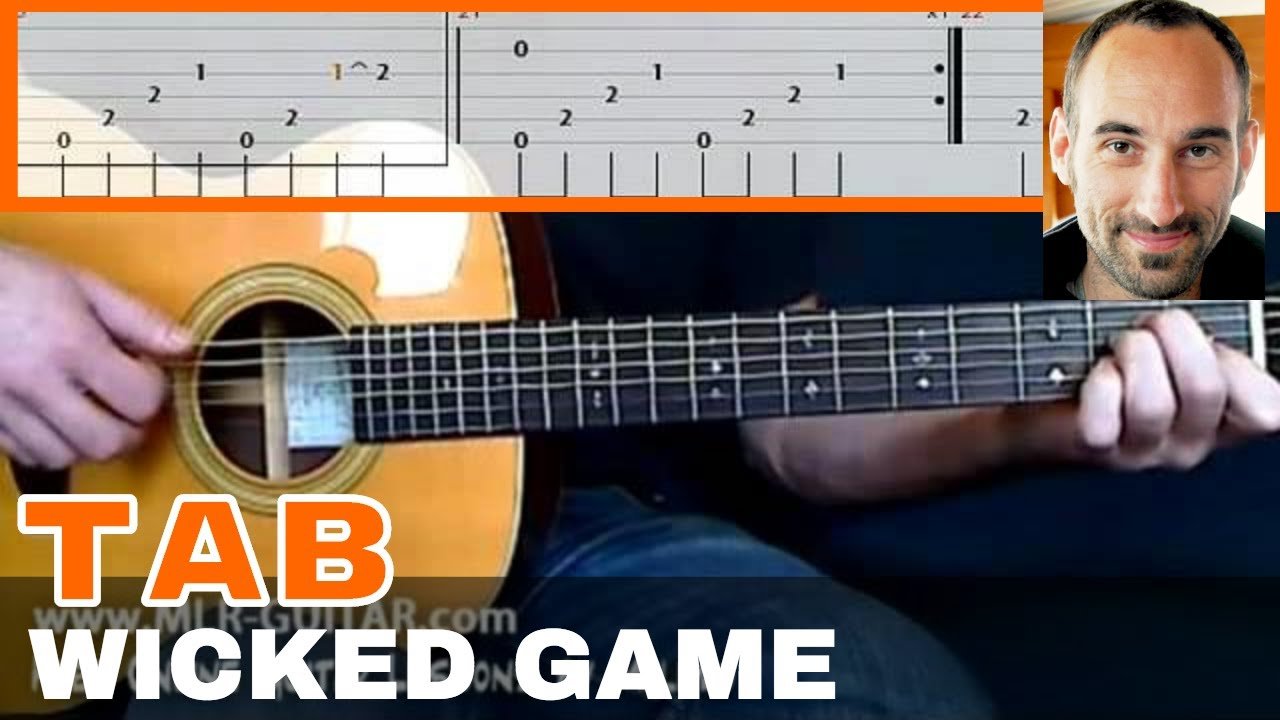
To play “Wicked Game” on guitar, learn the fingerpicked arpeggiated pattern for the verse, primarily using minor chords, then practice the power chord-based chorus riff.
Want to learn that haunting melody? The one that drips with emotion and late-night vibes? We will be looking at how to play “Wicked Game” on guitar. This song, a classic, may seem tricky at first, but with practice you can nail the signature sound.
We’ll break down the fingerstyle intro, those captivating verse chords, and the powerful chorus riff. Follow along, and you’ll be playing this Chris Isaak gem in no time. Understanding the structure will make learning it much easier.

How to Play Wicked Game on Guitar: A Step-by-Step Guide
Ready to learn how to play the hauntingly beautiful “Wicked Game” by Chris Isaak on your guitar? This song, with its iconic melody and melancholic feel, is a great addition to any guitarist’s repertoire. It might seem tricky at first, but with a little practice and understanding of the basic elements, you’ll be playing it smoothly in no time. Let’s break it down step-by-step, making it easy and fun to learn. We’ll cover the key parts of the song: chords, rhythm, strumming patterns, and even a little bit about the iconic intro lick.
Understanding the Song’s Structure
Before we jump into the chords, it’s helpful to understand how the song is put together. “Wicked Game” is mostly built around a repeating verse and chorus, with a short bridge section and, of course, that amazing intro. This structure makes learning the song easier, because once you get the hang of a few key parts, you’re on your way. Here is a basic outline:
- Intro: The iconic guitar melody.
- Verse: Where Chris Isaak sings the main story of the song.
- Chorus: The part where the lyrics focus on the “wicked game” itself.
- Bridge: A short section providing a change in pace.
- Outro: Usually a repeat of the intro or a simplified version.
Essential Chords for “Wicked Game”
Okay, let’s talk about the chords. The good news is that “Wicked Game” uses only a few chords, and most of them are beginner-friendly. Here’s a list of the main chords you’ll need:
- Bm (B minor): This is probably the trickiest one for beginners. Place your index finger on the 2nd fret of the A string (5th string), your middle finger on the 3rd fret of the D string (4th string), and your ring finger on the 4th fret of the G string (3rd string).
- G (G major): Place your middle finger on the 6th string (low E string) at the 3rd fret, your index finger on the 5th string (A string) at the 2nd fret, and your ring finger on the 1st string (high E string) at the 3rd fret.
- D (D major): Place your index finger on the 3rd string (G string) at the 2nd fret, your middle finger on the 1st string (high E string) at the 2nd fret, and your ring finger on the 2nd string (B string) at the 3rd fret.
- Em (E minor): Place your middle finger on the 5th string (A string) at the 2nd fret, and your ring finger on the 4th string (D string) at the 2nd fret.
- A (A major): Place your index finger on the 2nd fret of the D string (4th string), your middle finger on the 2nd fret of the G string (3rd string), and your ring finger on the 2nd fret of the B string (2nd string)
Don’t worry if these seem difficult at first. Keep practicing, and they’ll start to feel more comfortable. Use a chord diagram if needed to help your finger placement. Let’s look at the chord progression in the most common parts of the song.
Chord Progression in the Verse
The verse primarily uses a sequence that goes like this: Bm, G, D, A, and this pattern often repeats. For example, you might play it this way:
       Bm     G       D      A
       (Play for a set count, like 4 beats each)
       Bm     G      D      A
      (Repeat the chord progression)
Focus on transitioning smoothly from one chord to the next. A helpful tip is to find common fingers you can keep down when switching. For example, when moving from the Bm to the G, you can usually keep your middle finger in position. The same goes for moving between the G and D chords, you can often keep your index finger in place, moving the remaining fingers into new positions.
Chord Progression in the Chorus
The chorus keeps the same chords, but you might hear slight changes in the order, rhythm, or how long each chord is played for.
      Em      G      D        A
      (Play for a set count, like 4 beats each)
      Em      G      D        A
      (Repeat the chord progression)
It’s all about the feeling you bring to it, but using these chord progressions will keep you in the right direction. In some variations of the chorus, you may hear the Bm chord again. If you feel comfortable, try both and see which works best for you.
The “Wicked Game” Strumming Pattern
Now that we’ve got the chords down, we need to add rhythm! The most common strumming pattern used in “Wicked Game” is relatively simple.
- Down strum
- Down strum
- Up strum
- Down strum
- Up strum
This means you move your hand down, down, up, down, and up over the strings when strumming. It’s not too fast, more of a relaxed, flowing pattern that fits the mood of the song perfectly. You can count it out as “1-2-and-3-and” to keep it consistent. It is highly recommended you listen to the original song closely, this will help you feel the pulse and the slight variations Chris Isaak plays during the song. Feel the rhythm within the song rather than just playing notes.
When strumming, aim for a smooth, even sound. Don’t bang on the strings too hard; let the sound flow naturally. Try to achieve a balance where your strumming is even but adds to the song’s emotion.
The Iconic Intro Guitar Lick
The intro is what makes “Wicked Game” instantly recognizable. This part is a little more involved than the chords, but breaking it down makes it easier to approach. The intro is played using fingerpicking on higher strings.
Breaking Down the Intro Lick
Here is a simplified breakdown of how you can start practicing this iconic guitar part:
- First note: Start by placing your index finger on the 5th fret of the high E string. Pick it and let it ring.
- Second note: Next, place your middle finger on the 7th fret of the high E string. Pick that note.
- Third note: Come back to the 5th fret of the high E string and pick it again with your index finger.
- Fourth note: Move your index finger to the 7th fret on the B string, and pick this note.
- Fifth note: Move your middle finger to the 8th fret on the B string and pick this note.
- Sixth note: Go back to the 7th fret on the B string and pick that note again.
- Seventh note: Move your index finger back to the 5th fret of the high E string, and pick it.
Repeat this pattern, focusing on keeping the notes clear and precise. The secret to nailing this lick is playing it slow at first. Speed will come with practice. It may be helpful to use a metronome for this section. Once the timing is good and your fingers feel more comfortable, you will start to hear the magic of this lick. There are different variations to this lick, but this breakdown will help you to play the song in its original form.
Putting It All Together: Playing the Whole Song
Now that you’ve learned the chords, strumming, and intro lick, it’s time to put it all together. Here’s a suggested way to approach learning the full song:
- Start Slow: Don’t rush it. Begin by practicing the chord changes slowly, and strumming each chord accurately and in rhythm. Use a metronome to maintain a steady pace.
- Practice the Verse and Chorus Separately: Focus on getting the chord progressions smooth and effortless. Use the strumming patterns we discussed. Once you can comfortably play the chords, practice the strumming pattern with the chords.
- Intro Mastery: Spend time on the intro lick separately. Practice this slowly until you can play it cleanly. Start combining it with the verse.
- Gradually increase the speed: As you become more comfortable with all the elements, gradually increase the tempo.
- Listen to the original: Frequently listen to the original version of “Wicked Game” and try to identify how the guitar parts are played. You can use this to correct any mistakes you make and refine your technique. Try to play along with the original song once you have more experience.
Tips for a Great Performance
- Use a clean tone: Chris Isaak’s guitar sound is clean. Use the neck pickup or slightly dial the tone knob down.
- Focus on dynamics: Notice that the song varies in loudness and intensity. Listen to how Chris Isaak plays different parts of the song, and try to add these nuances to your performance.
- Play with feeling: “Wicked Game” is a very emotional song. Let your feelings guide your performance. This will make your playing more expressive and engaging.
- Be Patient: Learning a new song takes time and practice. If you have the patience, and keep practicing it will improve your playing.
Remember that music is all about enjoyment. Take your time, practice regularly, and let the beauty of the song guide you as you learn.
Final Notes on Playing “Wicked Game”
Learning “Wicked Game” on the guitar is a rewarding experience. It might seem challenging at the start, but with practice and persistence, you’ll find yourself playing one of the most iconic and beautiful songs ever written. From the simple yet effective chord progressions to the haunting intro lick, each part contributes to the song’s magic. Use the tips above, keep practicing, and soon you’ll be able to share this musical gem with others, or simply enjoy it yourself.
Chris Isaak Wicked Game Guitar Lesson + Tutorial
Final Thoughts
In short, learning ‘how to play wicked game on guitar’ involves mastering its distinct arpeggiated chords and fingerpicking pattern. Focus on a consistent rhythm. Practice the intro carefully. Begin slowly and increase your speed.
Accuracy trumps speed when you first learn the song. Pay attention to the subtle nuances in the melody, and use a light touch. The overall feel is more crucial than technical perfection at first. This song benefits from a relaxed approach.
You must learn the specific chord progression to accurately play the tune. Practicing with a backing track helps with timing and feel. Keep practicing, and you’ll play it beautifully.

