
To sell a board game to a publisher, you need a polished, playable prototype, a compelling pitch, and diligent research into suitable publishers.
So, you’ve crafted an amazing board game, one that you know will capture hearts and minds? The next hurdle is getting it into the hands of players everywhere. This means understanding how to sell a board game to a publisher. It’s not just about having a good game, you need a professional approach.
The process requires you to first refine your game and then present it in a way that highlights its unique appeal. Many publishers have specific needs and focusing on the right match increases your chance of success.

How to Sell a Board Game to a Publisher
So, you’ve created a fantastic board game! You’ve spent countless hours playtesting, tweaking rules, and maybe even designing some awesome artwork. Now, you’re ready to share your creation with the world. But how do you actually get your game into stores? That’s where board game publishers come in. Selling your board game to a publisher is a big step, and it can feel a bit daunting, but with the right preparation and approach, it’s totally achievable.
Understanding Board Game Publishers
Before you even think about pitching your game, you need to understand what a board game publisher does and what they are looking for. Publishers are the companies that invest in turning your idea into a commercially successful product. They handle things like:
- Production: They take care of manufacturing the game pieces, the box, the rulebook, and everything else needed.
- Marketing and Sales: They promote the game to stores and customers, and manage the distribution process.
- Artwork and Graphic Design: They handle all the visual aspects to make the game look appealing and professional.
- Game Development: They might also have a team that helps to refine your game even further.
Publishers are not just looking for good games; they are looking for marketable games that will sell well and bring a profit. Knowing this helps you shape your pitch to address their needs. Remember they are running a business and they want to be sure they can sell the game you created to their customers, your potential audience.
Preparing Your Game for Submission
Before you even think about contacting a publisher, you need to make sure your game is in its best possible shape. This means much more than just having a fun concept.
Playtesting, Playtesting, Playtesting
This cannot be emphasized enough. You need to playtest your game – a LOT. Play with different groups of people, and pay close attention to their feedback. Look for:
- Rules clarity: Are the rules easy to understand and follow? Where are people getting confused?
- Balance: Is one strategy clearly better than others? Are there any “dead ends” in gameplay?
- Enjoyment: Are people actually having fun? If not, what are the pain points?
- Playtime: Is the playtime appropriate for the complexity of the game? Is it too short or too long for what is intended?
Keep a log of your playtests, noting what worked, what didn’t, and what changes you made. This information will be valuable to you and potentially to the publisher.
Creating a Prototype
A good prototype isn’t just thrown together. It doesn’t have to be a polished, professionally-made product, but it does need to be functional, representative of the game experience, and pleasing enough for play testing. Make sure to include these essential elements:
- All the game components: Playing board, cards, tokens, dice, etc., at least in functional form.
- A clear and concise rulebook: This is the most crucial piece. Make it easy to read, easy to understand, and with lots of examples of the gameplay. Don’t forget a table of content to quickly navigate to the sections people want to read.
- Good-enough artwork and graphic design: Doesn’t need to be final, but your game needs to look put together to present the game well.
You can make your prototype at home by printing off the elements and using bits and pieces from other board games, or use a prototype creator service to give it a higher quality look. A good-looking, functional prototype shows that you’re serious about your game.
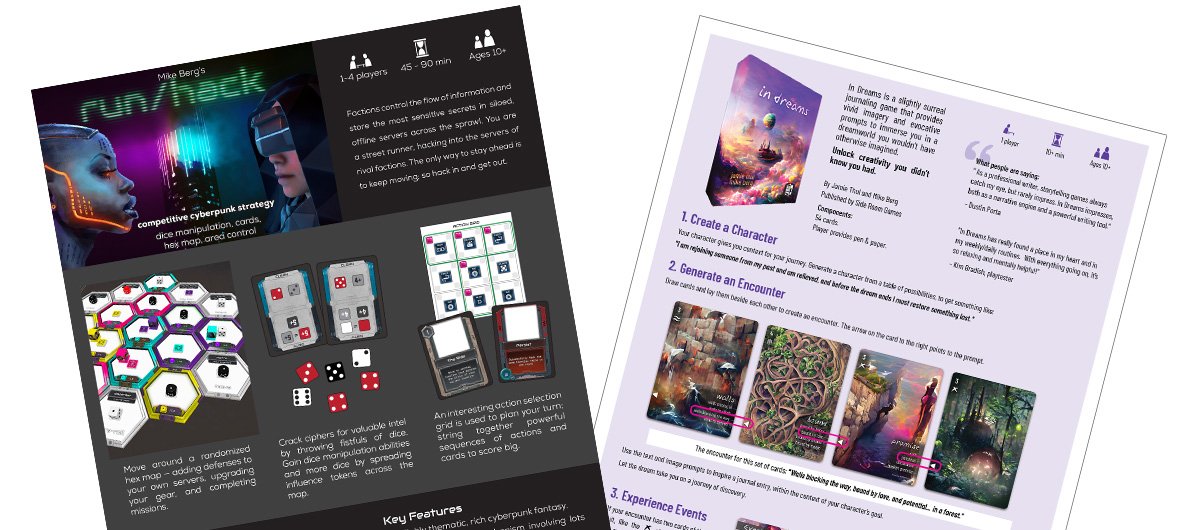
Crafting a Concise Sell Sheet
A sell sheet is a one-page document that summarizes your game. It’s your first chance to grab a publisher’s attention. Keep it short, visually appealing, and impactful. A typical sell sheet includes:
- Game Title and Designer(s): Make sure to include both.
- A Catchy Tagline: A short sentence that sums up the essence of the game.
- Number of Players and Playtime: Be realistic and don’t use an over optimistic value.
- Target Audience: For example, casual gamers, families, or strategy enthusiasts.
- Brief Overview: Summarize the game’s setting, mechanics, and objective in a few sentences.
- Key Selling Points: What makes your game unique and exciting? What sets it apart?
- Compelling Artwork: Show off the visual style of your game.
- Contact Information: How can the publisher reach you?
You can use design software to create a visually engaging sell sheet or use readily available templates. The goal is to make it easy for a publisher to understand your game at a glance.
Create a Rules Document
A well-written and detailed rulebook is an absolute necessity. It’s important that it’s clear, concise, and easy to understand. A good rulebook often includes the following:
- Overview of the game goal and mechanics: A quick summary of how to win the game.
- Component explanation: Describe each of the components of your game.
- Set-up instructions: Explain how to set up a game so players can jump right in.
- Rules, turn order and details: Describe how the game plays, in as much details as you can.
- Examples of play: Provide clear examples of how the rules work.
- FAQ section: Anticipate common questions that might arise.
- Visual Aids: Use images or diagrams to clarify complex rules.
Test the rules by having someone who has never played before read them and try to play the game. If they can do it correctly without your intervention, you’ve done a great job.
A Video Tutorial or Playthrough
A short video that shows how to play your game can be incredibly valuable for publishers. It’s a more dynamic way to show the gameplay, compared to just reading the rulebook or the sell sheet. Keep it concise, engaging, and highlight the core mechanics of your game. Aim for a high-quality video, even if it’s just from a camera phone. You don’t need to be a professional video editor, just aim for something clear and that shows how the game is played.
Identifying the Right Publishers
Not all publishers are created equal. It’s crucial to find publishers who are a good fit for your game. Sending a family game to a hardcore wargame publisher is likely going to be a waste of your time, and theirs.
Researching Potential Publishers
Start by looking at the types of games different publishers release. Do they specialize in strategy games, party games, card games, or something else? Look at the game themes they publish and see if they align with yours. Check their catalogs and recent releases. You want to pitch to publishers that have a history of publishing games similar to yours.
Look into how big the publisher is: some publishers will not be looking for new designers, or will only accept games that have already sold well. So make sure to get into that in your research.
Don’t forget to check the quality of games the publisher releases – you want the quality of your game to be at least as high if not higher. Do you like how the box art looks like? Do you appreciate the quality of components? If not, there might be a better publisher for you.
Where to Find Publishers
There are several ways to find board game publishers:
- BoardGameGeek (BGG): A great resource for searching publishers and seeing their games and associated feedback.
- Industry Events: Conventions like Gen Con, Essen Spiel, and PAX Unplugged allow you to meet publishers in person (if you’re able to attend them).
- Online Databases and Directories: There are resources that compile lists of board game publishers, such as BoardGameGeek’s directory.
Making a Target List
Compile a list of publishers that seem like a good fit for your game. Prioritize them based on how well they align with your game and your personal preference. It’s a good idea to start with the publishers that you would be more excited to work with first.
Pitching Your Game to a Publisher
Now comes the exciting part: reaching out to publishers. How you approach them is very important. The first impression is crucial and you don’t want to be forgotten immediately.
Creating a Personalized Pitch
Do not send out generic emails. Each email should be customized to the specific publisher. Briefly reference some of their games, to show that you’ve done your research, and explain why you think your game would be a good fit for their catalog.
In your email, you should also include:
- A brief introduction of yourself: Say who you are, and your background in board games, if you have any.
- Your game’s title and a one-sentence hook: Grab their attention.
- A quick summary of your game: Just a few sentences.
- Why you think it’s a good fit: Explain why your game matches their catalog and brand.
- What you are including: Rulebook, Sell Sheet, Videos, and whatever else you have created.
- Your contact information: Phone number, email address, etc.
Keep your initial email short and to the point. The goal is to pique their interest and get them to request your sell sheet and prototype.
Submitting Your Game
Once a publisher shows interest, they will most likely ask for a sell sheet and a rulebook. Some may ask you to send them a prototype, which you must be prepared to do. Make sure you agree on who pays for shipping and the return of the game.
Make sure that you send everything on time, in a professional manner, and that you don’t make it look like you have sent the same email to multiple publishers by accident. Always read your email one more time before sending.
Most importantly, be patient! Publishers get a lot of submissions, and it can take some time for them to review your game. Follow up politely if you haven’t heard back in a reasonable time, but don’t be pushy.
Following Up
It’s okay to follow up with a publisher if you haven’t heard back after a few weeks. A polite email checking the status of your submission will show your enthusiasm and keep your game in their minds. Don’t be too pushy. You want to look like someone that a publisher would want to work with. Always be professional and kind.
Be Prepared for Rejection
Not every publisher will be interested in your game, and that’s okay. Rejection is a part of the process. Don’t take it personally. It may not be a good fit for them, or they may be looking for something else at this time. Instead of getting upset, ask them if they can give you some feedback on why they rejected your game.
Use rejection as a learning experience. Reflect on the feedback and look at your game again. Maybe there is an area that can be improved, or maybe your game simply isn’t what publishers are looking for at this moment. Your goal is to learn something each time.
Negotiating a Contract
If a publisher decides they want to publish your game, you will need to negotiate a contract. This is where things can get tricky, and if you are not experienced with that, you may want to seek help from a lawyer or an agent that has experience with the board game industry. Here are some key elements of a board game contract to consider:
- Royalties: This is the percentage of sales you will receive. Make sure it is a fair deal.
- Advance: This is an upfront payment you might receive. Sometimes, royalties will only start to be paid once the advance has been recouped by the publisher.
- Rights: Decide on what rights you’re giving to the publisher, for which part of the world, and how long.
- Creative Control: Discuss how much input you’ll have in the final design, art, and components of the game.
- Timeline: Negotiate a reasonable timeline for production and release of your game.
Take your time and make sure you understand every clause before you sign anything. It’s okay to ask questions and even negotiate a better deal for you.
Tips for Success
Selling a board game to a publisher is tough, but it is very possible. Here are some extra tips to make this a less painful experience:
- Be Professional: Always be polite, respectful, and professional in your communications.
- Network: Attend game conventions and industry events to connect with publishers.
- Be Patient: Selling your game can take time. Don’t get discouraged, and keep improving your game and pitch.
- Be Open to Feedback: Be willing to listen to feedback and make changes to your game.
- Don’t Give Up: Keep learning, keep refining, and keep trying. You have created an incredible game, and there is a publisher out there that will appreciate it.
Selling a board game to a publisher can be a challenging but rewarding process. By preparing well, understanding publishers, and presenting your game professionally, you can greatly increase your chances of success. Remember to playtest thoroughly, create a functional prototype, and be persistent. With hard work and dedication, you can see your game on shelves and being enjoyed by people all over the world.
From Idea to Shelves: Get Your Board Game Published with Insider Tips from a Published Designer
Final Thoughts
Creating a compelling pitch is crucial. You must clearly present your game’s unique selling points. A well-crafted rulebook and prototype help publishers visualize your design.
Playtesting and feedback improve your game. Publishers want polished, fun experiences. Research potential publishers to find the best fit for your game’s style.
Ultimately, understanding how to sell a board game to a publisher involves persistence. Build connections, attend conventions, and never give up on your dream.

