
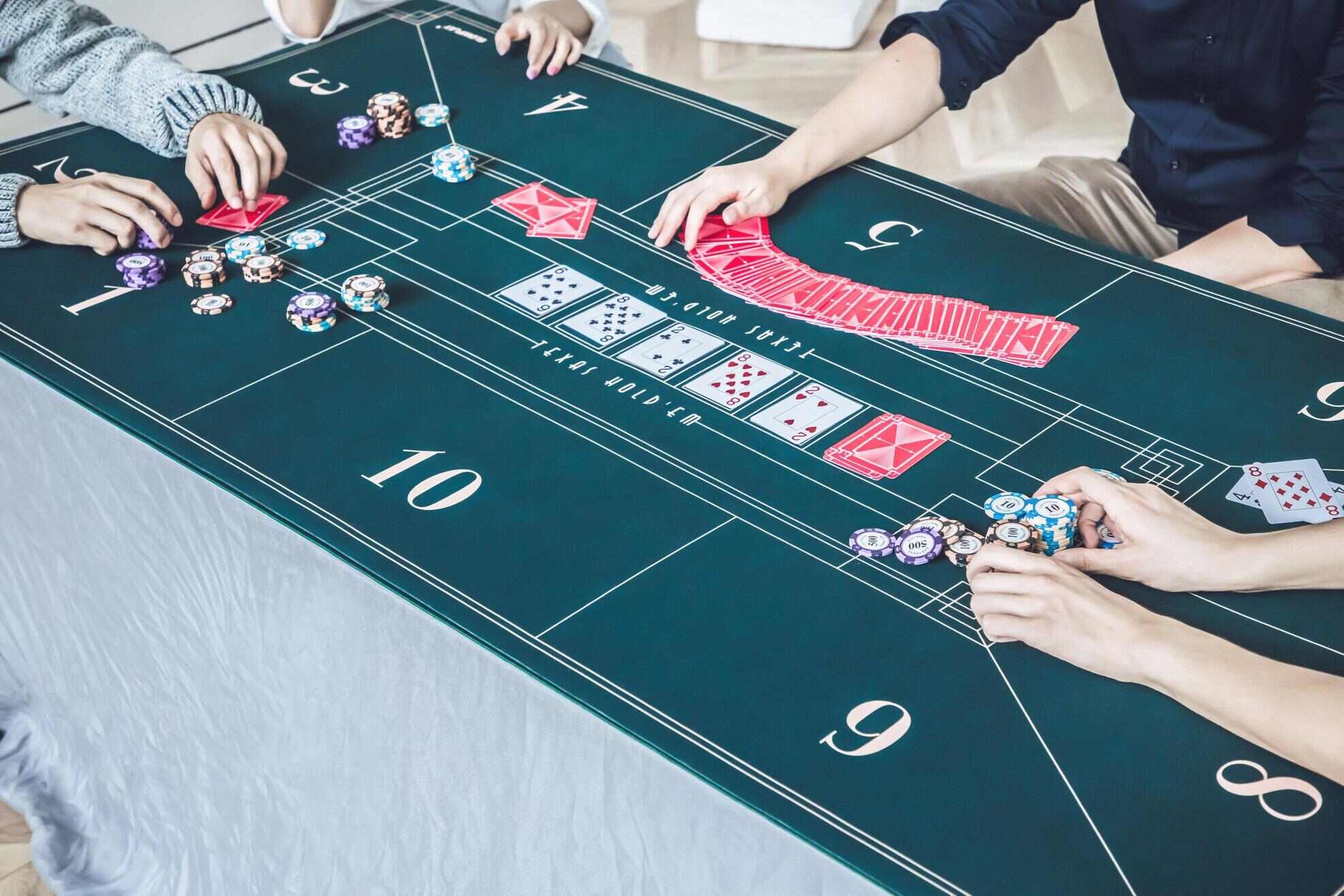
Setting up a poker game requires a deck of cards, poker chips (or something to represent them), a table, and players ready to participate.
Want to host a fun night with friends? Thinking of getting some card games going? Knowing how to set up poker game is your first step. It’s easier than you think and doesn’t need to be complicated.
You just need the basic equipment. Grab those playing cards, gather some chips, and find a table. Then, call your friends for a night of poker.

How to Set Up a Poker Game
Alright, let’s talk poker! Whether you’re planning a casual get-together with friends or a more serious poker night, knowing how to set up a game is super important. It’s not just about having cards and chips; it’s about creating a fun, fair, and memorable experience for everyone. This guide will walk you through everything, from picking the right poker variation to making sure everyone understands the rules. Let’s dive in and learn how to make your poker night a winner!
Choosing the Right Poker Game
First things first, what kind of poker will you be playing? There are many different types, but some are more popular than others, especially for beginners. Here are a few common choices:
Texas Hold’em
Texas Hold’em is probably the most popular poker game right now. It’s the game you see on TV a lot. Each player gets two cards face down, and there are five community cards placed face up in the middle of the table that everyone can use. The goal is to make the best five-card hand. It’s pretty easy to learn but can take time to become really good at.
Why it’s great for beginners: Simple rules, lots of strategy involved, easy to find learning resources.
Key things to know: Two hole cards, five community cards, betting rounds, hand rankings.
Five-Card Draw
Five-Card Draw is another classic poker game. Each player gets five cards face down, and then there’s one draw round where players can discard some of their cards and get new ones. It’s a more straightforward and less complex game than Texas Hold’em. It is really good for learning basic poker strategies.
Why it’s great for beginners: Easier to learn than Hold’em, faster-paced, teaches basic hand ranking.
Key things to know: One draw round, standard hand rankings.
Seven-Card Stud
Seven-Card Stud is a more complex poker game where each player receives a combination of face-up and face-down cards, with different betting rounds between the card distributions. It may be more suited for players with more poker experience.
Why it may not be best for beginners: More complicated rules, requires tracking cards more closely.
Key things to know: Various betting rounds, some cards face up and face down.
Other Games
There are many other poker games like Omaha, Pineapple, and Razz. But these are often for people who have played poker a lot. It’s generally best for your first poker night to choose a simple game like Texas Hold’em or Five-Card Draw. Once everyone is familiar with poker you can explore other types. The main idea of this guide is to provide you, how to set up a poker game for beginners, so we are focusing on simple and easy to understand poker variations.
Gathering Your Supplies
Once you’ve picked the game, you need to get the right stuff. This is what you will need:
Poker Chips
You will need chips to bet with. You can get a poker chip set from many stores or online. A good set will usually include different colored chips, each with a different value. This makes it easier to keep track of bets.
- White Chips: Usually have the lowest value.
- Red Chips: Have medium value.
- Blue Chips: Have higher value.
- Black Chips: Typically have the highest value.
How many chips do you need? This depends on the number of people playing and the type of game. A good rule is to have at least 50 chips per person. You might want even more for longer games. For example, in a game with 8 players, having 400 chips would be good. The total chips should be evenly divided based on color values.
Important: Decide the value of each chip color before you start playing so everyone knows how much they’re betting.
Playing Cards
A standard deck of 52 playing cards is essential for most poker games. You want a nice deck that’s easy to shuffle and deal. Make sure the cards are in good condition. No bent or marked cards!
- Consider using two decks: This can make the game faster. While one deck is being used, the other can be shuffled for the next hand.
Poker Table or Playing Surface
A nice, flat surface is important. A real poker table is great but it’s not necessary. You can also use a dining table, a coffee table, or any other smooth surface that gives players enough room. If you use your dining table, be careful about any scratches or spills.
Consider a table felt: If you play often, a felt cover is a good addition. It protects the table and also makes it easier to slide cards across. You can find these easily online.
Dealer Button
A dealer button is a small marker that shows who is the “dealer” for each hand. The person with the button starts the betting each round in some poker games. It’s important because it helps people keep track of the order of play. If you don’t have a real dealer button, you can use any small object or a coin.
Optional Supplies
- Timer: For tournament play, a timer is important for keeping the game moving. You can use your phone’s stopwatch.
- Card protector: Some players use a card protector, like a coin or chip to place on their hand, which tells other players that you don’t want to discard your hand.
- Snacks and drinks: It’s always good to have refreshments. It makes the game more comfortable.
Setting Up the Table
Now that you have all your supplies, it’s time to set things up.
Arranging the Seating
Arrange chairs around the table. Make sure there is enough space for players and their cards. It’s good to have the lighting good to see cards clearly.
Setting up the Chips
Place the chips in the middle of the table. Keep them organized by color. This makes it easy for everyone to grab them. If you don’t have a chip tray, use bowls or plates to sort them.
Note: If it’s a friendly game, you might let players buy in as they come along. But if it’s a tournament, you should start with a set number of chips per player. This number depends on the structure you decided to use for the game. Generally, this means that a buy-in is decided at the beginning.
Placing the Dealer Button
Place the dealer button in front of the person who will be the first dealer. Then, after each hand, the button is moved to the left to the next player. In some cases, there is a designated dealer who only deals and does not participate in playing the game, but it’s good to use rotating button for most home games.
Preparing the Cards
Make sure the cards are shuffled well. If you use two decks, shuffle the second one while the first is being used. This keeps the game moving quickly. You can watch different shuffling techniques on YouTube if you are not sure how to shuffle well.
Explaining the Rules
Before starting, make sure everyone understands the rules of the poker game you’ve picked. It’s best to explain this before the game starts so that there are no surprises.
Hand Rankings
One of the main things to explain is the hand rankings. This tells players which hands are stronger than others. Here are some of the most common poker hand rankings, from strongest to weakest:
- Royal Flush: Ace, King, Queen, Jack, and Ten, all of the same suit.
- Straight Flush: Five cards in a row, all of the same suit (like 5-6-7-8-9 of hearts).
- Four of a Kind: Four cards of the same value (like four kings).
- Full House: Three of a kind and a pair (like three queens and two sixes).
- Flush: Five cards of the same suit (but not in a row).
- Straight: Five cards in a row (but not all of the same suit).
- Three of a Kind: Three cards of the same value (like three jacks).
- Two Pair: Two sets of two cards of the same value.
- One Pair: Two cards of the same value.
- High Card: If you have none of the other hands listed above, the highest card wins.
Betting Rules
Explain how the betting works. In most poker games, there are rounds of betting where players can either:
- Check: Pass the action to the next player (only if no one has bet yet).
- Bet: Put chips into the pot.
- Call: Match the bet of the previous player.
- Raise: Increase the previous bet.
- Fold: Give up your hand and your chances to win that round.
It’s good to decide before the game what the minimum and maximum bet is for each round. For simple poker games for beginners, it’s best to use “limit” betting structure, which has set betting limits.
Example: In a limit Texas Hold’em game, the bet might be 1 chip before the flop and 2 chips after the flop.
Dealing Procedure
Explain the dealing order. For Texas Hold’em, the dealer deals two cards to each player, then the flop, turn and river as community cards. For five-card draw, the dealer gives each player 5 cards to start. It’s helpful to have one person deal while the others can observe at the start to help with their learning of the game procedure.
Handling Different Game Formats
There are different ways to structure a poker game. Here are a few ways:
Cash Games
In a cash game, players play with real money in the chips. They can buy in with more chips at any time. These games can last as long as everyone wants to play. You can start with a low buy-in amount so everyone can learn the game without risking a lot of money. It’s okay to keep the stakes low for the first few times you play.
Tournament Games
In a tournament game, everyone starts with the same number of chips. The blinds increase over time, so the game becomes more intense. The last player with chips wins the tournament. Tournaments require more organization and usually have set end times or until only one player has all the chips. There are many poker clock apps available online to help with this.
Sit-and-Go Games
Sit-and-Go games are like mini-tournaments, where you play until a certain number of players are eliminated or just one winner. They start as soon as all seats are filled. Sit-and-Go’s are good for when you have a specific time in mind, because they tend to be quicker than full length tournaments.
Keeping the Game Fair
Keeping the game fair is super important so that everyone has a good time. Here are a few things to keep in mind:
No Cheating
Make sure everyone knows that cheating is not allowed. This includes things like looking at other people’s cards, using marked cards, or hiding chips. If someone breaks the rules, it is okay to ask them to leave. Fair play is important to ensure everyone feels safe and happy during the game.
Be Clear About Rules
If everyone has a full understanding of the rules, it makes it much easier to keep the game fair. Make sure to explain everything at the start of the game and answer everyone’s questions to be clear.
Be Respectful
Everyone should treat each other nicely. Even when the game gets competitive, it’s important to be polite. If you disagree about anything, handle it calmly and without arguing. The purpose of playing a game together is to have a fun time.
Tips for a Great Game
To make your poker night even better, consider these tips:
Play with Low Stakes
When you’re first learning, it’s best to play with low stakes or even for free. This lets you practice and learn the game without losing a lot of money. Once you feel comfortable and know the game well, you can always bet higher. Start small, and learn well!
Keep it Fun
Remember, it’s just a game! Don’t get too caught up in winning or losing. The main idea is to have fun and enjoy time with friends. If you think there’s too much seriousness at your table, maybe it’s time to change the game or lower the stakes to remind everyone about the core purpose of having fun.
Take Breaks
If you’re playing for a long time, remember to take breaks. Everyone can stretch, have some snacks, and rest a bit. This will keep everyone refreshed and ready to play. Taking regular breaks are good for the brain and makes it easier to enjoy the game!
Be a Good Host
As the host, try to make everyone feel comfortable and welcome. Provide snacks and drinks, and make sure everyone has what they need to enjoy the game. It’s helpful if you can be the first one to help with any new players and ensure everyone has a nice time playing.
Setting up a poker game can be a lot of fun, and it’s a great way to bring friends together. By taking the time to plan carefully, from choosing the right game to making sure the rules are clear, you can ensure everyone has a fantastic time. Remember to be patient with beginners, keep the stakes low when starting out, and focus on having fun. Poker is not just about winning, it’s about enjoying the company and the challenge of the game. Happy playing!
How to Host the Perfect Poker Home Game – Live Poker Basics
Final Thoughts
To successfully organize your game, first gather your chips, cards, and a designated playing surface. Decide on the poker variant you want to play, and make sure everyone understands the rules. Next, set the stakes or betting structure for the game and clearly define any house rules.
Now, you’re ready to begin! Determine who deals and how the blinds and antes, if any, will work. Knowing how to set up poker game properly makes for a smooth and fun experience for everyone involved. The preparation is a must for a great poker night.

