
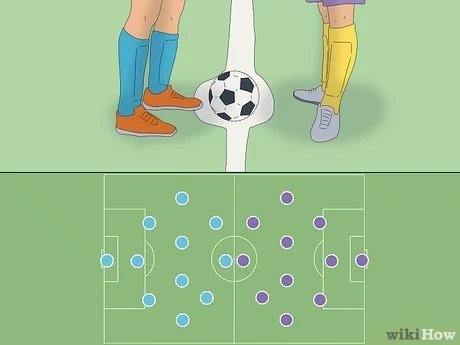
Starting a soccer game requires a coin toss to determine which team kicks off and chooses their side of the field.
Have you ever wondered about the first steps taken on the field before all the action begins? It’s more than just running onto the grass. Knowing how to start a soccer game properly is essential for a smooth and fair match.
It all begins with a simple flip. This determines who gets the ball first and which direction they’ll be attacking for the opening half. These initial decisions set the stage for the entire game.

How to Start a Soccer Game
Getting a soccer game going might seem simple, but there’s a bit more to it than just kicking a ball around! Whether you’re playing with friends in the park, coaching a youth team, or even setting up a more formal match, a smooth start is key for everyone to have fun and play fair. Let’s walk through each step, making sure we cover everything you need to know. We’ll go from setting up the field to that first whistle blow, with tips along the way.
Setting Up the Playing Field
First things first, you need a place to play. A soccer field doesn’t have to be perfect, but it does need a few basic things. Let’s discuss the essential parts.
The Basics of the Field
A real soccer field is rectangular with lines marking the boundaries. But don’t worry if you don’t have a perfect, lined field. You can use cones, markers, or even shoes to make corners and sidelines. Here’s what you need to consider:
- Size: The size of the field can change depending on how many people are playing and the age of the players. A small backyard game won’t need a giant field like a professional stadium. For little kids, a smaller area works best. A large field for a smaller group of players means a lot of running, which can be tiring. For a full 11 vs 11 adult match, the field needs to be bigger.
- Goal Posts: You will need something to use as goals. If you have real goal posts, that’s great! If not, you can use two cones or markers to show the sides of the goal. Make sure the distance between the “posts” is equal and big enough for a soccer ball to pass through. Try to make the width of the goal fit the size of the field so the game will flow.
- Sidelines and Endlines: The sidelines run along the longer sides of the field, and the endlines are at the short sides where the goals are. These help the players know when the ball has gone out of bounds.
Ensuring Field Safety
Before any game starts, take a quick walk around your chosen field to make sure it is safe. Look for any holes, big rocks, or glass that could be dangerous to players. Clear away any hazards to keep everyone safe and avoid accidents. Check for any uneven ground that could cause someone to twist their ankle. Also, consider if there’s enough space around the sidelines so that players have enough space to move or even fall without going into a dangerous area like a road.
Gathering Your Players and Teams
Now that your field is ready, it’s time to get the players together! Deciding who plays on which team, how many players per team, and their roles are important. It’s not just about having the right amount of players but also organizing them effectively for a great game.
Forming Teams
How many players per team? This depends on how many people are playing, the size of the field, and the age and fitness of the players. A game can be 1 vs 1, 2 vs 2, 5 vs 5, or even 11 vs 11. Here are some common ways to form teams:
- Even Split: The easiest way is to simply count off or divide players evenly. One way is to have two people who are not playing be captains, who take turns picking players.
- Skill-Based Teams: If you want to make the teams more even in skill level, try putting some experienced players with players newer to soccer. This is great for learning and teaching.
- Random Teams: If you are just playing for fun, pick random teams, or even just let people pick for themselves. The idea is to have fun without worrying too much about winning!
Assigning Positions
In soccer, the most basic positions are:
- Goalkeeper: The player who protects the goal. They can use their hands inside the penalty area. They are sometimes also called “goalie”.
- Defenders: Players who try to stop the other team from scoring. They usually stay closer to their own goal.
- Midfielders: Players who play in the middle of the field, going both offense and defense. They are often the ones who run the most in the game.
- Forwards: The players who try to score goals by running toward the other team’s goal. They are also called attackers.
While these are the basic positions, you do not have to be too strict about them. Younger or more casual players can have fun playing in all of these positions, running around freely. The important part of starting a soccer game is to have everyone active and enjoying the game.
Reviewing the Basic Rules
Before the first kick of the ball, it’s important to go over a few basic rules. Soccer is not complicated, but knowing these few rules will help keep everyone playing fair and having a great time.
Key Rules to Know
- Handball: Players can’t touch the ball with their hands or arms, except for the goalkeeper inside their penalty area. If a player touches the ball with their hand, this gives a free kick to the other team.
- Out of Bounds: When the ball crosses the sidelines or endlines, it is “out”. The other team will either throw it in or have a goal kick, depending on what kind of out-of-bounds it was. If it went out over a sideline, the other team does a throw-in. If it went out over the endline, the other team gets a corner kick (if it was kicked out by a player on the other team) or a goal kick (if it was kicked out by a player on the same team).
- Fouls: Fouls are like breaking the rules in a way that can hurt another player. This can be things like pushing, tripping, or hitting another player. Fouls can cause a free kick for the other team.
- Offside: This rule is more complicated and generally only used in more formal soccer games. It usually doesn’t apply to casual or younger players. Offside is when an attacker is ahead of the last defender before the ball gets passed to them. When the offside rule applies, an offside gives the other team a free kick.
- Goal: A goal is when the ball goes completely over the goal line into the goal.
It’s usually a good idea to keep the rules simple when kids are playing. Focus on having fun, being safe, and playing fairly. The most important thing is to have everyone understand how to move the ball and score.
The Game Begins – The Kickoff
Now it is time to start the match! The kickoff is the way you start a game after the field has been setup, players organized, and rules set. It is an important part of the game.
How to Do the Kickoff
- Coin Toss: Before the start of the game, you flip a coin to decide which team kicks off first.
- Center Spot: The game starts when a player on the team that won the coin toss places the ball at the very center of the field on the center spot.
- Everyone Away: All players, except the player who will kick the ball, have to be outside of the center circle for the kickoff.
- The Kick: Once the referee (or person who is starting the game) gives the signal, the player kicks the ball to start the game. The ball must move forward at least a little. It can’t go backward.
- Start Play: When the ball moves, then other players can move freely.
Restarting After a Goal
After a goal is scored, the team that did not score the goal gets to kick the ball off at the center spot to restart the game. It’s the same process as when the game first started.
Other Important Elements Before Starting
Referee or Game Coordinator
Having someone to be a referee helps. It makes the game more organized and helps make sure that people are playing by the rules and fairly. The referee will be the person to start the game by giving the kickoff signal and will be the person to make calls for fouls and other rules throughout the game. If you do not have anyone to be referee, just have someone be a game coordinator to help with this role. If no one wants to be a referee or game coordinator, then that’s okay too. You can play the game without that role, but it is something you can consider.
Game Timing
Before the game starts, you’ll also want to decide on the length of the game. You can keep it simple by playing for a certain amount of time, like 30 minutes, or you can play to a certain number of goals scored. For kids, shorter games are better because it keeps their energy levels up. For adults, you can play a longer amount of time. You’ll want to agree on the game length before you start, so everyone is on the same page. Also consider whether there will be a break at halftime. Halftime is a short break in the middle of the game for players to rest and get some water before finishing up the game.
Communication and Sportsmanship
Before the game begins, it’s a good idea to talk about good sportsmanship and how important communication is. Make sure everyone knows that playing fair, encouraging teammates, and respecting the other team is very important. Soccer is more fun when everyone is positive. Also, talking to each other during the game will help players know what’s happening and where the ball is going to go next. This is important both to have a good time and win the game.
Playing the Game
After the kickoff, the game is on. Soccer is all about moving the ball down the field. Here are some tips to keep in mind while playing.
- Passing: Work as a team to pass the ball to each other. Passing helps move the ball down the field better than trying to dribble it by yourself.
- Dribbling: When you have the ball, you need to learn how to control it as you run. This is called dribbling.
- Shooting: When you are near the goal, try to kick the ball in a way that it goes in.
The most important thing while you play is to have fun. Play as hard as you can but also remember to encourage your teammates and play fair. That way, everyone can enjoy soccer.
Starting a soccer game doesn’t have to be complicated. With some basic planning of the field, players, and rules, anyone can have a fun and safe game. Whether you’re a kid playing with your friends or an adult enjoying a weekend game, remember that the most important part of soccer is having fun!
How to Start a Soccer Game
Final Thoughts
To begin, both teams must be on the field. A coin toss decides which team kicks off. The referee signals the start, and the game begins with a player kicking the ball from the center circle.
Properly positioned players on each side is a must, before the kickoff. This ensures fair play from the very beginning. A clear understanding of the rules enhances everyone’s experience.
Now you know how to start a soccer game. Following these simple steps will get any match going smoothly.

