
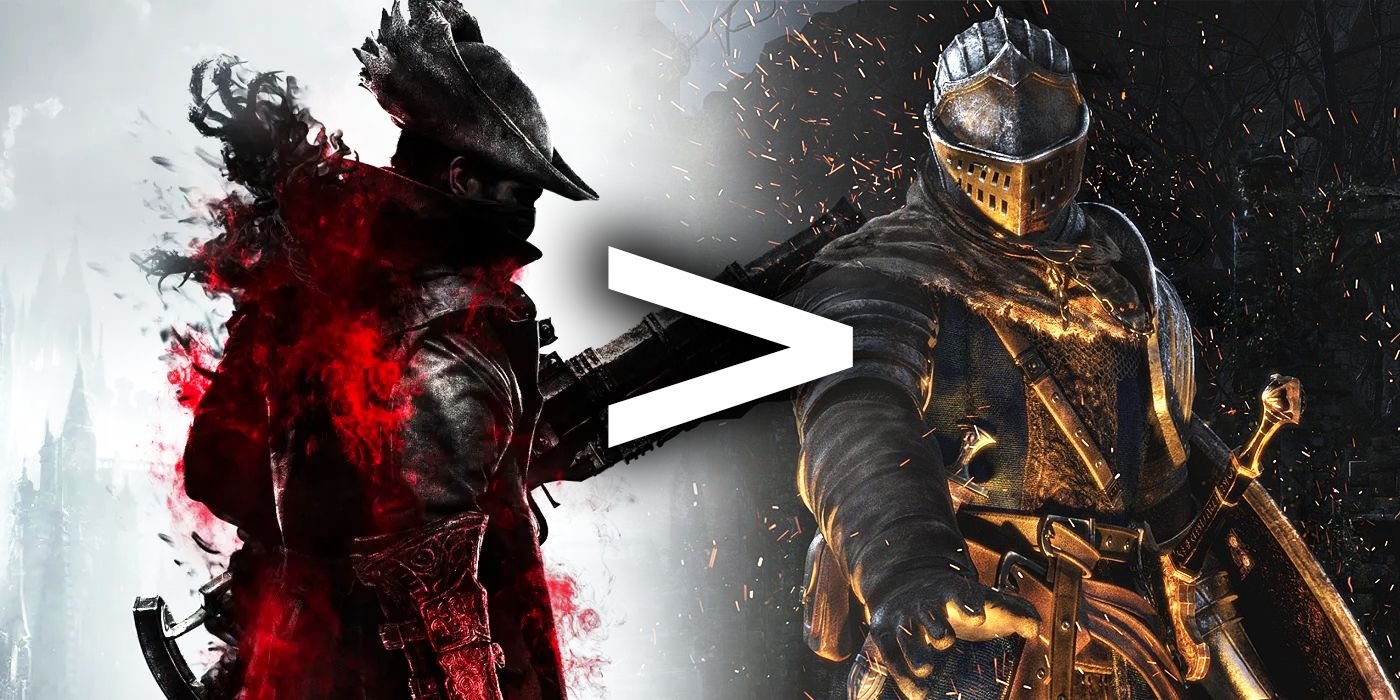
Yes, Bloodborne is a souls game, sharing many core mechanics and design philosophies with the Dark Souls series.
Is Bloodborne a souls game? It’s a question that sparks debate among gamers. The gothic world, fast-paced combat, and punishing difficulty all contribute to the discussions. People often wonder if its unique style makes it separate from the FromSoftware’s souls legacy.
Bloodborne undeniably possesses the hallmarks of the souls genre. It has intricate level design, challenging bosses, and the constant risk of death, all of which are familiar to souls players. These are some of the reasons that fans consider it a spiritual successor, if not directly within the same series.

Is Bloodborne a Souls Game? Exploring the Hunter’s World
The question hangs in the air like the scent of blood and old dust in Yharnam: Is Bloodborne truly a “Souls game”? It’s a question that has sparked countless debates among fans of challenging action RPGs. While there’s no single, definitive answer, we can certainly dive deep into what makes a Souls game and how Bloodborne fits – or doesn’t fit – that mold.
The Core of a Souls Game: What Defines the Genre?
To understand if Bloodborne is a Souls game, we need to understand what makes a Souls game in the first place. What are those special ingredients that give these games their unique flavor? These games have earned a reputation for being tough but fair. Let’s break down some important pieces:
Challenging but Fair Combat
Souls games aren’t easy, and that’s part of their charm! They throw tricky enemies at you, often forcing you to think strategically instead of just button-mashing. Death is a frequent visitor, but each defeat teaches you something new. You learn enemy attack patterns, where to find openings, and how to use your own character’s strengths. It’s a learning process that can be very satisfying.
- Enemies have clear attack patterns that you can learn.
- Mistakes are punished but offer valuable lessons.
- Patience and planning are often more important than quick reflexes.
Exploration and Interconnected Worlds
Exploring is a huge part of the experience. These games often feature large, interconnected areas with shortcuts, hidden passages, and secrets to find. You might be going down a path that seems like a dead end but then you might find a door that loops back to an earlier section of the map. This kind of world design makes exploration rewarding, and it often encourages players to explore every nook and cranny. You’re not just moving from point A to point B; you’re piecing together the world around you.
- Worlds are interconnected with shortcuts that provide new routes.
- Exploration is rewarded with items, lore, and hidden areas.
- Environments often tell stories through their design.
A Focus on Lore Told Through the Environment
The stories in Souls games are often mysterious. Instead of just being told what’s going on, you often learn about the game’s history by carefully observing the environment, reading item descriptions, and talking to a few key characters. This type of storytelling keeps you engaged and leads to a lot of theorizing with other fans. It’s more about figuring things out for yourself than being told everything explicitly.
- Lore is often fragmented and needs to be pieced together by the player.
- Environmental storytelling is used to convey the history of the world.
- Item descriptions offer valuable clues to the story and world.
Character Building and Customization
You get to make your character your own. Souls games typically let you build your character by choosing stats, skills, and gear. You can create a knight in heavy armor who can take a lot of hits, a fast-moving warrior who depends on dodging, or even someone who uses magic to take down enemies. The choices you make in building your character have a direct impact on how you approach combat.
- Players can customize their character builds.
- Stats and equipment have a significant impact on gameplay.
- Different builds cater to diverse play styles.
The “Souls” Mechanic: Losing Progress Upon Death
This is a big one. When you die, you usually lose a resource that acts as your experience points and currency. You have to go back to where you died to try and recover them. If you die again before getting them back, they’re gone for good. This “risk versus reward” aspect is core to the experience and adds a lot of tension to exploring and combat.
- Death results in a loss of in-game currency or experience.
- Players need to recover lost currency from their death location.
- The death mechanic adds a layer of risk and tension.
Bloodborne: A Souls Game in Disguise?
So, with all that in mind, where does Bloodborne fit? Is it a Souls game? The answer is yes… and no. Bloodborne takes inspiration from the Souls series but puts its own spin on things. It’s a Souls game but with significant differences, so much so that many players debate its place in the overall lineage.
Shared Foundations: The Souls DNA in Bloodborne
Let’s first acknowledge what Bloodborne borrows from the Souls series, showcasing its clear lineage:
- Tough but Fair Combat: Just like other Souls games, Bloodborne throws hard-hitting enemies at you that need to be approached with patience and strategy.
- Interconnected World: Yharnam is a complex city with many interconnected areas, shortcuts, and secrets, much like the worlds of Dark Souls.
- Environmental Storytelling: Bloodborne’s lore is hidden in item descriptions, the environment, and the cryptic ramblings of NPCs.
- Risk vs. Reward Gameplay: Like Souls games, Bloodborne punishes death by taking away your echoes (the game’s equivalent of souls), adding significant tension.
- Character Customization: Bloodborne allows you to create a unique character by selecting weapons, armor and stats.
In these core mechanics, Bloodborne certainly shares a strong resemblance to Dark Souls and other FromSoftware titles.
Divergences and Innovations: How Bloodborne Carves its Own Path
However, Bloodborne goes above and beyond in its own way. The game adds a number of elements that set it apart from the traditional Souls series:
A Focus on Aggression: The Rally System
Bloodborne is much faster-paced compared to other souls games. It encourages aggressive play styles thanks to its “Rally” system. When you take damage, you have a short window to regain some health by attacking enemies back. This encourages you to stay in the fight instead of constantly running away and healing.
Faster and More Fluid Combat
The combat is much faster and more aggressive. Unlike the slower, more methodical approach of Dark Souls, Bloodborne wants you to dodge, weave, and attack with speed. It’s more about quick reflexes and relentless offense. It feels closer to a fast paced action game, while still keeping the strategic nature of souls games.
Unique Weapon Transformations
Weapons in Bloodborne are very different from those of Dark Souls. Many can “transform” into a second form, offering new movesets and abilities. This adds a new layer to combat, making each weapon a versatile tool to use in your journey. There are fewer weapons to choose from, but each one is well-defined and can be used in many different ways.
The Trick Weapon System
Forget shields; Bloodborne gives you guns! They’re not for dealing heavy damage but are used to parry and stagger enemies. This is very different from the traditional shield-heavy combat of Souls, adding another layer of unique mechanics to the game. It encourages you to engage with the enemy and disrupt their attack.
A Gothic Horror Setting
The dark, gothic setting of Bloodborne is vastly different from the medieval fantasy worlds of Dark Souls. The Victorian-era architecture and grotesque creature designs create an incredibly unique and terrifying atmosphere. The creepy streets of Yharnam feel completely different than the castles and fortresses of other Souls games.
Less Emphasis on Armor
In Dark Souls, choosing the right armor is very important for defense. Bloodborne downplays this aspect significantly, focusing more on the weapons. While armor still provides protection, it has less impact on your overall survivability compared to the Souls series. The game wants you to be more focused on dodging and positioning than tanking hits.
Insight and Frenzy
Bloodborne also adds a unique “insight” mechanic. As you learn more about the game’s secrets and encounter more terrifying monsters, your “insight” goes up. High insight can change parts of the game, adding new challenges and enemies. This “insight” mechanic can lead to some strange and unexpected situations as you delve deeper into the game’s lore and mysteries, and the “frenzy” mechanic, a build up of a status effect, can quickly lead to death if you do not avoid or counter it properly.
Bloodborne’s Place in the FromSoftware Pantheon
So, given all this, is Bloodborne a Souls game? It’s more like a close relative, a cousin perhaps. It has the DNA of a Souls game, but it evolved in a different direction. Bloodborne’s changes are enough that it feels both familiar and fresh at the same time, a truly remarkable feat of game design. Some players prefer the tighter combat of Bloodborne while others prefer the slower, more strategic nature of souls games. The fact that both are so loved by fans speaks to the quality of FromSoftware’s games and their ability to make both distinct experiences.
Here’s a quick comparison table:
| Feature | Dark Souls | Bloodborne |
|---|---|---|
| Combat Speed | Slower, more methodical | Faster, more aggressive |
| Weapons | Diverse range, many options | Fewer options, transformable trick weapons |
| Shield Use | Prominent for defense and blocking | Rare, replaced with guns for parrying |
| Armor | Significant impact on defense | Lesser impact on defense, more cosmetic |
| Setting | Medieval fantasy | Gothic horror |
| Health recovery | Healing items are used frequently to recover health | Has a “rally” mechanic to recover lost health |
Why the Debate Matters: Defining Gaming Experiences
The ongoing debate about whether Bloodborne is a true Souls game is an interesting one. It shows that these games resonate so strongly with their fans, and they all have a different way to interpret them. Some feel strongly that Bloodborne’s changes make it a different kind of game, while others see the shared core mechanics as making it an obvious part of the series. This shows the importance of language, and how we classify different experiences that can be so different. These classifications help us to navigate games and know what to expect before even playing them. The “Souls-like” genre has expanded, and Bloodborne stands as an example of how you can take an established template and make something that feels both familiar and new.
Ultimately, whether you call it a Souls game or not, Bloodborne stands as an amazing game. It is challenging, atmospheric, and endlessly replayable. Its place in gaming is cemented and its impact in the souls genre will be felt for years to come.
Is Bloodborne the EASIEST Souls Game?
Final Thoughts
Bloodborne shares core mechanics with Dark Souls, like challenging combat and interconnected levels. It retains the punishing death system that sends players back to checkpoints. These are fundamental elements of the Souls formula.
The distinct setting and faster pace differentiate it. Is Bloodborne a Souls game? Yes, it clearly sits within the same genre. The core gameplay loop and design philosophy confirm this. It absolutely is a must for Souls fans.

