
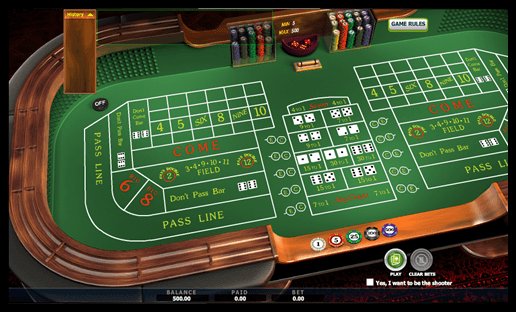
Craps is primarily a game of chance, with very limited opportunities for skill to influence the outcome.
Is craps a game of skill or just pure luck? That’s a question many people ask when they see the excitement at a craps table. The fast-paced action and many betting options can make it seem like there’s more to it than just dice rolls.
However, the core of craps relies on random results produced by the dice. While knowing the rules and odds helps make smarter bets, these choices don’t change the fundamental randomness of the game. Players can make informed choices but they are still at the mercy of the dice.

Is Craps a Game of Skill?
The question of whether craps is a game of skill or a game of chance is one that has puzzled many a gambler. It’s a common debate around casino tables and online forums alike. While the outcome of each dice roll seems purely random, there’s more to it than meets the eye. Let’s delve into the world of craps, exploring what aspects are based on luck and where a little bit of strategy might play a role.
The Foundation: Randomness of the Dice
At its heart, craps is built upon the foundation of random dice rolls. The numbered faces of the two dice, each bearing numbers 1 through 6, are meant to be unpredictable. When the dice are tossed, the combination of numbers that appear on the top faces is considered a random event. No human can control which numbers will come up. This core aspect highlights the significant role of chance in the game. The probability of each possible total is fixed, as demonstrated below:
- 2: 1/36 chance
- 3: 2/36 chance
- 4: 3/36 chance
- 5: 4/36 chance
- 6: 5/36 chance
- 7: 6/36 chance
- 8: 5/36 chance
- 9: 4/36 chance
- 10: 3/36 chance
- 11: 2/36 chance
- 12: 1/36 chance
Notice how the number 7 has the highest probability of appearing? This explains why it plays such a central role in the game’s rules. This inherent randomness means that past dice rolls don’t influence future rolls. Each roll is independent. This is a concept known as the ‘gambler’s fallacy’, thinking that past results influence future ones, which doesn’t apply to random events like craps dice throws.
The Betting Side: Where Strategy Enters the Picture
Although the outcome of the dice is based on randomness, the betting in craps offers a space where strategy can make a difference. The game provides many different types of bets, each with its own odds and payouts. The choices a player makes regarding which bets to place, and how much to wager, can impact the outcome of their gaming session. Here are some of the common bets:
Pass Line and Don’t Pass Line
These are the most basic bets in craps. The Pass Line bet is a wager that the shooter will win, while the Don’t Pass Line bet is a wager that the shooter will lose. These are considered bets with low house edges, making them relatively favorable for players. Players can make strategic decisions based on the point that’s established or if the game is in come out roll, but the main bets still depends on luck.
Come and Don’t Come Bets
These bets work similarly to the Pass and Don’t Pass line bets, but they’re made after the point has been established. Again, strategy involves knowing the odds and house edges involved, and choosing what makes the most sense for you.
Place Bets
Place bets involve wagering on specific numbers (4, 5, 6, 8, 9, or 10) to be rolled before a 7. Here, strategy might involve understanding the varying payouts and their odds. Players need to assess their risk tolerance. Some players might prefer to bet on numbers with a higher probability of appearing, even with a smaller payout.
Proposition Bets
These bets, such as the “Any 7” or “Hardways” bets, typically have very high house edges and are generally considered less favorable for players. While the payout on a winning bet can be significant, they offer a small chance of actually winning. Knowing to avoid these kinds of bets is one aspect of strategy, players choose not to play here based on its poor odds.
Odds Bets
This is a bet players can make after a point has been established. This bet directly backs up your original Pass or Don’t Pass bet. It offers true odds payout, which means the house has no edge on this bet itself. The ability to back up your initial wager with an Odds bet is a positive for players, and some may use it to their advantage.
House Edge: Understanding the Advantage
The house edge is a key concept in craps, as in most casino games. It represents the statistical advantage the casino has over the players in the long run. Different bets have different house edges. Some, like the Pass Line and Come bets, have a relatively low house edge, around 1.41%. This means that, on average, the casino will make a profit of about 1.41% on those bets. Other bets, like the proposition bets, have house edges that can soar to over 10% or even higher. This is why a skilled craps player will typically avoid proposition bets because of this house advantage. A good strategy involves choosing the right bets. A person who understands how to play the game wisely makes decisions that minimize the house edge, or even benefit the player, rather than those that maximize it.
Money Management: A Crucial Strategic Component
One crucial element of a strategic approach to craps is effective money management. This involves setting limits on how much you’re willing to wager, knowing when to quit, and staying disciplined with your betting patterns. A skilled player knows not to chase losses or wager more than they can afford. Good money management techniques can help players extend their playing time and reduce the impact of losses. While money management does not directly influence the randomness of the dice, it significantly impacts the outcome of your bankroll over time.
The Influence of Shooter Skill: Does it Matter?
Some people believe that skilled shooters can influence the outcome of the dice rolls. They might have techniques, like a consistent throw, or the ability to make the dice land at a certain way. While there is a popular theory called “dice setting” (or dice control), there’s no proven evidence that the dice throw can be controlled in any meaningful way. The physical laws of physics are what determine a dice roll, therefore, randomness still plays a significant role. Most casinos today do everything they can to maintain the randomness of the dice, making it an impossible job for any gambler to have such control. Therefore, relying on the randomness of dice is still the best approach.
Different Perspectives: The Player vs. The Mathematician
The way you perceive craps depends on your perspective. Players often focus on the excitement, the social aspect, and the feeling of anticipation. They might feel like they have some control over their destiny, even when relying on luck. However, a mathematician will approach the game from a purely statistical point of view. They will acknowledge that each dice roll is an independent event, and that the house edge is an inescapable reality in the long run. The mathematician understands that no matter what strategy a player employs, the house edge will eventually win out.
The Role of Probability
Understanding the probability of different combinations is vital to crafting a better strategy. Some bets, like those on a specific number, seem very enticing due to a large payout but have very small chances of actually happening. For example, a bet on a 2 or 12 has only a 1/36 chance, compared to a 7, which has 6/36 (1/6) chance. It’s essential to be aware of the odds of each roll, and not only focus on the potential payout. A strong strategy means you are more likely to make decisions with the odds on your favor.
So, Is It Skill or Luck?
In conclusion, craps is definitely a game with a significant element of chance, because the outcome of the dice roll itself is determined by randomness. However, the betting aspect of craps introduces a level of decision-making where strategy can influence a player’s experience. The choices players make on what to bet on, how much to wager, and their money management practices can impact their outcome. While no strategy can overcome the inherent house edge, smart, well-informed choices can help you play longer, enjoy the game more, and possibly even minimize your losses. So, while luck plays the starring role in craps, a bit of skill and understanding can definitely make for a better gaming experience.
This can get you kicked out of the Casino 😳 #Gambling #Craps #Vegas
Final Thoughts
Ultimately, craps relies heavily on chance. While understanding betting strategies can minimize losses, they cannot alter dice outcomes. The shooter’s roll remains unpredictable. Therefore, skill plays a very limited part in the game’s core mechanics.
The game must consider probabilities, but those are statistical, not skilled. Experienced players might manage bankrolls better or choose optimal bets, yet they cannot influence the dice. So, is craps a game of skill? No, it’s primarily luck.

